

The Ancestral Echo: Unraveling Generational Trauma and Its Healing
Golden Hook & Introduction
SECTION
Nova: Atlas, quick game. I say "ancestral trauma," you hit me with the first thing that comes to mind. Go!
Atlas: Oh, okay! Ancestral trauma... uh, déjà vu? That weird fear of heights that makes no sense? Why I always choose the same bad haircut despite trying to break the cycle?
Nova: Ha! All excellent, and surprisingly relevant, answers. Because those seemingly random quirks, those unexplained fears, or even those persistent patterns in our lives? What if they're not just? What if they're echoes from a past we never lived, but still feel?
Atlas: Whoa. That's a pretty heavy thought to kick us off. So you're saying my questionable fashion choices might be my great-grandma's fault?
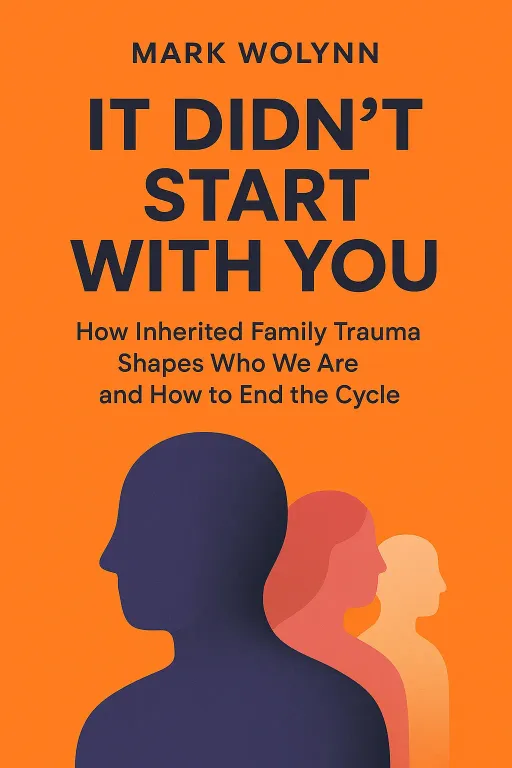
Nova: Well, maybe not the haircut, but the of self-sabotage, or fear of standing out, or a deep-seated anxiety could absolutely be. Today, we're diving deep into that very idea, exploring a book that has profoundly shifted how many people view their personal struggles: "It Didn't Start with You: How Inherited Family Trauma Shapes Who We Are and How to End the Cycle" by Mark Wolynn.
Atlas: That title alone is a gut punch.
Nova: It absolutely is. And what makes Wolynn’s work so compelling is that his journey into this topic began with his own unexplained physical symptoms and personal struggles. He spent years searching for answers, including a period of near-blindness, until he traced patterns in his own life back through generations of his family. He didn't just theorize; he lived the quest to understand how these echoes manifest.
Atlas: That’s fascinating. So it's not just an academic theory, it's rooted in a very personal quest for healing. But inherited trauma… that sounds incredibly heavy. Where do we even begin to unpack something that vast?
The Echo of Ancestral Trauma: Unseen Patterns
SECTION
Nova: We begin right where most of us are: in a blind spot. We often assume our challenges are solely our own making. We think, "I'm just an anxious person," or "I always attract the wrong kind of partner," or "Why do I have this inexplicable fear of success?"
Atlas: Right, we internalize it. We look for personal failings, or maybe a past event in our own life.
Nova: Exactly. But Wolynn presents compelling evidence that patterns of pain, anxiety, chronic illness, and even certain destructive behaviors can echo through generations. He argues that ignoring these ancestral influences can make true healing incredibly elusive.
Atlas: But wait, isn't that just... bad habits being passed down? Or learned behaviors? Like, if my parents were always stressed about money, I might pick up on that.
Nova: It’s so much deeper than learned behavior, though that plays a role. Wolynn illustrates this with powerful case studies. Imagine a woman, let's call her Sarah, who experiences debilitating, irrational anxiety every time she has to travel by sea. She's never had a bad experience on a boat. There's no logical reason for it. But through her family history, she discovers her grandmother survived a horrific shipwreck, losing many family members.
Atlas: Wow. So Sarah isn't consciously remembering the shipwreck, but her nervous system, her very being, is reacting as if it happened to her?
Nova: Precisely. It's not a memory in the traditional sense, but a deeply embedded pattern of fear. Or another example: a man constantly struggles with a deep, unexplained sense of shame and a feeling that he must always hide parts of himself, even though he lives a perfectly honest life. He later uncovers that his grandfather was forced to live in hiding during a war, carrying immense shame for simply existing.
Atlas: That’s incredible. So it's not just a story passed down, it’s a or a that seems to get passed down. Like a residual energy field.
Nova: A residual energy field is a great way to put it, Atlas. These are not always explicit stories; often, they are unspoken traumas, deep secrets, or unresolved grief that manifest as fears, physical symptoms, destructive behaviors, or even relational patterns in our lives today. It’s like a song playing in the background that we don't even realize we're humming.
Atlas: Honestly, that makes me wonder about some of my own inexplicable anxieties. That’s a really unsettling, but also kind of liberating, thought.
From Blind Spot to Breakthrough: Understanding Inherited Trauma
SECTION
Nova: And that unsettling thought is the first step towards a profound breakthrough. Because once you recognize that these aren’t just issues, but potentially echoes, you can begin to address the root causes. This is where Wolynn’s work really shines, connecting the dots between these ancestral echoes and how they manifest in our bodies and minds.
Atlas: But how does the body "remember" something it never experienced directly? That sounds a bit mystical, even for me.
Nova: It’s not mystical at all, and that’s where the science starts to catch up with the observation. While Wolynn focuses on the psychological and energetic transmission, his insights resonate deeply with fields like epigenetics and the work of trauma specialists like Babette Rothschild. Rothschild, in "The Body Remembers," emphasizes how individual trauma is stored somatically—in our nervous system, our muscles, our very cells.
Atlas: Okay, so body remembers trauma. That makes sense. But how does body remember trauma?
Nova: This is where transgenerational epigenetics comes in. Think of it like this: our genes are like a vast library of books. Epigenetics suggests that experiences, especially profound ones like trauma, don't change the of the books, but they can change how the books are or. They can put sticky notes on certain pages, highlight certain passages, or even temporarily bind chapters shut.
Atlas: So it's like a pre-loaded anxiety program, as I said before? Like my ancestors' survival mechanisms got activated, and those instructions were passed down, making more prone to certain stress responses, even if the original threat isn’t there?
Nova: Exactly! It's as if certain genes related to stress response or fear are "turned up" or "turned down" based on ancestral experiences, impacting how a subsequent generation's nervous system reacts to the world. It’s a biological predisposition, not a destiny. It explains why some people are born with a heightened sensitivity to certain stressors, or why certain phobias seem to run in families without any direct learning.
Atlas: That’s a phenomenal way to put it. It’s almost like a software bug passed down in the family code. So, understanding that shift, that it's not just a personal failing but a deeper, almost biological echo, must be incredibly empowering.
Nova: Incredibly so. It allows us to move beyond self-blame and address the actual root cause. Instead of just managing anxiety symptoms, you can begin to understand that anxiety might be there in the first place, tracing it back to an unhealed ancestral wound. That understanding brings tremendous relief and opens the door for a different kind of healing process. It's about shifting from symptom management to deep resolution.
Healing the Generational Line: Breaking the Cycle
SECTION
Atlas: So, if we identify these echoes, these "software bugs," what does "healing" even look like here? Is it therapy? Researching your family tree? Or something else entirely? Because for a lot of our listeners who are dealing with unexplained struggles or trying to protect their children from repeating patterns, this is where the rubber meets the road.
Nova: That’s the crucial question, and it's multifaceted. Healing starts with recognition, with simply acknowledging that these patterns exist and might not be solely your burden. It's not about blaming our ancestors; it's about understanding the burdens they carried and how those burdens might still be influencing us.
Nova: Wolynn, and many others in this field, emphasize approaches like family constellation work, which is a therapeutic process that helps individuals see and resolve hidden family dynamics. But even simpler, daily practices can be transformative. Journaling, for example, can be a powerful tool to uncover these patterns, to ask yourself, "What recurring themes appear in my life? What unexplained fears do I hold?" This aligns beautifully with the recommendation for personal reflection to unlock deep insights.
Atlas: So, just sitting with the question, "What if this isn't just me?" can be a starting point?
Nova: Absolutely. And then, once you've identified a potential echo, it’s about consciously choosing to respond differently. It's about developing new, healthier patterns. It might involve therapy, yes, but it also involves self-compassion, forgiveness, and sometimes, even symbolic rituals to acknowledge the past and release its hold on the present.
Atlas: I can see how that connects to the idea of being a "generational guardian" that many of our listeners resonate with—the desire to break cycles for their children. If you heal these echoes in yourself, you're not just healing your own life; you’re healing the ancestral line going forward.
Nova: Precisely. You become the one who says, "This pattern stops with me." It's an incredibly powerful act of love and responsibility, not just for yourself, but for your future generations. Imagine the freedom that comes from consciously choosing to not pass on the same fears, anxieties, or unaddressed grief. It’s an act of profound courage and transformation.
Synthesis & Takeaways
SECTION
Nova: So, we've journeyed from the unsettling blind spot that our personal struggles might be ancestral echoes, through the groundbreaking understanding of how trauma can be inherited, to the empowering realization that we can actively heal these generational lines. It’s a profound shift in perspective.
Atlas: It truly is. It reframes so much of what we think of as "personal" and places it within a much larger, intergenerational story. It makes you realize the sheer resilience of the human spirit, but also the deep responsibility we have to understand our past.
Nova: And it leaves us with that deep question: What recurring patterns or unexplained struggles in your life might be echoes of an ancestral story waiting to be understood? The answers might just unlock a whole new level of healing for you, and for generations to come.
Atlas: That gives me chills, honestly. It’s such a hopeful way to look at something that initially felt so heavy. Thank you, Nova, for shedding light on such a crucial topic.
Nova: My pleasure, Atlas. It's a journey worth taking.
Atlas: For more insights and to join the conversation, head over to Aibrary. com.
Nova: This is Aibrary. Congratulations on your growth!