

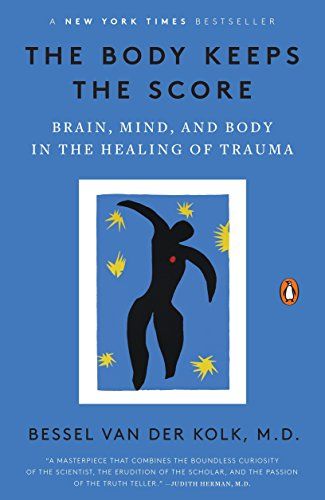
The Body Keeps the Score
Brain, Mind, and Body in the Healing of Trauma
Introduction
Nova: It's 2014, and a Dutch psychiatrist named Bessel van der Kolk publishes a dense, 464-page book about trauma. Almost nobody expects it to become a phenomenon. But fast forward a decade: over three million copies sold, published in 43 languages, and more than six total years on the New York Times bestseller list. It's been called a cult classic, a trauma bible, and also, depending on who you ask, dangerous pseudoscience. I'm Nova.
Nova: And we're talking about The Body Keeps the Score: Brain, Mind, and Body in the Healing of Trauma. It's one of those rare books that has genuinely reshaped how millions of people understand their own suffering, while simultaneously generating fierce debate among researchers who say some of its central claims don't hold up to scrutiny. So let's dig in. What does this book actually say, why did it resonate so deeply, and what should we make of the controversy?
Key Insight 1
The Core Idea: Why the Body Remembers What the Mind Tries to Forget
Nova: Let's start at the foundation. Van der Kolk's central argument is deceptively simple: trauma isn't just a psychological wound. It's a physiological one. The title says it all. The body keeps the score. Even when your thinking brain tries to bury a traumatic experience, your body holds onto the raw sensations, the fear, the helplessness, and keeps reacting as if the danger is still present.
Nova: Imagine your brain as having two major systems at play. There's the rational brain, your prefrontal cortex, which handles logic, reasoning, and planning. And then there's the emotional brain, including the amygdala, which is your alarm system. When you perceive a threat, the amygdala fires, triggering a cascade of stress hormones like cortisol and adrenaline. Normally, once the danger passes, the prefrontal cortex steps in and says, hey, we're safe now, stand down. But in traumatized people, that communication breaks down.
Nova: Exactly. Van der Kolk describes brain scans of PTSD patients where the self-sensing areas, the medial prefrontal cortex, the anterior cingulate, the insula, were essentially dark. Almost no activation. To cope with overwhelming terror, these patients had learned to shut down the very brain regions that register what's happening inside their own bodies. The terrible tradeoff: to escape the terror, they also deadened their ability to feel fully alive.
Nova: Right. And that's where the physical symptoms come in. When your body is constantly flooded with stress hormones, you don't just feel anxious. You get chronic muscle tension that leads to back pain, migraines, fibromyalgia. You develop digestive problems, irritable bowel syndrome, chronic fatigue. Van der Kolk notes that traumatized children have dramatically higher rates of asthma. The body is literally keeping score in aches, pains, and illness.
Nova: And this connects to a condition he describes called alexithymia, where people feel physically uncomfortable but cannot describe what's actually wrong. If you can't feel what your body needs, you can't take care of it. You might mistake anxiety for hunger and overeat. You might not feel hunger at all. The disconnection between mind and body becomes total.
Nova: So that's the core thesis. Trauma isn't a story you tell yourself. It's encoded in your nervous system, in your muscles, in your stress hormones, in the very architecture of your brain. And that means healing can't just be about talking. It has to involve the body too. But before we get to healing, let's look at why some people are more vulnerable to trauma in the first place, because van der Kolk's exploration of childhood is where things get especially powerful, and especially controversial.
Key Insight 2
Childhood Trauma and the ACE Study: The Hidden Epidemic
Nova: Van der Kolk draws heavily on the Adverse Childhood Experiences study, or ACE study, which was conducted by the CDC and Kaiser Permanente in the 1990s. The findings were staggering. One in five Americans was sexually molested as a child. One in four was beaten by a parent to the point of leaving marks. One in four grew up with alcoholic relatives. One in eight witnessed their mother being beaten.
Nova: Those numbers are hard to sit with. And the implications go far beyond the emotional fallout. The ACE study found that the more adverse childhood experiences someone had, the higher their risk for heart disease, cancer, chronic depression, alcoholism, drug addiction, and suicide. Van der Kolk writes that eradicating child abuse in America would reduce the overall rate of depression by more than half, alcoholism by two-thirds, and suicide, IV drug use, and domestic violence by three-quarters.
Nova: There's a quote from the book that really lands: For every soldier who serves in a war zone abroad, there are ten children who are endangered in their own homes. Van der Kolk is making the case that childhood trauma is a public health crisis on a scale we are barely beginning to acknowledge. And he argues the diagnostic system is failing these kids. They get labeled with ADHD, oppositional defiant disorder, bipolar disorder, but no diagnosis captures the full picture of what trauma does to a developing brain.
Nova: To address this, he actually campaigned to get a new diagnosis into the DSM, called Developmental Trauma Disorder. It was rejected. And you can feel his frustration in the book. He argues we're medicating traumatized children without treating the root cause. Now here's where attachment comes in. Van der Kolk emphasizes that our attachment bonds are our greatest protection against threats. He draws on research by Karlen Lyons-Ruth, who followed children from birth to age twenty and found something surprising: it wasn't hostile or intrusive mothers that had the most devastating impact. It was emotionally withdrawn mothers.
Nova: If your caregivers regularly ignore your needs, you learn to anticipate rejection and withdrawal. You cope by blocking it out. But the body stays in a state of high alert, prepared for abandonment at any moment. The effect, van der Kolk found, was not feeling real inside. When you don't feel real, nothing matters. You might resort to extremes just to feel something. And this doesn't just go away in adulthood. A child who was chronically humiliated is likely to lack self-respect. Adults brutalized as children carry a smoldering rage. The memory of the trauma, he writes, quoting Freud and Breuer, acts like a foreign body which long after its entry must continue to be regarded as an agent that still is at work.
Nova: It's a powerful image. A splinter in the mind that the body keeps reacting to. But this is also where we need to start surfacing some of the criticism, because not everyone agrees with how van der Kolk characterizes survivors, especially survivors of sexual abuse. We'll get to that. First, let's talk about how traumatic memories work differently from ordinary ones, because this is one of the most fascinating and debated ideas in the book.
Key Insight 3
Traumatic Memory: Fragments, Flashbacks, and the Speechless Horror
Nova: Van der Kolk argues that traumatic memories are fundamentally different from ordinary memories. Normal memories are organized. They have a beginning, middle, and end. You can tell them as a coherent story. Traumatic memories, by contrast, are fragmented. They're stored as isolated sensory imprints: images, sounds, smells, physical sensations, and overwhelming emotions, but no narrative holding them together.
Nova: The neuroscience behind this is intriguing. During overwhelming experiences, Broca's area, which is the speech center of the brain, can go offline. At the same time, the frontal lobes, responsible for rational thought, also deactivate. So the experience gets encoded without language, without logic, purely as raw sensation and emotion. This is why van der Kolk calls trauma a speechless horror. Survivors often literally cannot put what happened into words.
Nova: And that explains why flashbacks feel so different from remembering. When a traumatized person has a flashback, they're not recalling the event. They're reliving it. The same stress hormones flood their system. Their heart races. They feel the same terror they felt originally. Their body doesn't know the difference between then and now. This also explains the phenomenon of reenactment. People unconsciously repeat patterns from their trauma in current relationships and situations, not because they want to, but as a desperate, unconscious attempt to finally gain control over what was once uncontrollable.
Nova: Van der Kolk also discusses dissociation, where parts of the overwhelming experience are split off from conscious awareness. Survivors might feel detached from their own bodies, what's called depersonalization, or feel that reality itself is unreal, which is derealization. The essence of trauma, he writes, is dissociation. The experience is fragmented, split off, and then intrudes into the present unbidden.
Nova: Now, the concept of repressed memories and the body storing perfect hidden records of trauma is one of the most fiercely criticized aspects of the book. Several researchers say van der Kolk has overstated what the science actually supports. Harvard psychologist Richard McNally, in his book Remembering Trauma, offered a detailed critique of van der Kolk's earlier work, concluding his theory was one in search of a phenomenon. The newer critiques echo this. A 2025 review in BJPsych Bulletin evaluated 122 claims in the book and found that many of its assertions about trauma-induced brain damage and body-based treatments weren't supported by current research.
Nova: So we have a genuine tension here. The idea that trauma lives in the body resonates deeply with millions of readers because it matches their lived experience. But some scientists argue the mechanisms van der Kolk describes, like trauma being literally stored in muscles or the viscera, don't hold up under rigorous scrutiny. The body may not store perfect, hidden memories. But traumatic stress absolutely leaves biological footprints on inflammation, arousal, immune function, and more. The question is whether the metaphor has been taken too literally.
Nova: That distinction is everything. And yet, whether the science is airtight or not, van der Kolk builds on these ideas to propose a whole menu of treatments. That's where we're going next. What actually helps people heal?
Key Insight 4
Paths to Recovery: From EMDR to Yoga to Theater
Nova: Van der Kolk's position on traditional therapy is provocative. He argues that talk therapy alone is often insufficient because the rational brain simply cannot talk the emotional brain out of its deeply ingrained responses. As he puts it: knowing why you screwed up doesn't necessarily stop you from being screwed up. So he advocates for what he calls bottom-up approaches, methods that work directly with the body and the nervous system rather than starting with cognition.
Nova: The first major intervention he champions is EMDR, Eye Movement Desensitization and Reprocessing. The idea is that bilateral stimulation, often guided eye movements, while the patient focuses on distressing memories, helps the brain reprocess traumatic material, similar to what happens during REM sleep. Van der Kolk conducted his own study and found EMDR to be remarkably effective, in some cases outperforming Prozac. It's worth noting that EMDR is actually recognized as an evidence-based treatment by the VA and the American Psychological Association, so this isn't fringe.
Nova: Interesting. So some of his recommendations do have solid backing, even if others are more controversial. What else does he recommend?
Nova: Yoga is a big one. Van der Kolk became one of the first researchers to study yoga specifically for PTSD. The logic: trauma disconnects people from their bodies, so practices that cultivate mindful body awareness help rebuild that connection. Yoga also improves heart rate variability, which is often poor in traumatized people, meaning their nervous system is rigid, stuck in fight-or-flight mode. The deep breathing and intentional movement help the body learn that it can shift between stress and relaxation.
Nova: He also explores neurofeedback, where people learn to rewire their own brain waves by receiving real-time feedback on brain activity. Then there's Internal Family Systems therapy, which helps people relate compassionately to different parts of themselves that developed in response to trauma. And perhaps most surprisingly, he writes about theater and community as healing modalities. He describes working with traumatized youth through Shakespeare programs, where embodying different roles helps them access emotions and experiences they couldn't reach through words alone.
Nova: Theater as trauma therapy. That's unexpected. But it makes sense. If trauma isolates you and makes you feel invisible, then being seen on stage, embodying a character, experiencing synchrony with fellow actors, that directly counteracts the helplessness and disconnection at trauma's core. So here's the question: with all these treatments, how effective are they really? Because this is where the sharpest criticism comes in.
Nova: Right. Critics argue that van der Kolk steers readers away from treatments with the strongest evidence base, particularly cognitive behavioral therapy, or CBT. He claims in the book that only about one in three participants with PTSD who finish CBT research studies show some improvement. But the meta-analysis he cites actually concluded that 67 percent of people who completed treatment benefited. And one major VA study found that after just ten weeks of CBT, 75 percent of patients improved significantly and 47 percent no longer had PTSD at all.
Nova: So he potentially misrepresented the data on CBT while promoting treatments with less rigorous evidence. Julian Ford, a professor of psychiatry at the University of Connecticut whose work van der Kolk cites, has said flatly: as a frontline treatment, I don't think there's anything better for the treatment of PTSD than CBT. And other researchers, like Jennie Noll at the University of Rochester, have pointed out that van der Kolk's citations don't always match what the referenced studies actually found.
Nova: That's concerning. And a 2023 editorial in Research on Social Work Practice argued that the influence of van der Kolk means PTSD patients are often not offered first-line treatments by providers and don't seek them out. That's a real-world consequence of the book's popularity. But before we get too critical, let's also acknowledge that for many people, these body-based approaches have been genuinely transformative. The question isn't whether yoga or EMDR helps some people. They clearly do. The question is whether the book overpromises on some modalities while unfairly dismissing others.
Deep Dive
The Controversy: Victim Narratives, Misrepresented Science, and the Backlash
Nova: We've touched on some of the scientific critiques, but there's another layer of criticism that's perhaps even more uncomfortable. It's about how van der Kolk portrays trauma survivors, especially women and girls who have experienced sexual violence. In a 2024 Mother Jones investigation, journalist Emi Nietfeld, herself a survivor of sexual assault, went through the book and found patterns that disturbed her.
Nova: She points to specific passages. In a section called Addicted to Trauma, van der Kolk describes a girl named Julia who was raped at gunpoint at sixteen and then got involved with a violent pimp, which is child sex trafficking. Instead of exploring how predators target vulnerable children, van der Kolk uses her story to illustrate the idea that many traumatized people seem to seek out experiences that would repel most of us. That framing puts the responsibility on the survivor.
Nova: That's a tough framing. And he describes sexually abused girls in language like: they don't have friends of either gender, they hate themselves and their biology is against them, other kids usually don't want anything to do with them, they are simply too weird. Jennie Noll, the researcher whose work he cites for these claims, told Mother Jones: that's so awful. She said it in no way describes an entire group of survivors. That van der Kolk may have met one or two people who fit that mold, but he's painting with far too broad a brush.
Nova: And there's a deeper structural critique. The words racism, sexism, and their variations never appear in the book. Scholar Layla AlAmmar has pointed out that van der Kolk advances an individualized view of trauma largely disconnected from the social and political systems in which the violence occurs. He opens the book with the story of Tom, a Vietnam veteran whose platoon was ambushed, after which Tom went on a rampage, raping a Vietnamese woman and murdering children. Van der Kolk centers Tom's torment. The Vietnamese victims are treated as collateral damage, not even offered a condolence.
Nova: That's a stark example. He invites us to empathize with the perpetrator while the actual victims essentially disappear from the narrative. Psychologist Jennifer Mullan, who wrote Decolonizing Therapy, notes that van der Kolk fails to acknowledge intersectionality and how identity shapes trauma experiences. A Black teenager in foster care faces different structural forces than a white middle-class veteran. The book flattens all of that.
Nova: There are also factual problems. The claim that traumatized children have fifty times the rate of asthma as non-traumatized peers? The paper he cites doesn't contain the words asthma, breathing, or any related terms. The claim that sexually abused girls experience puberty a year and a half earlier? The published paper contradicts it. Van der Kolk told Mother Jones he sometimes relied on preliminary unpublished data, which is not how scientific citation is supposed to work.
Nova: And in 2018, van der Kolk himself was fired from the Trauma Center he founded, amid allegations of creating a hostile work environment, which followed the firing of the center's executive director for alleged sexual mistreatment of female employees. He denied wrongdoing and called it character assassination. But it adds another layer to the question of whose perspective is centered and whose is marginalized.
Nova: So where does this leave us? The book has genuinely helped millions of people. It's given language to experiences that felt inarticulable. But it also contains significant problems, from misrepresented science to troubling narratives about survivors. Are we supposed to throw it out entirely?
Nova: I don't think it's that simple, and I think that's exactly where our conclusion needs to go.
Conclusion
Nova: So let's synthesize what we've covered. The Body Keeps the Score makes a powerful and intuitively resonant argument: trauma is not just in your head. It reshapes your brain, your nervous system, your stress hormones, your immune function. It manifests in chronic pain, illness, and a profound disconnection from your own body. And healing, therefore, requires approaches that engage the whole person, body, mind, and community, not just the rational, talking brain.
Nova: These insights have been transformative for countless readers. They've helped people understand why they feel the way they do, why talk therapy alone sometimes isn't enough, why yoga or EMDR or theater might reach places that words can't. That's not nothing. That's genuinely valuable.
Nova: But we also have to reckon with the problems. Some of the science is overstated or incorrectly cited. The triune brain model is outdated. The book can paint trauma survivors, particularly women and girls, in pathologizing, even dehumanizing terms. It largely ignores structural factors like racism, poverty, and sexism. And it steers people away from evidence-based treatments like CBT that have decades of rigorous research behind them.
Nova: So what's the responsible takeaway? I think the Psychology Today essay we encountered puts it well: we don't have to burn the whole house down. We can renovate the rooms that need updating while preserving the shelter that many people rely on. The body may not literally store perfect hidden memories in muscles. But traumatic stress absolutely leaves biological footprints. The triune brain is a metaphor, not literal neuroscience, but metaphors can be clinically useful. Somatic therapies help with regulation, even if they're not magic.
Nova: And maybe the most important thing is this: if the book helped you, you are not foolish or misguided. Finding language for your suffering is a valid and powerful thing. But if you're a trauma survivor seeking treatment, don't let this one book be your only guide. The VA's National Center for PTSD offers evidence-based guidance. There are multiple effective paths. CBT, prolonged exposure therapy, EMDR, they all have strong track records. And as Paula Schnurr, executive director of the VA's National Center for PTSD, has said: we used to think PTSD was chronic and we had to help people live with their symptoms. We now know PTSD is treatable.
Nova: That's a hopeful note to end on. Trauma is real. It leaves deep marks. But it is not destiny. The body keeps the score, yes, but it can also learn a new song.
Nova: This is Aibrary. Congratulations on your growth!