The Information Overload Trap: Why You Need Curated Signal
Golden Hook & Introduction
SECTION
Nova: Atlas, rapid-fire word association. I say 'information,' you say the first thing that comes to mind.
Atlas: Firehose.
Nova: 'Decision.'
Atlas: Paralysis.
Nova: 'Truth.'
Atlas: ... Endangered.
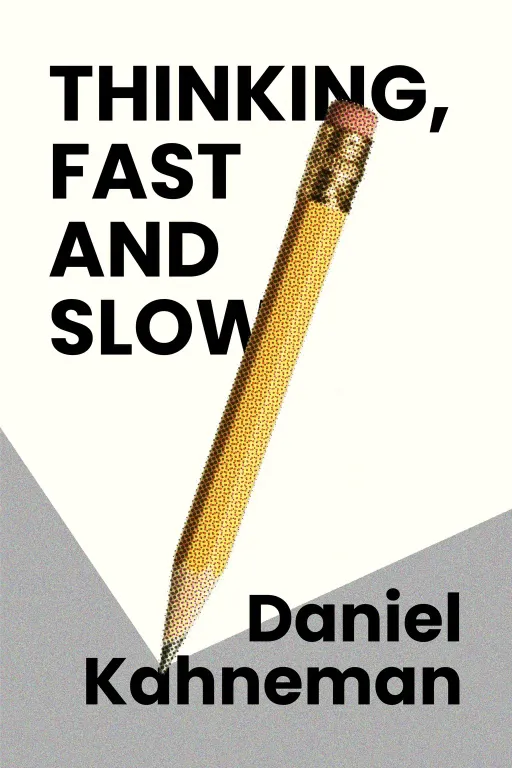
Nova: Endangered, indeed. And that's exactly what we're wrestling with today. We're drawing heavily from two profound thinkers: Daniel Kahneman's "Thinking, Fast and Slow" and Nassim Nicholas Taleb's "The Black Swan."
Atlas: Both authors are game-changers. Kahneman, a Nobel laureate in Economic Sciences, completely reshaped our understanding of human judgment and decision-making, even though he's a psychologist and not an economist by training. And Taleb, a former options trader turned philosopher, gave us a whole new vocabulary for the unpredictable.
Nova: Exactly. And it's this unpredictability, this deluge of data, that truly blurs the lines between what's real and what's just noise.
The Information Overload Trap: Distinguishing Signal from Noise
SECTION
Nova: We're not just dealing with a lot of data; we're dealing with a system designed to overwhelm. Think of it like trying to navigate a dense fog, but instead of just visual obscurity, it's an auditory and cognitive one. Every direction you turn, there's another siren, another voice shouting, another 'urgent' notification.
Atlas: Oh, I know that feeling. I imagine a lot of our listeners, especially those who are deep thinkers and analysts, feel this constantly. But wait, isn't the goal always to have information, especially for someone who needs to see patterns and connect complex ideas? How can 'more' actually be bad?
Nova: It's a fantastic question, and it's counter-intuitive, isn't it? The problem isn't the quantity of information itself; it's our to process it effectively. When you're trying to make a critical decision, like a market strategist needing to understand complex societal influences, you might feel compelled to consume available news, every report, every social media trend.
Atlas: Right, because you don't want to miss anything. You want that complete picture.
Nova: Precisely. But that strategist can quickly become paralyzed by contradictory data. Sensational headlines scream one thing, economic reports whisper another, and social media amplifies a thousand different opinions. They start mistaking minor fluctuations for fundamental shifts, or sensational noise for critical signal.
Atlas: So they're drowning in data, and it's actually making their decisions worse, not better.
Nova: It can. The cognitive load becomes immense. They spend so much time sifting through the dross, trying to connect disparate pieces, that they miss the actual, quieter signals. The emotional toll is also significant—that feeling of always being behind, of never having enough information, even when they're consuming it constantly. They feel like they're being more informed, but they're actually just more overwhelmed, and the decision they eventually make might be delayed and suboptimal.
Atlas: That sounds rough, but how do you even begin to distinguish between signal and noise then? For someone who seeks underlying truths, this is the core challenge.
Nova: It’s an active process of curation, Atlas. It's about understanding that our minds aren't passive recipients of data. They're active interpreters, and those interpretations are heavily influenced by internal shortcuts.
Leveraging Dual-System Thinking to Combat Bias
SECTION
Nova: That paralysis and misinterpretation often come from letting our brain's natural shortcuts take over. And that leads us directly to Daniel Kahneman's groundbreaking work on System 1 and System 2 thinking.
Atlas: Ah, the two systems that drive our thoughts. I've heard of these, but can you break them down simply?
Nova: Absolutely. Think of System 1 as your intuition. It's fast, automatic, emotional, and often unconscious. It's what allows you to instantly recognize a face, understand a simple sentence, or slam on the brakes in an emergency. It's incredibly efficient, but it's also prone to biases. It loves shortcuts.
Atlas: Like confirmation bias, where you seek out information that confirms what you already believe? Or the availability heuristic, where you overestimate the likelihood of events that are easily recalled?
Nova: Exactly! Those are classic System 1 pitfalls. System 2, on the other hand, is your more deliberative, logical, and effortful thinking. It's what you use to solve a complex math problem, learn a new language, or carefully weigh the pros and cons of a major life decision. It's slow, but it's more accurate.
Atlas: So are you saying we should just turn off System 1? That seems impossible. And for someone who needs to make ethical, rigorous decisions, how do we engage System 2 without getting bogged down in every single decision?
Nova: That's the million-dollar question. We can't turn off System 1; it's essential for daily functioning. The key is and knowing to engage System 2. Imagine you're interviewing a new candidate for a critical role. Your System 1 might form an instant impression based on their handshake or their smile. It's a quick judgment.
Atlas: Which could be completely wrong.
Nova: Precisely. To counteract that, your System 2 needs to kick in. You consciously review their resume, check references, evaluate their skills against objective criteria, and analyze their responses to behavioral questions. You're overriding that initial intuitive impression with logical, effortful thought.
Atlas: So it's about identifying when the stakes are high, or when there's a risk of bias, and then actively to slow down and engage the more analytical process. That makes sense for someone who's always dissecting information and seeking underlying truths.
Nova: It really is. It’s about building a mental framework that allows you to self-diagnose those cognitive blind spots, especially when you're looking at complex societal influences where the easy, intuitive answer is often the wrong one.
Embracing the Unpredictable: Black Swans and Robust Frameworks
SECTION
Atlas: Even with System 2, we're still trying to predict things, right? We're trying to analyze and anticipate. But what about the things we can't predict? The truly unforeseen?
Nova: Exactly, Atlas. And that's where Nassim Nicholas Taleb swoops in with his 'Black Swan' theory. He argues that we spend too much time trying to predict the predictable and completely miss the events that truly reshape our world.
Atlas: The term 'Black Swan' itself is fascinating. It refers to the old assumption that all swans were white, until black swans were discovered in Australia. A single observation changed everything.
Nova: That's a perfect analogy. Taleb defines a Black Swan as an event with three characteristics: it's an outlier, completely outside the realm of regular expectations; it carries an extreme impact; and despite its outlier status, human nature makes us concoct explanations for its occurrence the fact, making it seem predictable in hindsight.
Atlas: So we look back and say, "Oh, we should have seen that coming," but in reality, no one did. This sounds incredibly frustrating for a truth-seeker. If we can't predict these high-impact events, how can we strategize? What does a 'robust framework' even look like if you can't account for the biggest threats?
Nova: That's the brilliant, and somewhat unsettling, insight of Taleb. He says the goal isn't to predict Black Swans. You can't. The goal is to build systems.
Atlas: Antifragile? That's not a term you hear every day.
Nova: It's his own invention, and it's profound. Most things are fragile—they break under stress. Some things are robust—they resist stress. But antifragile things from disorder, volatility, and stress. They get stronger.
Atlas: So, like a muscle that gets stronger after being stressed, or a complex organization that learns from disruption?
Nova: Precisely. Think about how financial markets often operate under the illusion of normal distribution, relying on models that assume predictable fluctuations. They design for "100-year floods" but are completely devastated by "500-year floods" because they're fragile to the unexpected. A robust framework, in Taleb's view, would build in redundancy, foster adaptability, and even welcome small, manageable failures to learn and grow stronger.
Atlas: It's a shift from trying to control everything to building systems that thrive in uncertainty. For someone who cares about understanding unseen societal influences, this is huge. It means looking beyond linear causes and effects, and preparing for the non-linear.
Nova: Absolutely. It's about moving from a rigid, predictive mindset to one that embraces randomness and uses it to its advantage. It's about questioning assumptions not just about the data, but about the very nature of reality itself.
Synthesis & Takeaways
SECTION
Nova: So, bringing it all together, we've talked about the firehose of information blurring our perception, how our fast-thinking System 1 can lead us astray, and how Black Swans remind us that the biggest impacts often come from the truly unpredictable.
Atlas: It feels like a journey from understanding the external chaos, to our internal biases, and then to the fundamental unpredictability of the world.
Nova: Exactly. True clarity isn't about having all the answers, Atlas. It's about understanding the limits of our knowledge, the inherent biases in our perception, and building systems—both mental and societal—that are resilient, even antifragile, in the face of constant noise and unpredictable events. It's a profound shift from a quest for certainty to a quest for resilience and truth.
Atlas: That’s actually really inspiring. So what's one tiny step someone can take to start applying this today?
Nova: For the next 24 hours, consciously identify one decision you make using System 1 versus System 2 thinking. Just notice it. That awareness is the first step towards better decision-making.
Atlas: I love that. Awareness is everything. This is Aibrary. Congratulations on your growth!