The Future Is Not Fixed: How to Design Your Tomorrow Today
Golden Hook & Introduction
SECTION
Nova: We're all told to plan, control, and predict. We build elaborate five-year plans, minute-by-minute schedules, and try to map out every possible outcome. But what if the very act of trying to fix your future is what's actually breaking it? What if the best way to thrive is to embrace the mess?
Atlas: Whoa, that's a bold claim, Nova. I imagine a lot of our listeners, especially those driven by innovation and structured thinking, are probably thinking, "Wait, are you saying we should just throw caution to the wind?" That sounds a bit out there.
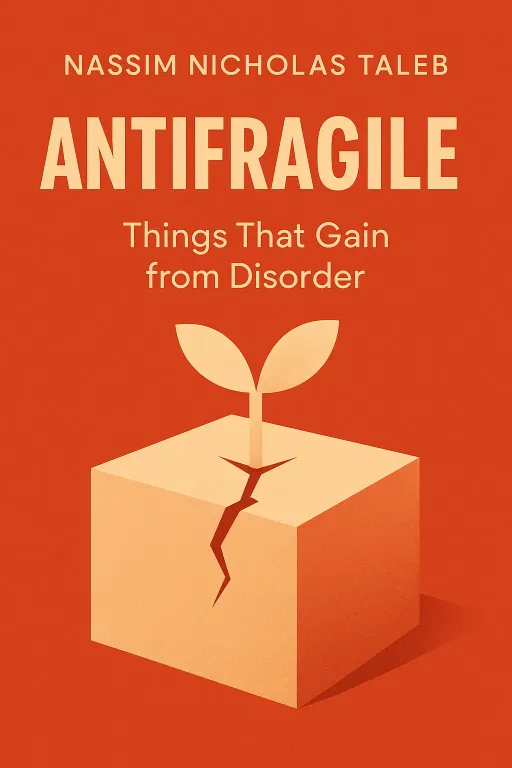
Nova: Not at all, Atlas. What I'm saying is that our traditional approach to the future often cultivates a major blind spot. And this profound insight comes from a thinker who understands risk better than almost anyone: Nassim Nicholas Taleb. Today, we're diving into the core ideas behind his work, particularly as they inform the concept that 'The Future Is Not Fixed.'
Atlas: Oh, I'm already intrigued. I mean, Taleb is a fascinating figure.
Nova: He absolutely is. What's so compelling about Taleb is that he's not just an academic; he's a former options trader and risk analyst. He famously made a fortune during the 2008 financial crisis precisely because he understood how truly unpredictable events could reshape markets. His insights aren't just theoretical; they're battle-tested and exceptionally practical.
Atlas: Right, like he saw the storm coming when everyone else was still checking the weather app for sunny skies.
Nova: Exactly. And that naturally leads us to our first core idea: the blind spot we all share, which is believing the future is predictable.
The Blind Spot: Why We Fear Uncertainty
SECTION
Nova: Most of us crave stability. We're wired to seek clear paths, to minimize risk, and to believe that if we just plan enough, we can control what's coming. But the world is inherently uncertain, and this blind spot leaves us incredibly vulnerable to unexpected shocks. It's like trying to navigate a wild ocean with a meticulously drawn map of a quiet pond.
Atlas: I guess that makes sense. I mean, for our listeners who are pioneering new ideas or navigating complex relationships, that desire for a clear roadmap is so strong. But how does that desire for predictability actually make us vulnerable? Isn't it just common sense to try and anticipate problems?
Nova: That's a great question, and it gets to the heart of Taleb's work, particularly his concept of 'The Black Swan.' He explains that rare, unpredictable events – 'Black Swans' – have extreme, often devastating, impacts. Think 9/11, the rise of the internet, or the 2008 financial crisis. These aren't just improbable; they're fundamentally unpredictable. The problem isn't anticipating every single one of these; it's the that we anticipate them, which leads us to build brittle systems.
Atlas: So you're saying focusing on predicting these events is futile? Like, we spend all our energy trying to forecast the next big market crash or relationship crisis, and meanwhile, something completely different blindsides us?
Nova: Precisely. It's like trying to predict exactly where and when a specific asteroid will hit Earth, when you should really be building a spaceship ready for any impact. This blind spot not only leaves us unprepared, but it also stifles our innovative spirit. When we're obsessed with a fixed plan, we resist deviations, we fear experiments that might fail, and we become rigid.
Atlas: I can see how that would be true for someone in a high-stakes tech environment, where innovation is key, but also for someone trying to cultivate profound self-awareness. If you're rigidly trying to predict your emotional responses, you might miss the unexpected growth that comes from genuine, messy experience.
Nova: Absolutely, Atlas. The illusion of control can be comforting, but it's a dangerous comfort. It leaves us fragile. But what if we could flip that script? What if disorder, volatility, even stress, could actually make us stronger?
Embracing Antifragility: Benefiting from Disorder
SECTION
Nova: And that naturally leads us to the second key idea we need to talk about, which often acts as a counterpoint to what we just discussed: antifragility. This is where Taleb offers a truly revolutionary concept. Most things are fragile – they break under stress. Some things are robust – they resist stress, they stay the same. But antifragile things? They from disorder. They grow stronger, adapt, and improve when exposed to volatility and randomness.
Atlas: Wait, so the simple version is, like, my muscles. If I lift weights, I’m putting them under stress, and they don’t just resist it, they actually grow bigger and stronger. That’s a great analogy.
Nova: Exactly! Or think about the immune system. It needs exposure to pathogens to develop strength. Without it, it remains weak and vulnerable. Antifragility isn't just resilience; it's a step beyond. It's transforming the unexpected into an advantage. This insight fundamentally shifts our approach from fearing uncertainty to actively seeking ways to grow stronger from it.
Atlas: That’s actually really inspiring. But how does one for antifragility? For our listeners who are innovative seekers, how do they apply this to a project that needs structure? Or for those working on emotional mastery, how do you become antifragile to emotional shocks without just letting chaos reign?
Nova: Great question. It's not about inviting catastrophe, but embedding mechanisms that allow you to gain from it. One key strategy is building in. Don't commit to one rigid path. Have multiple small bets, multiple options. If one fails, you learn, and another might surge forward. Think about a startup ecosystem: many small ventures, most will fail, but the few that succeed become disproportionately powerful. That's an antifragile system.
Atlas: So, for someone launching a new product, it might mean creating several minimum viable products and seeing which one gains traction, rather than pouring all resources into one 'perfect' launch?
Nova: Precisely. Another strategy is redundancy. Having backups, not just to survive a failure, but to allow you to experiment more boldly knowing you have a safety net. And crucially, it involves learning from mistakes, quickly and effectively. Every unexpected challenge, every "disorder," becomes an opportunity for data, for adaptation, for growth. It empowers our creative and adaptive capabilities.
Atlas: That makes me wonder, how would this apply to someone trying to build healthier, more secure relationships, which is a core drive for many of our listeners? It sounds like a paradox, trying to make a relationship antifragile.
Nova: Ah, but it's not. In relationships, antifragility might mean not fearing the occasional disagreement or conflict, but seeing it as an opportunity. If both partners can safely express vulnerabilities and work through challenges, the relationship doesn't just return to its previous state; it actually deepens, strengthens, and becomes more resilient to future stresses. It gains from the disorder. It's about building trust that can withstand the unexpected, rather than a fragile peace that shatters at the first sign of trouble.
Synthesis & Takeaways
SECTION
Nova: So, what we're really talking about today is a profound reorientation of how we view the future. The future isn't fixed, and that's not a threat; it's our greatest opportunity. True strength comes not from avoiding chaos, but from intelligently engaging with it. It’s about building systems, whether personal or professional, that don't just tolerate stress, but are actively improved by it.
Atlas: That’s a powerful shift in perspective. It moves us from a reactive stance to a proactive one, where we're not just hoping for the best, but designing for it, even when the best involves some bumps in the road.
Nova: Exactly. And the deep question Taleb asks, and one I'd love for all of our listeners to reflect on, is this: How can you design a current project or personal goal to become 'antifragile', benefiting from unexpected challenges rather than being broken by them?
Atlas: That’s a fantastic challenge. I’d love to hear how our listeners are building antifragility into their lives. Share your insights with us on social media. What’s one small way you can introduce optionality or learn from a small unexpected 'disorder' this week?
Nova: This is Aibrary. Congratulations on your growth!