

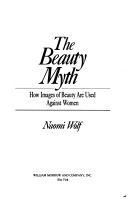
The beauty myth : how images of beauty are used against women
How Images of Beauty Are Used Against Women
Introduction: The Last, Best Belief System
Introduction: The Last, Best Belief System
Nova: Imagine this: In the early 1990s, as women were finally breaking significant ground in boardrooms and politics, a new, invisible weapon was being deployed against them. It wasn't a law or a policy; it was an aesthetic. It was the idea that their worth was still fundamentally tied to an impossible physical standard. Welcome to the deep dive on Naomi Wolf’s seismic 1990 book, The Beauty Myth: How Images of Beauty Are Used Against Women.
Nova: : That’s a powerful framing, Nova. I remember when this book first hit. It felt like a cultural earthquake. For listeners who might only know the title, what is the absolute core of Wolf’s argument? Is it just about makeup and dieting?
Nova: It’s so much bigger than that. Wolf argues that the beauty myth is the “last, best belief system that keeps male dominance intact.” It’s not just about vanity; it’s about political control. She posits that the more social power women gain, the more intensely the pressure to conform to narrow, unrealistic beauty standards increases. It’s a backlash, a way to keep women distracted, competitive, and ultimately, subservient.
Nova: : A backlash. That’s chilling. So, if the 1970s were about liberation in the workplace, Wolf is saying the 1990s saw a calculated, commercialized counter-offensive aimed squarely at the female psyche?
Nova: Precisely. She saw the rise of supermodels, the explosion of diet culture, and the obsession with thinness not as a natural evolution of fashion, but as a direct, political response to feminism’s gains. It’s about diverting the energy women use to fight for equality into the energy they use to fight their own bodies.
Nova: : So, we’re not just talking about personal choice; we’re talking about systemic distraction. This book is over three decades old, but I have a feeling the conversation it started is more relevant now than ever. Let’s unpack how she built that argument.
Nova: Absolutely. Let’s start by defining the myth itself and where Wolf saw it taking root.
Key Insight 1: Beauty as a Political Weapon
Defining the Myth: Commodification and Unreachability
Nova: Wolf breaks the myth down into several components, but the most crucial is that the ideal is both commodified and fundamentally unreachable. It’s a moving target designed to keep women perpetually in a state of lack.
Nova: : Unreachable is the key word. It’s not just about looking good; it’s about looking like a highly airbrushed, professionally lit, and often surgically enhanced fantasy that no real human can maintain day-to-day. How does she connect this to commerce?
Nova: She points out that the beauty industry—cosmetics, diet, fashion, cosmetic surgery—needs women to feel inadequate to survive. If women were truly satisfied with their natural state, the multi-billion dollar industry collapses. She argues that the myth forces women to spend time, money, and emotional capital trying to achieve something that, by definition, is a commercial construct.
Nova: : It’s brilliant in its cynicism. It turns self-care into self-policing. I recall reading that she linked this directly to women entering the workforce in greater numbers. Is the argument that beauty standards tighten proportionally to female professional success?
Nova: That’s the central thesis! She found historical parallels. When women gained the right to vote, the corset became tighter. When women entered the professional sphere in the 20th century, the pressure for extreme thinness intensified. It’s a social safety valve. If women can’t be stopped politically, they can be stopped psychologically by making them obsessed with their appearance.
Nova: : That suggests a level of coordinated societal awareness that’s almost conspiratorial. Did she provide concrete evidence that this was a conscious strategy, or was it more of an emergent cultural phenomenon?
Nova: Wolf uses historical analysis extensively. She looks at the shift from the 1950s ideal—the robust, motherly figure—to the waif-like figures of the late 80s and 90s. She argues that the shift wasn't random; it was a reaction to the perceived threat of the 'liberated woman.' She states explicitly that society uses beauty as a tool to distract women from other pursuits like careers or political engagement.
Nova: : So, the myth functions as a kind of social tax on ambition. If you want to be powerful, you must first pay the price of obsessive self-scrutiny. What about the internal cost? She must have discussed how this pits women against each other, right?
Nova: Absolutely. The myth thrives on rivalry. If every woman is competing for a scarce resource—the label of 'beauty'—they are less likely to see each other as allies in broader struggles. It’s a classic divide-and-conquer strategy, but applied to self-image. It makes women police each other, too, reinforcing the standard from within the community.
Nova: : It creates a zero-sum game where only a few can 'win' the beauty contest, leaving the rest feeling like failures, even if they are achieving incredible things professionally. It’s a psychological cage.
Nova: A cage built of mirrors and magazine covers. And the language used is key. Wolf noted how the language of beauty—words like 'flawless,' 'perfection,' 'must-have'—mirrors the language of political control. It’s not suggestion; it’s command.
Nova: : It sounds like she was laying the groundwork for understanding how media shapes reality long before we were all scrolling through curated feeds. This concept of beauty as a political weapon is the foundation.
Key Insight 2: Tracing the Political Roots
The Historical Echo: From Corsets to Calories
Nova: To really appreciate the book, we have to look at the historical deep dive Wolf undertakes. She doesn't just criticize the 1990s; she traces the lineage of beauty control back centuries, showing it’s a persistent mechanism of patriarchal power.
Nova: : What’s the most surprising historical example she uses to illustrate this pattern of backlash? I’m thinking of the Victorian era and the corset, which was literally dangerous.
Nova: The corset is the classic example, but she draws a direct line from it to modern dieting. The corset physically reshaped the body to fit an ideal, often causing organ damage. Wolf argues that the modern diet, the relentless pursuit of thinness, is just the corset internalized. Instead of external steel, we use internal willpower and calorie counting to achieve that same restrictive, unnatural shape.
Nova: : That’s a fantastic analogy. The tool changed from steel to self-denial, but the function—restricting female potential—remained the same. Did she discuss how this affected women of color specifically?
Nova: Yes, and this is where the book, while groundbreaking for its time, also faced criticism for its primary focus on white, middle-class ideals. However, Wolf does touch upon how the standards are inherently exclusionary. The 'ideal' beauty standard has historically been rooted in Eurocentric features. For women of color, the myth demands not just conformity to thinness, but often a erasure or downplaying of their natural features to fit a white aesthetic mold.
Nova: : So, for marginalized women, the myth is doubly oppressive: they must fight against the standard fight against the standard’s inherent racial bias. It’s a higher barrier to entry for 'acceptance.'
Nova: Exactly. And she points out how the media often uses these standards to create a hierarchy of desirability, which further fractures solidarity among women. Think about the historical pressure on women to be 'bystanders' or primarily homemakers—the beauty ideal supported that role by emphasizing fragility and domesticity.
Nova: : It’s fascinating how she connects the physical ideal to the expected social role. When women started demanding to be seen as intellectual equals, the ideal shifted to emphasize physical fragility, suggesting they weren't physically capable of the same strenuous work as men.
Nova: It’s a constant negotiation of power played out on the female body. Wolf emphasizes that the myth is clever because it makes women they are choosing this pursuit out of self-love or aspiration, rather than recognizing it as a societal mandate designed to keep them occupied and compliant.
Nova: : So, when we see a celebrity promoting a new diet or workout regime, Wolf would argue we shouldn't see it as inspiration, but as a symptom of this ongoing political battle?
Nova: Precisely. She’d say, 'Look at who is gaining power right now, and then look at what beauty standard is being aggressively marketed.' The correlation is the evidence of the political function.
Key Insight 3: The Myth in the Age of Social Media
The Digital Mirror: Filters, Selfies, and BDD
Nova: Now, let’s fast-forward from 1990 to today. If Wolf were writing this book now, she wouldn't need to rely solely on magazines and billboards. She’d have Instagram, TikTok, and Snapchat in her crosshairs. The myth has gone hyper-personalized.
Nova: : It feels like the pressure has gone from external—looking at a magazine cover—to internal—constantly looking at your own face through a lens. Research shows that social media use directly influences the internalization of thin body ideals and increases appearance anxiety.
Nova: The research confirms Wolf’s thesis on steroids. The modern tool is the beauty filter. These filters don't just smooth skin; they subtly alter bone structure, enlarge eyes, and slim noses—creating a digitally perfected version of the self that is even unattainable than the 1990s supermodel.
Nova: : And this leads directly to the concept of 'Snapchat Dysmorphia' or the documented rise in Body Dysmorphic Disorder, BDD, linked to selfie culture. People are seeking cosmetic surgery to look like their filtered selfies. That’s the ultimate commodification Wolf warned about.
Nova: It is the ultimate internalization. The industry no longer needs to sell you a magazine; it sells you the that convinces you your natural face is broken. Wolf talked about the anxiety surrounding the female body; now, that anxiety is quantified by likes, comments, and the constant comparison to thousands of other filtered realities.
Nova: : It’s the constant performance of self. We are now our own editors, producers, and critics, all day long. How does this constant visual feedback loop compare to the passive consumption of beauty images Wolf analyzed?
Nova: It’s far more insidious because it involves active participation. In the 90s, you looked at a magazine and felt inadequate. Now, you the inadequate image of yourself, post it, and then wait for validation. The validation becomes the temporary fix for the anxiety the platform itself created. It’s a perfect feedback loop for the myth.
Nova: : And the speed! The standards change weekly now, driven by viral trends, not just quarterly fashion shows. Does this rapid turnover make the myth even more effective at keeping women off balance?
Nova: Absolutely. The goal is perpetual dissatisfaction. If the ideal changed every six months in the 90s, now it changes every six. You can never catch up, which means you must keep buying, keep trying, and keep comparing. It’s the engine of consumerism fueled by insecurity.
Nova: : It makes me think about the sheer volume of visual data we process. We are bombarded. Wolf argued that beauty images are a form of censorship—censoring women’s intellectual focus. Does the sheer volume of digital imagery today constitute a new, overwhelming form of censorship?
Nova: I think so. It’s not that the intellectual voice is silenced by a single powerful image; it’s that the intellectual voice is drowned out by a constant, high-frequency noise of aesthetic demand. It’s a saturation bombing of the self-image.
Key Insight 4: The Societal Price Tag
The Cost: Rivalry, Consumerism, and the Unseen Woman
Nova: We’ve established the mechanism and the modern amplification. Let’s talk about the broader societal cost. Wolf made a strong case that the beauty myth is fundamentally anti-woman because it forces women into competition rather than coalition.
Nova: : That’s the part that resonates most deeply with me. When women are focused on judging each other’s weight, clothing, or makeup application, that’s energy diverted from organizing for better parental leave, equal pay, or political representation. It’s a massive drain on collective feminist energy.
Nova: It is. And the industry profits immensely from this rivalry. Wolf highlighted how the beauty myth demands that women see other women as competitors for male attention or social status, rather than as comrades in shared struggle. It’s a manufactured scarcity of validation.
Nova: : I wonder how Wolf would view the current 'body positivity' movement in relation to her work. Is it a successful counter-myth, or is it just being absorbed and commodified by the same system?
Nova: That’s the million-dollar question. Wolf’s work inspires movements that embrace natural features, but we see brands co-opting the language of 'authenticity' and 'self-love' while still selling products that promise to fix the 'flaws' they claim to celebrate. The myth is adaptive; it absorbs its critics.
Nova: : So, if a brand uses a plus-size model but still heavily airbrushes her skin texture, they’ve successfully co-opted the language of inclusion while maintaining the core, unreachable standard of perfection in other areas.
Nova: Exactly. The goalposts move, but the game remains the same. Wolf also discussed the economic aspect—the sheer amount of time women spend on maintenance. Think about the hours spent grooming, exercising, shopping, and applying makeup. That’s time not spent building businesses, writing legislation, or engaging in civic life.
Nova: : It’s a hidden tax on time. If you calculate the average hours spent per week on beauty maintenance across the entire female population, the economic impact is staggering. It’s a massive, uncounted subsidy to the leisure and consumption economy.
Nova: And it’s a tax that disproportionately affects women who are already struggling economically, as they often feel the pressure to use cheaper, less effective products or spend more time on DIY solutions, creating a cycle of debt and dissatisfaction.
Nova: : It’s a system designed to keep women busy, tired, and looking down, rather than looking up and organizing.
Conclusion: Reclaiming the Gaze
Conclusion: Reclaiming the Gaze
Nova: We’ve covered a lot of ground today, tracing Naomi Wolf’s argument from its 1990 publication as a feminist rallying cry to its current, digitally enhanced reality. The core takeaway remains potent: beauty standards are not benign aesthetic preferences; they are political tools.
Nova: : They are mechanisms of control designed to distract and divide. If there’s one actionable insight for our listeners today, what should it be when they look in the mirror or scroll through their feeds?
Nova: The actionable takeaway is to practice what I call 'political awareness of the gaze.' Before you criticize your body or buy that new product, pause and ask: Who benefits from me feeling this way right now? Is this standard serving my ambition, or is it serving someone else’s bottom line?
Nova: : That shifts the focus from self-blame to systemic critique. It reframes the personal struggle as a political one. It’s about reclaiming the energy that the myth demands we spend on our appearance and redirecting it toward our goals.
Nova: Exactly. Wolf’s work, even three decades later, is a powerful reminder that the fight for equality isn't just in the legislature; it’s in the choices we make about how we present ourselves, and more importantly, how we about those choices. The myth thrives on silence and internalization. Speaking about it, analyzing it, and recognizing its political function is the first step to dismantling it.
Nova: : It’s a call to look up, look around, and see the system at work. The beauty myth is a powerful illusion, but understanding its construction is the first step toward shattering it.
Nova: A perfect summary. The conversation Wolf started in 1990 is far from over; it’s just moved to a new, more complex battlefield. This is Aibrary. Congratulations on your growth!