Grand Narratives: Finance, Tech, and Global Strategy
Golden Hook & Introduction
SECTION
Nova: The next big financial disruption? It’s probably already happened, centuries ago. We just forgot.
Atlas: Whoa, that’s a bold claim, Nova. Are you saying FinTech isn't as new as we think, or that history just keeps repeating itself, even with AI and blockchain? Because for many of our listeners, the idea is to the future, not just re-read the past.
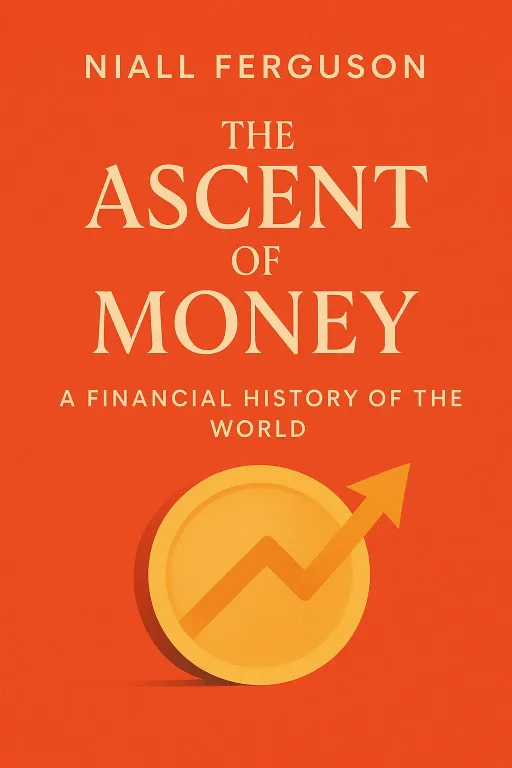
Nova: Both, Atlas, both! And it’s a fascinating journey that we’re going on today, drawing insights from two incredibly powerful books. First, we have Niall Ferguson’s acclaimed work,, a book so insightful it was even adapted into a major television series. Ferguson, a renowned economic historian, has this knack for sweeping narratives that make complex financial history feel like an epic drama, revealing how finance has always been at the heart of human progress and global power.
Atlas: And that’s a perfect pairing for the second book, I imagine? Because our listeners, the strategists and builders out there, aren't just looking at the past; they're building the future and need a clear playbook.
Nova: Absolutely. The second is by David B. Yoffie and Michael A. Cusumano. These are two respected academics and consultants who’ve spent decades studying the titans of the tech world. They distill the strategic genius of figures like Bill Gates and Andy Grove into actionable principles for building and maintaining competitive advantage in rapidly evolving industries. So, we’re essentially asking: how do these deep historical currents of finance, as revealed by Ferguson, intersect with the cutting-edge strategic plays of tech giants, as decoded by Yoffie and Cusumano? The goal is to offer crucial insights for innovation and risk in today's financial technology landscape.
Atlas: That’s a powerful question. Because for anyone trying to build momentum in their career, accelerate growth, or achieve tech-driven success, understanding both the ebb and flow of financial history the strategic mindset of disruptors is gold. It feels like a way to gain clarity and focus amidst all the noise. I’m curious, where do we start unearthing these forgotten disruptions?
Nova: We start with the idea that finance isn't just about money. For Ferguson, it’s a fundamental force, almost a "fifth element" that has shaped human progress, global power, and even our very societies. He traces its evolution from ancient forms of debt to modern markets, showing how it’s always been about trust, information, and managing risk. And for me, one of the most compelling examples he brings to life is the story of the Rothschild family. It’s a narrative that feels almost ripped from a modern FinTech thriller.
The Enduring Echoes of Financial History
SECTION
Atlas: Oh, the Rothschilds. The name itself conjures images of immense wealth and influence. But what’s the specific lesson here for someone navigating today’s FinTech world, where every startup promises to be the next big thing, and "disruption" is the buzzword of the day? How does their history translate into impact now?
Nova: The Rothschilds were, in essence, the original FinTech innovators and master strategists. During the tumultuous Napoleonic Wars, Nathan Rothschild, operating from London, built an unparalleled network of couriers across Europe – primarily his own brothers. They used carrier pigeons, fast ships, and meticulously organized routes to get information about battles and political shifts days, sometimes, before government officials even caught wind of them. This was a private intelligence network that outpaced national communication systems.
Atlas: So, they had an information advantage. Like a pre-internet, pre-satellite, real-time data feed, but powered by familial trust and a relentless pursuit of speed. That’s incredible. It’s almost like they built an early version of a secure, distributed ledger of information.
Nova: Exactly! Imagine the market advantage. When Napoleon was decisively defeated at Waterloo, Nathan Rothschild knew about it a full day before the official dispatch reached the British government. While others were still trading on rumors, or even the false report of a French victory, Nathan subtly began selling British government bonds on the London Stock Exchange. The market, seeing the highly informed Rothschilds selling, panicked, assuming he had insider knowledge of a British defeat. Bond prices plummeted. Then, at the absolute bottom, when the market was in a frenzy of fear, he bought up a massive amount of bonds for pennies on the pound.
Atlas: That’s pure arbitrage, driven by superior information and a deep understanding of market psychology. It’s like high-frequency trading and algorithmic manipulation, but with pigeons and human intuition! And the outcome wasn't just profit, I assume?
Nova: The outcome was immense profit, of course, but more profoundly, it cemented the Rothschilds' reputation as financial titans. They could then leverage this trust and capital to underwrite sovereign debt for entire nations, essentially becoming the central bankers of Europe, financing wars and profiting from peace. Ferguson highlights how their innovative use of networks, rapid information flow, cross-border capital movement, and, crucially, their ability to project an image of infallible knowledge, gave them unprecedented global power. It wasn't just about the money; it was about the system they built, a private financial network that could outmaneuver entire governments and shape geopolitical events.
Atlas: That makes me wonder, when we talk about "historical financial cycles," are we talking about specific events like this, or more like underlying human tendencies that repeat? Because for our listeners who are trying to assess risk in a volatile market, or build a resilient FinTech product, understanding the is more valuable than just the anecdote. How does this help us navigate today?
Nova: That’s a brilliant distinction, Atlas. Ferguson argues it’s both. The specific events—like the Dutch tulip mania or the South Sea Bubble—are dramatic illustrations, but they underscore perennial human behaviors: greed, fear, the herd mentality, the allure of easy money, and the power of information asymmetry. The Rothschild story isn't just about one family; it's about the enduring power of networks, information flow, and trust in finance. Modern FinTech, with its focus on decentralized finance, instant payments, and data analytics, is essentially trying to create new networks, new forms of trust, and new ways to leverage information. Many of the challenges, like regulatory arbitrage, managing systemic risk, or even the battle for data privacy, echo those ancient patterns. The "new" tech often just amplifies the "old" human dynamics.
Atlas: So, the core lesson isn't just that history repeats, but that the fundamental drivers of financial success and failure—trust, information, networks, and risk—remain constant, even as the technology evolves. That’s a powerful lens for looking at today’s innovations and for a builder to understand the foundational elements of any financial system. It gives you clarity on what truly matters.
Strategic Playbook for Disruption
SECTION
Nova: Precisely. If Ferguson shows us the deep financial currents and the historical playing field, then by Yoffie and Cusumano gives us the playbook for winning on it, particularly in rapidly evolving industries. They’ve distilled the wisdom of legendary tech leaders into five core rules that apply whether you're a startup or a global corporation.
Atlas: Five rules, huh? In the chaotic world of tech and FinTech, where disruption is the norm and speed is everything, it often feels like there are no rules, just constant adaptation. For someone trying to accelerate their career or build a successful tech-driven enterprise, what's the most counter-intuitive or impactful rule they've uncovered? One that truly drives progress?
Nova: One of the most impactful rules is "Platforms, Not Just Products," but perhaps even more fundamental, and directly tied to the idea of navigating constant change, is what Yoffie and Cusumano observed about adaptability. They emphasize that strategic thinking isn't a one-time event; it’s a continuous, often brutal process of evolution. A classic example is Andy Grove at Intel, a story that epitomizes the "adapt or die" principle.
Atlas: Andy Grove, the legendary CEO of Intel. His name is synonymous with silicon chips and a relentless drive for performance. What did he do that encapsulates this "adapt or die" principle so profoundly, especially in a context that resonates with high-stakes tech environments?
Nova: In the mid-1980s, Intel was primarily known as the world leader in memory chips. They were a dominant player, but Japanese competitors were beginning to flood the market with cheaper, high-quality memory. Intel was facing immense pressure, losing money, and struggling to compete. Grove and his co-founder Gordon Moore were in a tough spot, clinging to a business that was rapidly becoming commoditized. One day, in a moment of sheer desperation and strategic clarity, Grove asked Moore, "If we got kicked out and the board brought in a new CEO, what do you think he would do?" Moore immediately replied, without hesitation, "He would get us out of memory." Grove then said, "Why shouldn't you and I walk out the door, then come back in and do it ourselves?"
Atlas: Wow. That’s a visceral way to force a strategic pivot. It’s like a mental reset button, forcing themselves to view the situation with fresh, unattached eyes. It speaks to a deep level of mastery and courage. So, what happened next?
Nova: They did it. They made the incredibly difficult decision to exit the memory business entirely, which had been their bread and butter and identity for years, and focus all their resources on microprocessors – a nascent but promising market. This was a massive, high-stakes gamble. It meant laying off thousands, retooling factories, and completely redefining their company's core mission. But Grove, known for his "only the paranoid survive" mantra, understood that clinging to a dying business was infinitely riskier than embracing a painful but necessary change. It was a strategic move driven by foresight, data, and an uncompromising commitment to where the market was, not where it had been.
Atlas: That’s a huge lesson for any builder or strategist in FinTech. It’s not just about identifying the next big wave, but having the courage and foresight to abandon your current ship, even if it's still floating, when you see a tsunami of change coming. But in FinTech, where everything moves at warp speed and regulations are constantly shifting, can these "rules" really apply? Isn't it just about being first to market and iterating quickly, almost blindly?
Nova: That’s a crucial challenge, Atlas, and it’s where Yoffie and Cusumano’s insights truly shine. They would argue that speed and iteration are tactical, but strategy is about the and the when the landscape shifts. Grove’s decision wasn’t about being first to market with a new memory chip; it was about abandoning a market entirely to dominate a nascent one. In FinTech, this means not just building a better payment app, but asking: "Is the entire model of payments shifting? What's the next 'microprocessor' for finance?" It's about seeing beyond the current product cycle and understanding the underlying technological and market shifts. Building resilient platforms and leveraging ecosystems, for example, is far more strategically sound and provides a competitive advantage than just building a standalone product, no matter how innovative.
Atlas: So, it's about anticipating the "next big thing" and being ruthless enough to adapt, even if it means disrupting your own success. That’s a tough pill to swallow for many established players, and a huge opportunity for nimble startups and visionary leaders. It's about proactive evolution, not reactive survival.
Synthesis & Takeaways
SECTION
Nova: Precisely. So, we have Ferguson showing us the deep financial currents – the ancient patterns of trust, risk, and information that underpin all markets, reminding us that finance is fundamentally a human endeavor. And Yoffie and Cusumano giving us the strategic sails and the navigational chart – the principles for adapting and dominating in turbulent, tech-driven waters, emphasizing bold pivots and ecosystem building. The deep question we started with was: how do these historical financial cycles and the strategic principles of tech leaders inform our current approach to innovation and risk in the financial technology landscape?
Atlas: For a strategist or builder focused on growth and impact, and aiming for mastery, the answer seems to be that you need to be both a historian and a futurist. You need to understand the fundamental, unchanging human and systemic elements of finance, while also possessing the strategic agility to pivot and build platforms in a rapidly evolving tech landscape. What’s the one overarching takeaway for our listeners striving for career acceleration and tech-driven success in this space?
Nova: It’s this: the ultimate competitive advantage in FinTech, or any disruptive industry, isn't just about having the latest tech or the biggest budget. It’s about cultivating a profound dual vision. On one hand, understanding that the "new" problems and opportunities in FinTech often have deep historical roots—that human nature, greed, fear, and the search for trust and efficient information flow remain constant. On the other hand, it’s about having the strategic courage, like Andy Grove, to continuously question your core assumptions, to pivot dramatically when necessary, and to build resilient ecosystems rather than just standalone products. It’s about leveraging timeless financial principles with cutting-edge strategic execution, always with an eye on the future but grounded in the past. For anyone looking to accelerate their career or build a successful tech venture, this blend of historical wisdom and strategic foresight is truly invaluable. It provides the clarity and impact needed to truly navigate and build.
Atlas: So, it's about seeing the patterns in the past to anticipate the disruptions of the future, and then having the strategic blueprint to act decisively. That’s a powerful way to achieve mastery and impact in any field, but especially in FinTech. What historical financial pattern or tech strategy are you seeing play out in your world right now, dear listener? We'd love to hear your thoughts.
Nova: This is Aibrary. Congratulations on your growth!