Unlocking Your Inner Genius: The Path to Creative Flow
Golden Hook & Introduction
SECTION
Nova: You know, Atlas, I was reading this wild stat the other day: studies suggest that the average person spends about 47% of their waking hours paying attention to what they’re doing. Almost half our lives, mentally checked out!
Atlas: Whoa. That’s actually really jarring. Almost half? So, basically, we’re sleepwalking through our own existence for a huge chunk of the day? That sounds rough.
Nova: Exactly! And it highlights a universal human longing: how do we actually with our lives, truly, deeply, and creatively? How do we stop being passengers and start being the artists of our own experience?
Atlas: That makes me wonder, then, what’s the secret sauce? Is there a manual for that kind of full immersion? Because I imagine a lot of our listeners feel that pull, that desire to be more present, more effective, more….
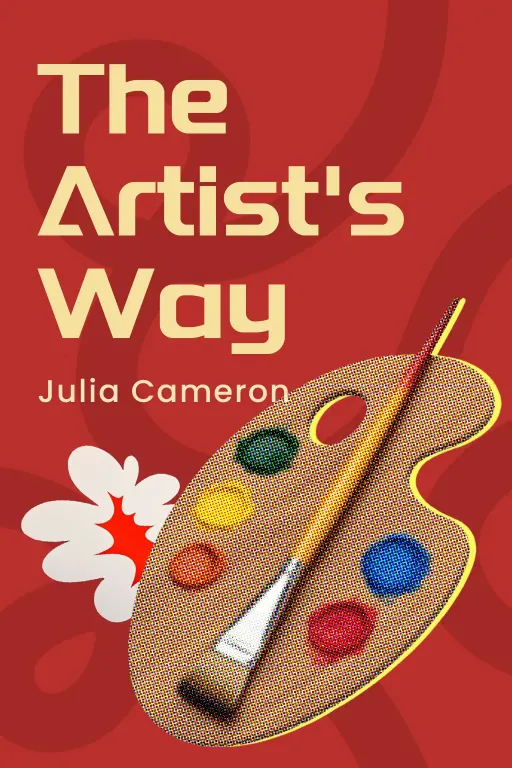
Nova: Well, today we’re diving into two absolute titans in this space, books that offer profound insights into precisely that: by Julia Cameron, and by Mihaly Csikszentmihalyi. Cameron’s book, launched in the early 90s, became a cultural phenomenon, helping millions unblock their creative potential, not just artists, but anyone feeling stuck. Csikszentmihalyi's work, on the other hand, is the culmination of decades of rigorous psychological research into what makes life worth living. He coined the term 'flow' after interviewing hundreds of people across diverse fields, from rock climbers to surgeons, to understand those moments when they felt most alive and effective.
Atlas: That’s a great pairing. Cameron, with her practical, almost spiritual guide, and Csikzentmihalyi, with the scientific underpinning of that peak experience. It's like the "how-to" meets the "why." So, where do we even begin with such rich material?
The Creative Crucible: Forging Your Best Self
SECTION
Nova: We begin where both books converge: the idea that unlocking your inner genius isn't some mystical, unachievable state, but a deliberate process. Cameron, with her "Artist's Way" program, argues that everyone is inherently creative, but societal conditioning and past hurts often block that natural flow. She offers very specific, almost ritualistic practices.
Atlas: Okay, so you’re saying it’s not about waiting for inspiration, but actively it? That’s a bit out there for some, I think. Many people assume creativity is this lightning bolt from the heavens, not a daily chore.
Nova: Exactly! And that’s where her 'Morning Pages' come in. It’s disarmingly simple, yet profoundly effective: three pages of longhand, stream-of-consciousness writing, first thing in the morning. No judgment, no editing, just getting whatever is in your head onto the paper. It's not meant to be good writing; it's meant to be writing.
Atlas: Three pages, every morning? That sounds like a lot of internal monologue to unpack before coffee. What’s the actual mechanism there? How does just writing uncensored thoughts magically unblock creativity?
Nova: It's a mental decluttering. Think of your mind as a busy highway. Morning Pages are like clearing out all the mental traffic—the worries, the to-do lists, the anxieties—so the creative ideas, the deeper insights, can actually find space to emerge. It silences the inner critic and builds a muscle of self-expression without self-censorship. People who do it consistently report feeling lighter, more focused, and seeing solutions to problems they didn't even realize they had.
Atlas: I can see how that would be powerful. It’s almost like a daily mental detox. But how does that connect to Csikszentmihalyi’s concept of 'flow'? Because ‘flow’ sounds like this intense, almost effortless state, not a deliberate, sometimes messy, writing exercise.
Nova: That’s the beautiful bridge! Morning Pages are the for creativity, and flow is the it helps lead you towards. Csikszentmihalyi defines flow as that state where you’re so completely absorbed in an activity that nothing else seems to matter. Time flies, self-consciousness disappears, and you feel a sense of energized focus and enjoyment. It’s where your skills are perfectly matched to the challenge at hand.
Atlas: So, it's that feeling when you're completely lost in a task, whether it's painting, coding, playing music, or even just having a really engaging conversation? Like the world just melts away?
Nova: Precisely. He found that people describe this state as intrinsically rewarding. The activity itself becomes the motivation. It’s not about the outcome, but the sheer joy of the process. And what Cameron's Morning Pages do, in part, is help clear the mental clutter that you from entering that flow state. If your mind is buzzing with anxieties, you can't fully immerse yourself in anything.
Atlas: So, Morning Pages are like the warm-up act, preparing the stage for flow to make its grand entrance. That makes a lot of sense. It’s the intentional engagement that both books champion, just from slightly different angles.
Cultivating Your Creative Ecosystem
SECTION
Nova: And it's not just about Morning Pages. Cameron also advocates for "Artist Dates." These are dedicated blocks of time—say, two hours a week—spent alone, doing something that nurtures your inner artist. It could be visiting a museum, going to a quirky bookstore, taking a walk in nature, or even just watching a visually stimulating film. The key is solitude and intentional exposure to beauty or novelty.
Atlas: An Artist Date. I love that term. It sounds so much more appealing than "get inspired." But again, what’s the deeper purpose? Is it just about having fun? Because for someone in a high-pressure environment, carving out that much time might feel like a luxury they can't afford.
Nova: It’s far from a luxury; it’s a necessity for creative resilience. Cameron argues that these dates replenish your creative well. They feed your subconscious with new ideas, observations, and sensory input. It’s like filling up your internal pantry so you have ingredients for your creative work. Without this regular input, your creative output eventually becomes stale or forced. It’s about active self-nurturing, which is often neglected in our busy lives.
Atlas: So, it’s about creating an for creativity, not just forcing it. And that brings us back to flow. If you’re constantly taking in new stimuli, constantly clearing your mental space, does that make it easier to flow?
Nova: Absolutely. Csikszentmihalyi identified several conditions conducive to flow, and many of them align with what Cameron teaches. For example, a clear set of goals, immediate feedback, and a balance between challenge and skill. If you're constantly feeding your mind with new information and experiences through Artist Dates, you're expanding your skill set and your understanding of the world, making you more capable of tackling complex challenges. And if you're regularly clearing mental noise with Morning Pages, you have the focus to set clear goals and process feedback.
Atlas: I get it. It’s about building the internal and external conditions. So, the tiny step for our listeners would be to dedicate 15 minutes each morning to those Morning Pages, without judgment. Just write. And the deeper question is, what activities currently bring them a sense of flow, and how can they intentionally integrate more of them?
Nova: Exactly. Because both books, ultimately, guide you towards a more fulfilling existence by intentionally engaging with your innate creative drives and finding joy in focused effort. They remind us that creativity isn't just for artists; it's for anyone who wants to live a richer, more engaged life.
Synthesis & Takeaways
SECTION
Atlas: This has been incredibly insightful, Nova. It's fascinating how these two seemingly different approaches—the spiritual, almost therapeutic 'Artist's Way' and the scientific, psychological 'Flow'—converge on the same fundamental truth: that our best selves emerge when we actively cultivate our inner worlds.
Nova: And the profound insight here is that you don't need a grand revelation or a sudden burst of talent. It's the consistent, small acts of self-care and intentional engagement—like those Morning Pages or Artist Dates—that build the foundation for those peak experiences of flow. It’s about treating your creativity as a muscle, not a gift.
Atlas: That’s actually really inspiring. It means everyone has the potential to unlock that inner genius, it just requires showing up for yourself, consistently. It's not about waiting for permission, it's about giving yourself the tools.
Nova: Precisely. And it's a testament to the idea that a life well-lived is often a life deeply engaged, whether that’s in a challenging project, a creative pursuit, or simply observing the world around you with fresh eyes.
Atlas: It really makes you rethink how you spend those 47% of your waking hours. This is Aibrary. Congratulations on your growth!