The Creative Flow State: How to Achieve It Without Force
Golden Hook & Introduction
SECTION
Nova: Alright, Atlas, quick game. Five-word review for today's topic: achieving creative flow. What do you got?
Atlas: Effortless focus, no burnout. Pure magic.
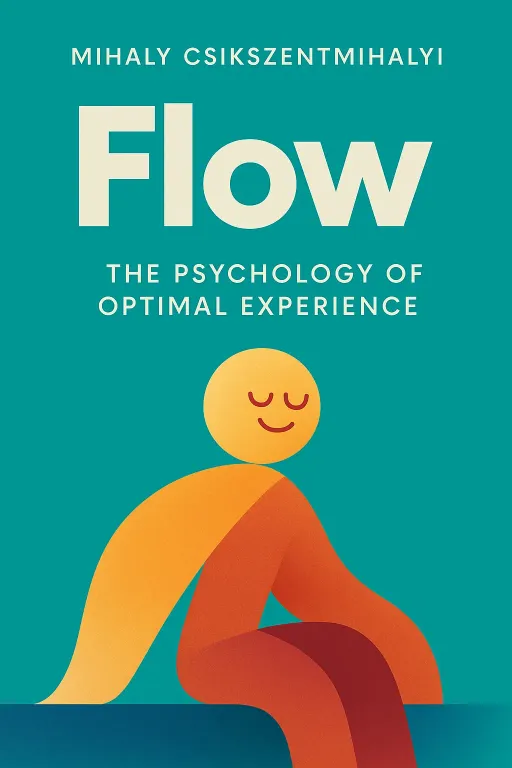
Nova: Perfect. Because that's what we're dissecting today, pulling insights from Mihaly Csikszentmihalyi's groundbreaking book "Flow," which essentially kickstarted the scientific exploration of optimal human experience.
Atlas: Oh, I see. So this isn't just some vague, inspirational idea; it's got a scientific backbone. That's a great way to put it.
Nova: Exactly. And for visual storytellers, for anyone who pours their soul into creation, finding that sweet spot is everything. It's about letting creativity flow you, not wrestling it you.
Understanding the Flow State: Challenge Meets Skill
SECTION
Nova: So, let's break down this 'flow state.' Csikszentmihalyi's big idea is that flow happens when there's a perfect balance: the challenge of the task meets your skill level.
Atlas: Hold on. So, it's not about being overwhelmed by something too hard, or bored by something too easy? It’s that exact sweet spot in the middle?
Nova: Precisely. Think of a master painter. They're not just idly brushing; they're tackling a complex vision, but their skills are so refined, the brush strokes become an extension of their thought. Time melts away, self-consciousness vanishes. They're entirely absorbed.
Atlas: Right, like a dancer in perfect synchronicity with the music, or a composer lost in their symphony. For a visual storyteller, I imagine this feels like when the narrative just on the screen, almost writing itself.
Nova: Exactly. It's that feeling of effortless focus. Imagine a photographer, composing a shot in a bustling market. The chaos fades, their eye hones in on the light, the expression, the perfect moment. Their technical skills are so ingrained, they're not thinking about camera settings; they're the story unfold through the lens. The challenge of capturing that fleeting beauty perfectly matches their honed skill. The result isn't just a picture; it's a piece of their soul.
Atlas: Wow. That gives me chills. So, it's not just about producing great work, it's about the of producing it. The process becomes intrinsically rewarding. But how often does that actually happen? And how do we even begin to get there?
Cultivating Flow: Rituals and Routines for Creative Energy
SECTION
Nova: That's a fantastic question, and it leads us directly to our second core idea: how do we this state? Because waiting for inspiration is like waiting for lightning to strike twice in the same spot. It might happen, but it’s not a strategy.
Atlas: Okay, so we can't just 'force' flow. What's the secret then?
Nova: This is where Julia Cameron's "The Artist's Way" comes in, offering a beautiful counterpoint to Csikszentmihalyi's theory. She emphasizes daily practices, simple rituals like 'morning pages'—three pages of longhand, stream-of-consciousness writing first thing in the morning—or 'artist's dates,' which are solo excursions to do something you find inspiring.
Atlas: Oh, I've heard of morning pages! So it's not about writing anything profound, just dumping your thoughts on paper to clear the mental decks for the day?
Nova: Precisely. It's a mental decluttering exercise. Cameron argues these rituals help clear out the inner critic, the anxieties, the to-do lists, making for flow to emerge naturally. It's about respecting your creative energy, not just demanding output from it.
Atlas: That makes sense. For a visual storyteller, that could be a morning sketch, or even just 15 minutes of mindful observation before diving into a project. The goal is to quiet the noise so the intuitive eye, as our user profile puts it, can actually.
Nova: Exactly! Think of it like this: a musician doesn't just pick up their instrument and expect a masterpiece. They practice scales, they warm up, they develop routines that build muscle memory and mental clarity. Those routines aren't the performance, but they make the performance possible. My take is that cultivating a routine that your creative energy is infinitely more effective than just waiting for that 'aha!' moment. It's about building a fertile ground for flow.
Synthesis & Takeaways
SECTION
Atlas: So, if I'm getting this right, flow is that magical sweet spot where challenge meets skill, where time disappears and creativity feels effortless. And we don't wait for it; we create the conditions for it through consistent, mindful practices.
Nova: You've absolutely nailed it. It's about understanding the mechanics of optimal experience, and then designing your life, your creative routine, to invite it in. It’s about moving from a place of struggle to a place of effortless creation. For anyone driven to create and connect, for those who truly want their unique vision to lead, this isn't just a nice-to-have; it’s a necessity. It’s the difference between burning out and truly glowing.
Atlas: That's actually really inspiring. So, for our visual storytellers out there, what’s the tiny step they can take tomorrow to start cultivating this?
Nova: Tomorrow, dedicate just 15 minutes to a creative task, whatever that looks like for you. Don't focus on the outcome; focus purely on the process. Notice how your mind engages, how your body feels, how the world around you might just… fade away. That's your first step into flow.
Atlas: I love that. Focus on the journey, not just the destination. That’s a powerful shift.
Nova: Absolutely. And that subtle shift can redefine your entire creative life.
Nova: This is Aibrary. Congratulations on your growth!