The Creative Flow: Reclaiming Your Joy in Making Art
Golden Hook & Introduction
SECTION
Nova: Atlas, five words to describe your last creative attempt, good or bad, go!
Atlas: Oh man, overthinking, messy, frustrating, then... nothing.
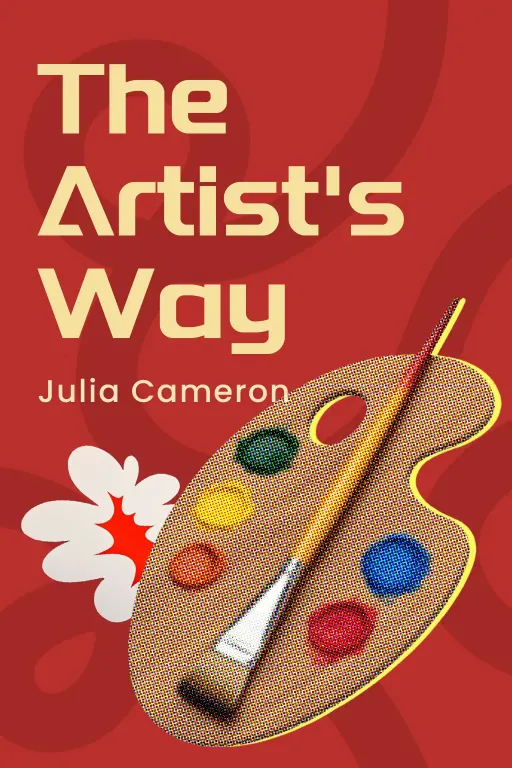
Nova: Right? That "then nothing" part is the killer. It's that moment where the pressure to perform just completely eclipses the joy of making. And that, my friend, is exactly what we're wrestling with today, inspired by "The Creative Flow: Reclaiming Your Joy in Making Art." We’ll be drawing heavily from the insights of Julia Cameron, whose seminal work, "The Artist's Way," became a phenomenon after she personally found her way out of creative blocks, ultimately inspiring millions to unlock their own artistic potential.
Atlas: I know that feeling of being stuck all too well. Like you have something in you, but it's just... locked away. It’s like the harder you try to force it open, the more stubborn it becomes.
Nova: Exactly! It’s this paradox where our desire to create, when coupled with the pressure to make it or, actually stifles the very art we wish to bring into the world. It makes us forget the simple pleasure of making things.
The Pressure Cooker of Performance vs. Joyful Creation
SECTION
Atlas: But wait, isn't some pressure good? I mean, doesn't a deadline make you focus? Like, if I didn't have to deliver this podcast script, I might just be... daydreaming.
Nova: That’s a great question, and it highlights a common misconception. There’s a crucial difference between a healthy challenge or a clear goal, and the kind of crippling pressure that turns creativity into a performance. Cameron talks about clearing mental clutter, and Gilbert, in "Big Magic," actively challenges this whole idea of the tortured artist.
Atlas: Oh, I've heard of the tortured artist trope. The idea that you have to suffer for your art, right? That creativity comes from a place of angst.
Nova: Precisely. Gilbert argues against that, suggesting a more playful, less burdened approach. Think of a child drawing. They’re completely absorbed, joyful, not thinking about whether it’s "good" enough for a gallery or if it will win awards. They’re just.
Atlas: And then you become an adult, and suddenly every creative act has to have a purpose, an outcome, a potential for external validation. It’s like the joy gets zapped out of it. I can totally relate to that. The moment I start thinking about what others will think, my hands freeze.
Nova: It’s a classic trap. This striving for perfection or external validation often stifles the very art we wish to create. It's the difference between creating because you to express something, and creating because you to impress someone. That second one is a joy killer.
Atlas: So you're saying true creativity flows not from striving for perfection, but from an open, unburdened spirit? That’s kind of counter-intuitive in a world that rewards hustle and output.
Nova: It absolutely is. And that’s why reclaiming that unburdened spirit is the secret ingredient. It’s about remembering that the act of creation itself is the reward, not just the finished product.
Practical Pathways to Reclaim Creative Flow
SECTION
Nova: So, if pressure is the problem, what's the antidote? This brings us to practical pathways to reclaim that flow. And one of the most famous tools from "The Artist's Way" is something called "morning pages."
Atlas: Morning pages? Oh, I like that. What exactly are they? Sounds a bit... fluffy. What’s the real science or psychology behind just writing whatever comes to mind first thing in the morning?
Nova: It's deceptively simple, and incredibly powerful. Every morning, before you do anything else, you write three pages of longhand, stream-of-consciousness. No editing, no rereading, no judgment. It's not about quality, it’s about quantity and consistency.
Atlas: So you just... dump your brain onto the page?
Nova: Exactly! It's a daily brain dump. It clears out the mental clutter, the worries, the to-do lists, the anxieties. Think of it like clearing debris from a river. Once the debris is gone, the water flows freely. It’s a direct path to an unburdened spirit, because you're getting all those nagging thoughts out of your head and onto paper.
Atlas: That makes sense. It’s like a mental detox, making space for actual creative thought instead of just rehashing worries. What else can we do?
Nova: Another powerful practice Cameron advocates for are "artist dates." These are solo excursions, typically for an hour or two each week, to simply observe and absorb something beautiful, without any agenda.
Atlas: An artist date? So, just going to a museum alone, or a walk in the park? How does that actually help you create more, especially when you're already swamped and feel like you don't have time to create at all?
Nova: It's not about something productive; it's about. It’s about refilling your creative well. Imagine walking through a botanical garden, just noticing the colors, the textures, the way light hits a leaf. Or visiting an antique shop and letting your imagination wander about the stories behind the objects.
Atlas: Okay, so a walk in nature, observing patterns, listening to sounds… and that later inspires a new melody or a story idea. I can see how that works. It's about nourishing the inner artist, not just forcing output.
Nova: Absolutely. And it ties directly into Elizabeth Gilbert's philosophy from "Big Magic." She famously describes ideas as living entities, floating around, looking for human partners. And our job, as creatives, is to be open and curious, to invite these ideas in, not to wrestle them into submission out of fear or pressure. Gilbert's work, which received widespread acclaim for its accessible and empowering take on creativity, really complements Cameron's structured practices by reframing the entire creative process as a joyful partnership rather than a solitary struggle.
Atlas: That’s a great way to put it. So, these practices are about cultivating curiosity, not fear, and embracing the flow rather than fighting against it. It sounds like a total reframing of what it means to be creative.
Synthesis & Takeaways
SECTION
Nova: It really is. Both Cameron and Gilbert, in their own ways, point to the unburdened spirit as the wellspring of true creativity. It's less about the "art" and more about the "artist," and the state of mind they bring to the making.
Atlas: So it’s less about the 'art' and more about the 'artist'? What’s the one core shift listeners can make right now if they feel completely creatively drained?
Nova: The core shift is from a 'producer' mindset to a 'receiver' mindset. Instead of forcing ideas or judging every stroke, it's about being open, curious, and playful – like that child drawing. It's about rediscovering the capacity for wonder that we often lose as adults.
Atlas: That’s actually really inspiring. So, for someone listening right now, who feels completely creatively drained, what’s the absolute first, smallest step they can take this week to get a tiny spark back?
Nova: I would say, carve out just 15 minutes this week for an "artist date." A solo excursion to simply observe and absorb something beautiful, without any agenda. Don't go looking for inspiration; go looking for wonder. It’s not about what you from it, but the simple act of beauty.
Atlas: That’s such an accessible step. Just 15 minutes to reconnect with that unburdened, curious part of yourself. I can definitely do that.
Nova: And that small act of reclaiming joy can be the beginning of a magnificent creative flow, transforming your relationship with your art from a chore to a cherished conversation.
Nova: This is Aibrary. Congratulations on your growth!