The Creative Code: Unlocking Artistic Flow and Innovation
Golden Hook & Introduction
SECTION
Nova: What if everything you've been told about creativity is wrong? What if it's not some ethereal spark reserved for a chosen few, but a skill, a muscle, waiting to be trained?
Atlas: Really? Because I think for a lot of our listeners, myself included sometimes, creativity feels like this elusive, almost mystical force that just randomly decides to visit some people and completely ignore others. Are you saying that's not the case?
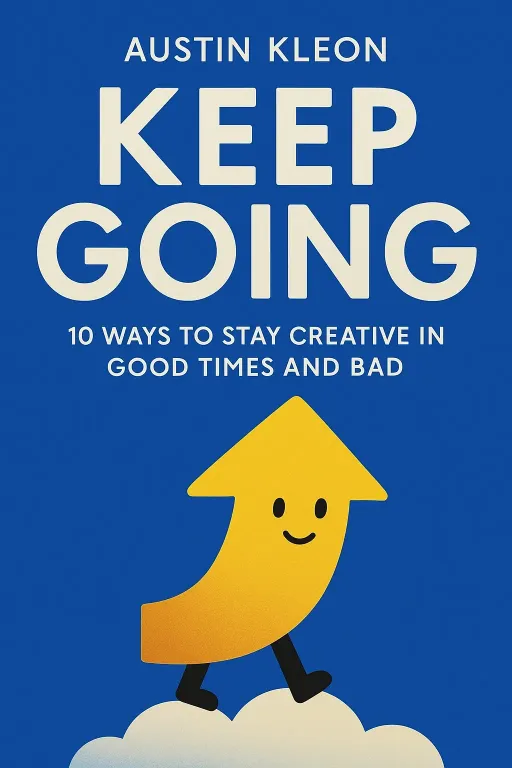
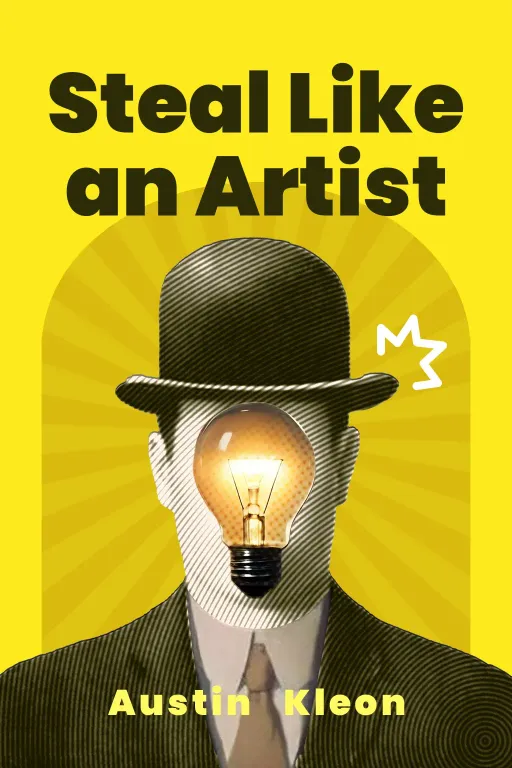
Nova: Absolutely not the case, Atlas. That's exactly the "blind spot" we're talking about. Today, we're diving into that profound realization through the lens of "The Creative Code: Unlocking Artistic Flow and Innovation." We’re pulling insights from two incredibly influential books: Austin Kleon's "Steal Like an Artist" and Julia Cameron's "The Artist's Way."
Atlas: Oh, I know Kleon! He's that writer and artist who's really big on sharing his process online, making creativity feel incredibly accessible.
Nova: Exactly. His approach is so refreshing because it strips away all the pretense. And then you have Julia Cameron, whose "Artist's Way" has been a foundational text in creative recovery for over three decades, guiding millions through a more spiritual but intensely practical path to unblocking their creative potential. The pairing might seem unconventional, but both fundamentally argue the same thing: creativity is a process, not a gift.
Atlas: That makes me wonder, then. If it’s not a gift, why do so many of us feel like we just don’t have it? Why does it feel so mysterious?
Creativity as Cultivated Skill: Debunking the Myth
SECTION
Nova: That's the core of the myth, isn't it? We look at someone like Leonardo da Vinci and think, "Oh, he was just born a genius." But if you actually dig into his process, it's a masterclass in diligent cultivation.
Atlas: Right, like the Mona Lisa just sprang fully formed from his mind.
Nova: Precisely. We forget the hundreds of anatomical drawings, the mechanical inventions, the relentless observation of nature, the countless notebooks filled with sketches and notes. He wasn't just waiting for inspiration to strike; he was actively, systematically gathering, experimenting, and iterating. His "genius" was the culmination of an incredibly disciplined, almost scientific, creative process.
Atlas: So, you're saying even the "greatest minds" weren't just passively brilliant? They were actively things to foster their creativity? That's actually really inspiring. For someone like me, who thrives on systems and analytical rigor, the idea of "creativity" often feels too amorphous, too... unstructured. How do I, or any of our listeners in equally structured environments, reconcile that with Da Vinci's seemingly messy process?
Nova: That's a brilliant question, Atlas. And it's where the myth truly unravels. Da Vinci's process systematic, just not in the way we traditionally define it. His notebooks weren't chaos; they were a meticulously organized external brain, a living database of observations, questions, and experiments. He was connecting dots from anatomy to engineering to painting. It was an early form of interdisciplinary thinking, a structured way to explore the unknown.
Atlas: So, the "mess" was actually a highly personalized, dynamic system for generating and refining ideas. It wasn't about waiting for a muse; it was about building a framework for the muse to show up, consistently.
Nova: Exactly! And that's the profound shift in perspective these books offer. They argue that if you treat creativity like a skill, like learning a language or playing an instrument, you can develop it. You practice, you observe, you learn from others, and you make connections. It's less about a sudden flash of insight and more about consistent, often unglamorous, work.
Atlas: That gives me chills. It fundamentally changes the barrier to entry. It means creativity isn't exclusive; it's a choice and a practice.
Practical Pathways to Creative Flow: Stealing, Remixing, and Daily Nurturing
SECTION
Atlas: So, if it's a skill, what are the actual steps? How do we, mere mortals not named Da Vinci, start to train this creative muscle?
Nova: That's where our two brilliant authors offer distinct, yet complementary, pathways. Let's start with Austin Kleon and his bold idea: "Steal Like an Artist."
Atlas: "Steal like an artist"? That sounds a bit out there. Isn't that just plagiarism with a fancy name? I mean, for someone involved in intellectual property or historical analysis, the idea of "stealing" can be a bit… jarring.
Nova: That's a crucial clarification, and Kleon addresses it head-on. He's not advocating for plagiarism; he's talking about influence, observation, and remixing. Think of it like this: no creative work exists in a vacuum. Every artist, every innovator, stands on the shoulders of giants. A musician might "steal" a chord progression from a jazz classic, blend it with a beat from hip-hop, and add lyrics inspired by a personal experience, creating something entirely new. It's about taking existing ideas, understanding them deeply, and then transforming them through your unique perspective.
Atlas: So, it's more like informed appropriation and transformation rather than outright copying. It's about recognizing patterns, dissecting what works, and then reassembling those elements into an original mosaic. I guess that makes sense; even historians "steal" narratives and frameworks from previous scholars, but they re-interpret them with new evidence and perspectives to create new understanding.
Nova: Precisely. It's about seeing the world as a vast library of ideas, ready to be sampled, remixed, and re-imagined. And then, on the other side of the spectrum, you have Julia Cameron's "The Artist's Way," which focuses on internal nurturing. Her two most famous tools are "morning pages" and "artist dates."
Atlas: Morning pages and artist dates? To an analytical mind, those sound incredibly "soft," almost like self-indulgent rituals. What's the tangible benefit for someone who needs clear, measurable outcomes? How does scribbling in a notebook or going for a walk actually contribute to innovation or creative output?
Nova: I totally know that feeling! But the power is profound. Morning pages are three pages of longhand, stream-of-consciousness writing, done first thing in the morning. No editing, no judgment, just getting everything out. It's a mental decluttering, a way to clear the noise and unblock your inner critic before your creative work even begins. Neurologically, it can help quiet the prefrontal cortex, which is often responsible for self-censorship, allowing for freer association later in the day.
Atlas: So, it's like a daily brain dump, a mental reset button to clear the cache before you start the day's processing. That’s actually a brilliant way to frame it. And artist dates?
Nova: Artist dates are dedicated, playful excursions, just for you and your inner artist. It could be visiting a museum, going to a hardware store, taking a walk in nature, or even just sitting at a coffee shop and people-watching. The key is that it's a solo, non-productive activity designed to fill your creative well, to expose you to new stimuli, to spark curiosity without the pressure of an immediate outcome.
Atlas: That makes me wonder, how would someone in a high-pressure, analytical role, who might feel guilty about "non-productive" time, justify an artist date?
Nova: It's about reframing it as essential maintenance, not a luxury. Think of it as preventative care for your intellectual and creative engine. Just as a complex system needs regular diagnostics and calibration, your creative mind needs input and space to synthesize. It’s an investment in sustainable innovation, not a distraction. Kleon gives us permission to look outwards and build new things from existing ideas, while Cameron reminds us to look inwards, to clear our own channels and replenish our creative energy. Both are vital.
Synthesis & Takeaways
SECTION
Nova: So, what emerges from these two seemingly different approaches is a powerful, unified message: creativity isn't about isolated genius. It's about consistent practice, keen observation, and fearlessly drawing connections from the world around us, both externally through remixing and internally through nurturing.
Atlas: That’s a powerful synthesis. It transforms creativity from a vague aspiration into a concrete, dual-pronged strategy. It's about active engagement with the world's ideas, and active engagement with your own inner landscape.
Nova: Exactly. It's about understanding that every piece of art, every innovative solution, every groundbreaking idea, is a culmination of influences, experiments, and dedicated time spent both collecting and processing.
Atlas: For our listeners who are constantly analyzing complex systems and seeking clarity, what's one concrete step they can take this week to start cultivating this "creative code" in their own highly structured routines?
Nova: I love that challenge. I'd say, pick one. Either try five minutes of "morning pages" each day – just free-writing to clear your head – or take a short "artist date" this week. Go for a walk in a different neighborhood, visit a bookstore, or just sit somewhere new and observe. Actively seek out novel input without an agenda, and see what connections your brain starts to make.
Atlas: That's incredibly actionable. It’s about creating the conditions for creativity, rather than waiting for it. And for someone who values understanding evolution and impact, seeing creativity as a cultivable skill, rather than an innate trait, fundamentally changes how we approach innovation and progress.
Nova: Absolutely. It empowers us all to be creators.
Atlas: This is Aibrary. Congratulations on your growth!