The Blind Spot: Why We Underestimate the Power of Ritual in Creative Life
Golden Hook & Introduction
SECTION
Nova: Forget what you think you know about creative genius. It's not about lightning bolts of inspiration; it's about the quiet, often overlooked, power of the mundane.
Atlas: Whoa, that sounds like heresy in a world obsessed with viral moments and sudden breakthroughs! Are you seriously telling me that the grand, dramatic acts of creation are actually rooted in something… boring?
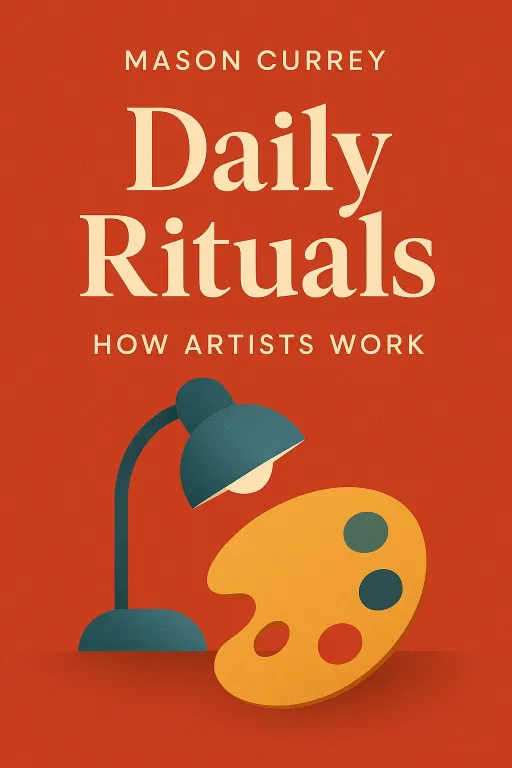
Nova: Not boring, Atlas, but consistent. Deliberate. Almost ritualistic. Today, we're dissecting 'The Blind Spot,' an idea that draws heavily from Mason Currey's fascinating book and Julia Cameron's foundational work,. Currey, a writer himself, didn't just theorize; he spent years meticulously compiling the often quirky, yet always consistent, habits of history's most prolific creators. He discovered that consistency is often the unsung hero behind their brilliance. He's not telling us to create, but the conditions for creation are set.
Atlas: Right. So, we're talking about the conditions, not just the content. That makes me wonder about our societal obsession with the "eureka!" moment. Why do we cling to this romanticized version of creativity, where ideas just spontaneously burst forth, fully formed, like Athena from Zeus's head? It's almost like we're afraid to admit that hard, regular work is involved.
The Myth of Spontaneous Genius: Uncovering the Creative Blind Spot
SECTION
Nova: Exactly! That's the core of the blind spot. We romanticize creativity as a spontaneous burst of genius, ignoring the quiet, consistent work that underpins it. We see the finished masterpiece, the groundbreaking theory, the elegant solution, but we rarely see the thousands of hours, the daily grind, the specific routines that made those breakthroughs possible. Think of it like a beautiful garden. We admire the vibrant flowers, but we forget the daily watering, the weeding, the careful tending that went into cultivating that beauty.
Atlas: That's a great analogy. For someone who thrives on understanding systems and patterns, this romanticized view of creativity feels… inefficient. It promotes a kind of passive waiting for inspiration, rather than actively cultivating it. It’s almost like a philosophical disconnect from how the world actually functions. Is this blind spot just a harmless fantasy, or does it actually hinder our own creative and intellectual pursuits?
Nova: It absolutely hinders us. When we wait for inspiration to strike, we often wait indefinitely. This blind spot leads to creative blocks, procrastination, and burnout because we set unrealistic expectations for ourselves. We feel like failures if we're not constantly experiencing those "lightning bolt" moments. It's a fundamental misunderstanding of how the human mind, and indeed, how nature, truly operates. True creativity isn't about conjuring something from nothing; it's about connecting, refining, and expressing what's already there, and that requires a consistent channel.
Atlas: So, it's not just about what we see, but what that oversight us. For our listeners who are constantly striving for intellectual depth or innovative solutions in their fields, this idea that they might be waiting for a muse that prefers a schedule to a whim is quite profound. It flips the script on what 'being creative' even means. It’s less about a mystical gift and more about a cultivated practice.
Nova: Precisely. It shifts creativity from a passive gift to an active practice. And that practice is where ritual comes in. It's the mechanism by which we build the muscle, clear the path, and make ourselves available for those insights when they arrive. We're not saying inspiration doesn't exist, but that rituals create the fertile ground for inspiration to land and flourish, rather than being a fleeting spark.
Ritual as the Engine of Creativity: From Daily Habits to Profound Practice
SECTION
Atlas: Okay, so if it's not about the lightning bolt, what it about? What's the antidote to this blind spot? How do we actively cultivate that fertile ground you're talking about?
Nova: The antidote, Atlas, is ritual. And not grand, esoteric rituals, but small, repeatable actions. Mason Currey's is a treasure trove of examples. He shows us that minds like Beethoven, who would take long morning walks while composing in his head, or Balzac, who famously drank copious amounts of coffee and wrote through the night, weren't just indulging eccentricities. These were deliberate structures. Beethoven’s walks weren't just exercise; they were a moving meditation, a space for his thoughts to coalesce. Balzac’s coffee wasn't just a stimulant; it was part of a focused, uninterrupted block of creative output. The common thread wasn't the of the ritual, but the and of creating a dedicated space and time for their work.
Atlas: That makes sense. It’s not just discipline then, it’s about establishing a framework. For our more analytically minded listeners, what's the here? How do these small acts, like a morning walk or a specific writing time, actually foster creativity beyond just 'being disciplined'? Is there a common thread here beyond just 'doing something every day'? It feels like there's a deeper psychological or even neurological process at play.
Nova: There absolutely is. It's about reducing decision fatigue, building momentum, and creating a psychological cue. When you have a ritual, you don't have to decide you're going to work, or, or. The ritual makes those decisions for you, freeing up mental energy for the creative task itself. Julia Cameron, in, offers two powerful examples: 'morning pages' and 'artist dates.' Morning pages are simply three pages of longhand, stream-of-consciousness writing, first thing in the morning.
Atlas: Wait, three pages of anything? Just… dumping your brain onto paper? For someone who values structured thought and clarity, that sounds a bit chaotic, almost… counter-productive. How do you explain the efficacy of something like 'morning pages' to someone who needs data and logic? What's the practical, almost scientific, benefit?
Nova: It’s incredibly practical, actually. Morning pages are a form of mental decluttering. They clear out the worries, the to-do lists, the anxieties, the inner critic, before you even start your creative work. It's like sweeping the floor before you begin painting. It reduces resistance. And 'artist dates' are solo excursions to do something fun and inspiring – visit a museum, walk in nature, explore a new neighborhood. These aren't about producing art; they're about refilling your creative well, nurturing your inner artist. For the analyst, think of it as input optimization and system maintenance. You clear the cache, and you feed the algorithm. Nova’s take here is crucial: Embracing deliberate rituals transforms fleeting inspiration into a sustainable, robust creative practice, making breakthroughs far more likely. It’s about building a robust system, not just waiting for a lucky break.
Atlas: I can see that. It's about intentionality. It's about setting up an environment, both internal and external, where creativity is not just allowed to appear, but is actively invited and supported. It’s a profound shift from passively hoping for inspiration to actively cultivating the conditions for it. So, for our listeners who are now convinced, but perhaps feel overwhelmed by the idea of adding "more to their plate," how do they actually integrating this?
Synthesis & Takeaways
SECTION
Nova: The key takeaway is that the blind spot is overcome by understanding that creativity thrives on consistent, deliberate ritual, not just inspiration. Breakthroughs are not random acts of magic; they are the natural outcome of a well-tended creative life. It’s about making your creative process resilient and robust. Think of it this way: a single spark can easily be extinguished, but a well-fueled fire burns steadily and eventually creates its own heat.
Atlas: That’s a very powerful image. It brings us back to the deep question from the main content: What small, repeatable ritual could you integrate into your day to consistently nurture your creative or intellectual pursuits? For our listeners, who are often looking for foundational principles to build upon, what’s one small, almost imperceptible step they can take today to begin this cultivation?
Nova: Start ludicrously small. Maybe it's five minutes of quiet reflection with a cup of tea before the day chaos begins. Maybe it's jotting down three ideas in a notebook before bed. It doesn't have to be perfect; it just has to be consistent. The ritual itself isn't the goal; it's the gateway. It's about showing up for your creative and intellectual self, every single day, even when you don't feel like it. That consistency is where the magic, the real genius, actually resides.
Atlas: Showing up. I love that. It’s a very humanist approach to a very analytical problem. It’s about tending to yourself, and in doing so, tending to your craft. I imagine a lot of our listeners can find their own version of that small, repeatable ritual.
Nova: Absolutely. It’s about making a quiet, steady commitment to your own potential.
Atlas: This is Aibrary.
Nova: Congratulations on your growth!