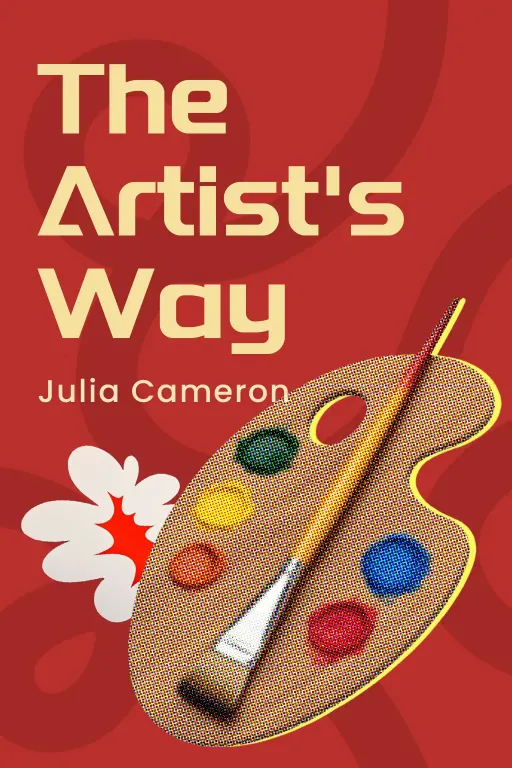
The Artist's Mind: How to Cultivate Radical Creativity and Overcome Blockages.
Golden Hook & Introduction
SECTION
Nova: Forget everything you think you know about creativity. It's not about waiting for a lightning strike of genius. It's not about being born with a special, elusive gift. In fact, chasing pure, untainted 'originality' might just be the fastest, most effective way to kill your creative spirit dead in its tracks. What if true innovation comes from a place you’d least expect?
Atlas: Oh man, Nova, that's a bold claim. Most people hear 'creativity' and immediately think 'talent,' 'inspiration,' or 'a muse.' You're completely upending that. What are we actually talking about today if it's not that?
Nova: Exactly, Atlas! Today, we're diving into "The Artist's Mind: How to Cultivate Radical Creativity and Overcome Blockages." We’re challenging that myth of the 'lone genius' and exploring how creativity is actually a discipline, a muscle you can strengthen. And we're drawing from some incredible minds to do it.
Atlas: Okay, so it’s less about waiting for the heavens to open and more about showing up for the work. I like that. Who are we looking to for guidance on this journey?
Nova: We're going to explore two transformative frameworks. First, from Julia Cameron’s seminal work, "The Artist's Way." Cameron herself was a successful playwright and filmmaker who pivoted to guiding others through creative recovery, noticing a profound need for practical tools beyond just talent. Then, we'll turn to Austin Kleon, a digital artist and author of "Steal Like an Artist," who offers a wonderfully liberating, anti-perfectionist stance that's resonated with millions. Both offer incredibly practical, non-academic approaches to a subject often shrouded in mystique.
Atlas: That's a great setup. So, if creativity is a muscle, and we're starting from a place of feeling completely blocked or out of shape, where do we even begin to strengthen it?
Unblocking the Creative Flow: Nurturing the Inner Artist
SECTION
Nova: That's the perfect question, Atlas, because the very first step, according to Julia Cameron, is often about internal clearing. She calls her approach "creative recovery," and it's less about learning new techniques and more about dismantling the internal blockages – things like self-criticism, fear, and emotional depletion – that prevent our natural creativity from flowing.
Atlas: So, it's like clearing a clogged drain before you can even think about filling the tub?
Nova: Precisely! And her most famous tool for this is something called "Morning Pages." It’s deceptively simple: every morning, before you do anything else, you free-write three pages of whatever comes to mind. No judgment, no editing, no going back. Just stream-of-consciousness.
Atlas: That sounds… surprisingly simple, almost too simple. For someone who thrives on structure and measurable outcomes, what’s the value of just… journaling? Isn't that just navel-gazing? I imagine a lot of our listeners, who are trying to dissect complex problems and plan strategic moves, might find that a bit fluffy.
Nova: That's a fair challenge, and it's a common misconception. The strategic value isn't in the content of the pages themselves – you often throw them away or never reread them. The value is in the. It’s a dedicated space to dump all the mental clutter, the anxieties, the to-do lists, the inner critic's incessant chatter. Think of it like clearing your computer's cache every morning. It frees up your processing power for actual creative tasks later in the day. It builds consistency, helps you identify patterns of self-sabotage, and ultimately creates mental space for genuine insights to emerge.
Atlas: Okay, so it’s a systematic way to declutter the mind, which I can absolutely see the strategic benefit of. It’s like a daily mental reset button. What else does Cameron suggest for nurturing this inner artist?
Nova: Once you've started clearing the clutter, you need to replenish the well. And that's where "Artist Dates" come in. These are solo, playful excursions, just for you, designed to fill your creative tank. It could be visiting a quirky antique shop, taking a walk in a new park, going to a matinee movie alone, or just sitting by a lake. The key is it's solo, and it's about play and observation, not productivity.
Atlas: Alright, so we're clearing the mind and then... going on field trips? I imagine a lot of our listeners, who are constantly juggling high-pressure demands, might see 'Artist Dates' as a luxury they absolutely cannot afford. How do you justify prioritizing play when the inbox is overflowing and deadlines are looming? It sounds like a distraction, not a solution.
Nova: That's a crucial point, and it's where we need to reframe our thinking. It's not a luxury, Atlas, it's essential maintenance. Think of it like charging your phone or doing preventative car maintenance. You wouldn't skip an oil change and then wonder why your engine seized. Your creative spirit, your problem-solving capacity, your ability to think outside the box – it all needs regular replenishment. It's an investment in sustainable output, not a distraction. It actually makes you effective and resilient in the long run.
The Art of Creative Theft: Remixing for Originality
SECTION
Nova: And speaking of output, once we've cleared that internal space and replenished our creative well, the next challenge often hits: the paralyzing fear of not being 'original.' We feel this immense pressure to conjure something completely new from nothing, and that's where Austin Kleon's "Steal Like an Artist" comes in, completely flipping the script in a wonderfully liberating way.
Atlas: "Steal Like an Artist." That's a provocative title. To an analyst who values integrity and proprietary ideas, and for someone driven by sustainable impact, that sounds... ethically dubious, or at least lazy. How do you distinguish between 'stealing' and outright plagiarism? And how does one 'remix' without just producing a watered-down, unoriginal version of someone else's work? I mean, we're taught from a young age that copying is bad.
Nova: That's the brilliant paradox Kleon explores, and it's exactly what makes his work so powerful. He clarifies that "stealing" isn't about direct copying or plagiarism; it's about influence, study, and transformation. He frees you from the pressure of perfection by asserting that nothing is truly 100% original. Every new idea is a mashup or an evolution of existing ideas. Kleon, a successful artist himself, provides a counter-narrative to the 'lone genius' myth, showing how all creators, throughout history, build on the shoulders of giants.
Atlas: So, it's about disciplined observation and synthesis, then, rather than just outright copying. That's a crucial distinction. It's like a chef taking traditional ingredients and creating a new dish, not just reheating leftovers.
Nova: Exactly! Think of it like this: a musician samples a beat from an old record, but then they layer new instruments, add new lyrics, and create a completely fresh track that stands on its own. Or a painter studies the masters, not to copy their strokes, but to understand their use of light and color, then applies that understanding to their own unique subject matter. It's about taking raw ingredients, understanding they work, and then making a new dish, adding your own unique voice and perspective.
Atlas: That makes sense. It’s about understanding the underlying mechanics of success and adapting them. For someone trying to innovate in a competitive field, or strategize a novel solution, how do they practically apply this 'collect and remix' strategy without just rehashing old ideas or falling into the trap of imitation?
Nova: It starts with being a curious collector. Kleon encourages you to keep a 'swipe file' – a collection of anything that inspires you: articles, images, snippets of conversation, even random thoughts. Then, it's about actively looking for connections between seemingly unrelated things. It's about asking, "What if I combined this idea from architecture with this concept from biology?" or "How would a musician solve this business problem?" It's not about finding answer, but about creating by juxtaposing disparate elements. That's where the remix magic happens.
Creativity as a Daily Practice: Building Habits for Inspiration
SECTION
Nova: Exactly, Atlas. And that leads us perfectly into the synthesis of these ideas, which is my own take: creativity is less about waiting for inspiration to strike like lightning, and more about building consistent habits that invite it daily. It's about consistency over sporadic brilliance.
Atlas: This really resonates with the 'strategist' in me – the idea of a structured, systematic approach to something as seemingly nebulous as creativity. It turns it into a process, not a prayer.
Nova: Absolutely. Think about it: Morning Pages become a daily habit of mental clearing. Artist Dates become a regular habit of replenishment and input. And actively collecting and remixing ideas becomes a habit of observation and synthesis. These aren't just one-off activities; they're daily or weekly rituals that strengthen that 'creative muscle' we talked about. They make creativity a reliable visitor rather than a rare, unpredictable guest.
Atlas: That's a powerful shift in perspective. But many of us, especially those in high-pressure roles, fall into the trap of 'all or nothing.' We either commit to a huge, time-consuming creative project or nothing at all. What's a tiny, almost ridiculously small step someone could take tomorrow to start building this creative habit, especially if they feel completely overwhelmed and time-starved?
Nova: That's a fantastic question, Atlas, and it's crucial for getting started. My tiny step recommendation, straight from the heart of these principles, is this: Dedicate just 10 minutes tomorrow morning to free-write three pages of whatever comes to mind, without judgment. Just for 10 minutes. Set a timer. Don't worry about grammar, spelling, or even making sense. Just let your hand move.
Atlas: That's tangible. It turns a daunting, abstract concept into a manageable, 10-minute task. It removes the pressure of "being creative" and replaces it with the simple act of "doing creative." So, it's not about being a 'creative person,' it's about engaging in 'creative actions' consistently.
Nova: Precisely. That small action builds momentum, clears the mental deck, and subtly tells your subconscious that you're ready to engage with your creative side. It's the first step in inviting inspiration in, every single day.
Synthesis & Takeaways
SECTION
Nova: Ultimately, Atlas, cultivating radical creativity is about recognizing it as a discipline, not a divine spark. It's about systematically clearing internal blockages, actively seeking external inspiration through observation and remixing, and then showing up for the work, even when you don't feel inspired, trusting the process.
Atlas: I really appreciate how you've broken this down. Looking at this through the lens of 'sustainable solutions' and 'ethical leadership,' what's the long-term impact for someone who adopts this mindset? Beyond just creating more, what does it do for their overall approach to problem-solving, innovation, and even their leadership style?
Nova: It does so much more than just produce ideas, Atlas. It fosters incredible resilience because you learn to navigate uncertainty and criticism. It cultivates a unique problem-solving perspective because you’re constantly making connections others miss. And crucially, it strengthens that connection to your inner voice, which is absolutely foundational for trusting your own insights, making ethical decisions, and leading with integrity. It's about seeing possibility where others see only obstacles.
Atlas: So, it’s not just about producing art or innovative products, it’s about cultivating a more robust, adaptable, and insightful self. That’s a truly powerful takeaway. For our listeners who are ready to start strengthening that creative muscle, what's one final thought or challenge you'd leave them with today?
Nova: Don't wait for permission or perfection. Don't fall into the trap of thinking you're 'not creative.' Your creative spirit isn't hiding; it's waiting for you to show up. Start small, start messy, but start. The world needs your unique perspective.
Atlas: A fantastic blend of insight and action. We encourage you to share your 'Morning Pages' experiences, or your favorite creative 'thefts' that led to something new, on our social channels. We love hearing how these ideas spark new connections for you.
Nova: This is Aibrary. Congratulations on your growth!