The Art of Noticing: Finding Creativity and Connection in the Everyday
Golden Hook & Introduction
SECTION
Nova: Forget the myth that creativity hits like a lightning bolt. What if your biggest creative block is simply... you're not looking hard enough?
Atlas: Whoa, Nova, that's a bold claim. Most people chase grand inspiration, not... staring at a wall.
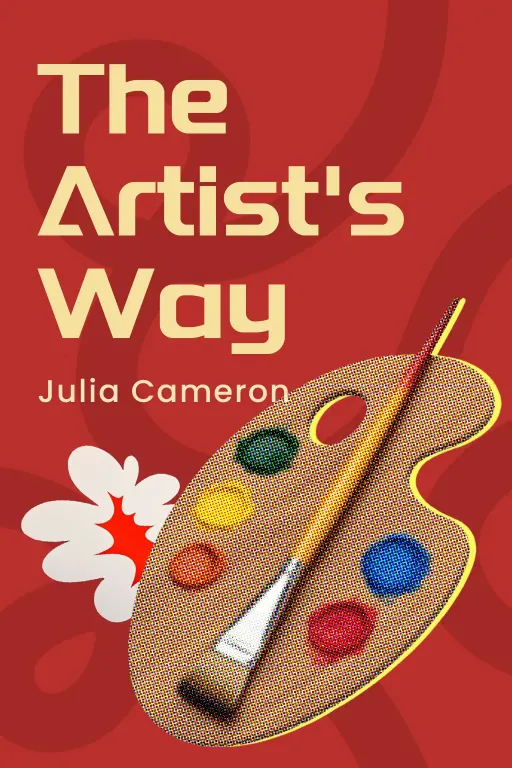
Nova: Exactly. Today, we're diving into "The Art of Noticing: Finding Creativity and Connection in the Everyday." It's less about finding inspiration, and more about rediscovering the world as it truly is. And we’re pairing that with the profound insights from Julia Cameron's seminal work, "The Artist's Way," which really revolutionized how we think about nurturing our creative selves. Cameron, with her background in spiritual guidance, pushed the idea that creativity isn't just a talent for a select few, but a daily, almost spiritual practice accessible to everyone.
Atlas: And for those of us who appreciate the messy reality of the creative process, we’ll also weave in Dani Shapiro’s "Still Writing: The Perils and Pleasures of a Creative Life." Shapiro, a seasoned writer, beautifully grounds the whole concept in sustained effort and honest self-reflection, demystifying the romanticized notion of a creative life. For someone who enjoys really digging into the practicalities of a creative life, these two are essential complements.
Nova: Absolutely. These books together really highlight how creativity and connection aren't grand gestures, but products of consistent, gentle attention to our inner lives and the world around us.
Atlas: So, we're talking about more than just "stopping to smell the roses," right? This sounds like a deeper re-wiring of how we perceive the world, something that goes beyond surface-level observation.
The Silent Erosion: How Modern Life Dulls Our Notice-Ability
SECTION
Nova: Precisely, Atlas. Think of it this way: we're constantly bombarded. Notifications, deadlines, the endless scroll of information. Our brains are incredibly efficient, wired for pattern recognition, for filtering out the 'unimportant' to focus on the urgent. And in doing so, we've inadvertently trained ourselves to notice the subtle, the beautiful, the truly connective elements of our existence.
Atlas: That makes sense. For someone who is always processing a lot of complex information, it feels like a necessity to filter. You have to triage. But you're saying that filtering has a profound, perhaps unseen, cost?
Nova: A huge cost. Julia Cameron, in "The Artist's Way," speaks about 'creative U-turns,' where we abandon our creative impulses, often because we feel blocked or uninspired. She argues this block isn't a lack of talent, but a lack of. We're not feeding our inner artist. Imagine a painter who only ever looks at finished masterpieces, never at the play of light on a crumpled leaf, or the texture of old wood. Their well of inspiration dries up because they're not observing the raw material of life itself.
Atlas: So, it's not about being untalented, but about being un-fed, starved of sensory input and genuine observation. That’s a powerful reframe. I can imagine a lot of our listeners, who are always seeking to expand their knowledge and engage deeply, feeling that exact creative stagnation, but blaming themselves for a lack of innate ability.
Nova: Exactly. It's not a personal failure, but a symptom of a world that prioritizes speed, efficiency, and consumption over presence and observation. Dani Shapiro echoes this in "Still Writing," emphasizing that the creative life is not about waiting for a muse, but about showing up to the page, or to life, every day, and paying attention. She recounts her own struggles with writer's block, realizing that often it stemmed from a feeling of having 'nothing to say,' when in reality, she simply hadn't been or closely enough at her own life and surroundings. The seemingly mundane, she found, was often the richest source of her most profound insights.
Atlas: That's fascinating. So the first step isn't to force creativity, or chase some grand idea, but to diagnose why we're not seeing things clearly in the first place. You're saying we've essentially built up a kind of perceptual scar tissue that prevents us from truly engaging with the world around us? It’s almost like we’re walking around with blinders on, and we don’t even realize it.
Cultivating the Attentive Eye: Practices for Reclaiming Creativity and Connection
SECTION
Nova: Perceptual scar tissue, I love that, Atlas. And the good news is, it's remarkably pliable. This leads us to our second core idea: cultivating the attentive eye. It’s about gentle, consistent practices that re-sensitize us. Cameron offers her famous 'Morning Pages' and 'Artist Dates.' Morning Pages are three pages of stream-of-consciousness writing, first thing in the morning. No judgment, no agenda, just emptying the brain onto the page.
Atlas: Three pages every morning? For someone with a packed daily schedule, that sounds incredibly daunting. What's the real benefit of just... brain dumping? Is it really that impactful?
Nova: The magic isn't in the content you write, it's profoundly in the. It clears the mental clutter, the anxieties, the to-do lists, making space for new observations to even register. It's like sweeping the floor before you can truly see the dust motes dancing in the sunlight. And Artist Dates? Those are solitary, weekly excursions to nurture your inner artist – a walk in a park, visiting a museum, exploring a quirky shop. They’re not about productivity or output; they’re about playful, unburdened engagement with the world.
Atlas: So it's deliberate, non-productive noticing. I’m curious, how does this connect to Dani Shapiro's idea of sustained effort? Because 'playful engagement' and 'sustained effort' can feel like different ends of the spectrum, almost contradictory.
Nova: Ah, but they're two sides of the same coin, Atlas. Shapiro talks about the 'pleasures of a creative life,' but also the 'perils.' The pleasure, the joy, comes from that playful engagement, that noticing. The peril is that it requires discipline and resilience. She emphasizes that creativity isn't a bolt of inspiration; it's showing up to the page every day, even when you don't feel like it. Her practice is less structured than Cameron's but equally rooted in presence. She might not prescribe 'Morning Pages,' but her entire philosophy is about being present to the work, to the moment, and to the subtle shifts in her own internal landscape. It’s about finding the extraordinary in the ordinary, consistently.
Atlas: That's a great point. It’s like the sustained effort of a gardener who knows that consistent, gentle watering and weeding will eventually yield a beautiful bloom, rather than just waiting for a miracle. For someone who is used to tackling complex problems with intense intellectual focus, this idea of 'gentle attention' feels almost counterintuitive, but compelling in its simplicity and profound effect.
Nova: It absolutely is. And the healing moment from our content sums it up perfectly: take five minutes today to simply observe something small around you – a plant, a cloud, a stranger's smile – without judgment or agenda. It's these tiny, consistent acts of noticing that slowly re-sensitize us, rebuilding that attentive muscle, and reconnecting us to the vibrant world we often rush past.
Synthesis & Takeaways
SECTION
Atlas: So, we started with this pervasive feeling of a dimmed creative spark, often blaming ourselves for a lack of talent or inspiration. And now we're seeing it's more about a systematic lack of deliberate, gentle attention. It's not about big, dramatic shifts, but consistent, almost quiet practices that re-engage our senses.
Nova: Exactly. The profound insight here is that creativity and connection aren't out there in some grand, dramatic moment. They are within, through the simple, consistent act of paying attention to the everyday. It's a radical act of presence in a world designed for distraction, a gentle rebellion against the noise. It’s the difference between merely existing and truly in the richness of each moment, feeding that inner artist.
Atlas: That gives me chills, honestly. It’s such a hopeful way to look at something that often feels like a personal failing. It means the power to rekindle that spark is always within our reach, not dependent on external forces.
Nova: It is. So, for our curious and deep-thinking listeners, we invite you to take that five-minute challenge today. Observe something small. And if you feel moved, share a tiny detail you noticed with someone, or even just jot it down in a journal. See how that simple act shifts your perspective and opens up new avenues for thought.
Atlas: That's a fantastic actionable step. It ties directly into the 'consistent, gentle attention' we've been talking about, making these profound ideas incredibly accessible.
Nova: Absolutely. Because the art of noticing isn't just about seeing more; it's about more, more creative, more connected, more alive.
Atlas: Beautifully put, Nova. This is Aibrary. Congratulations on your growth!