From 'What If' to 'What Is': Mastering Creative Flow Under Pressure
Golden Hook & Introduction
SECTION
Nova: Everyone says "pressure makes diamonds," right? That intense, crushing force transforms carbon into something brilliant and invaluable. But what if I told you that in the world of creativity, pressure often makes... dust? Or worse, it makes you just freeze up entirely.
Atlas: Oh, I know that feeling. That sudden blank page, the looming deadline, and your brain just decides to take an early lunch. But wait, in our high-stakes, fast-paced world, isn't pressure often seen as the way to ignite innovation, to push boundaries? It feels almost counter-intuitive to say it stifles creativity.
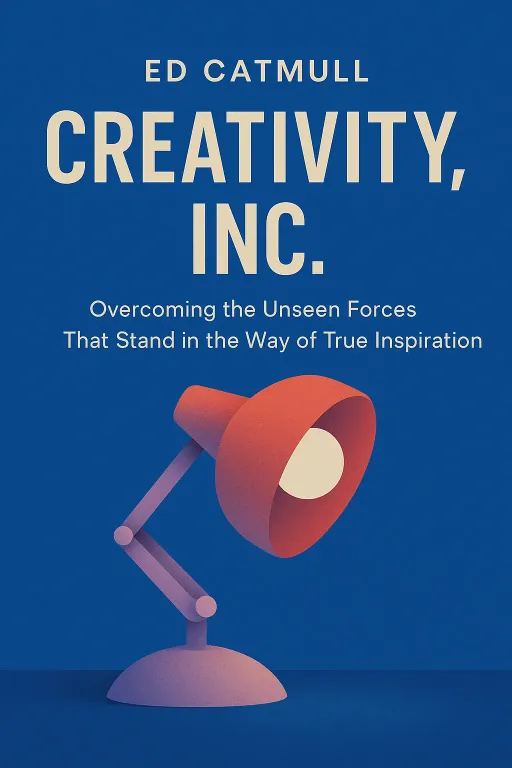
Nova: Absolutely. And that's exactly the paradox we're diving into today. We're exploring how to navigate that pressure, drawing wisdom from giants like Ed Catmull's "Creativity, Inc." and Julia Cameron's "The Artist's Way." Catmull, for instance, didn't just theorize about creativity; as the co-founder of Pixar, he literally built a multi-billion dollar animation studio on these very principles, reshaping an entire industry.
Atlas: That’s incredible. So, we're talking about lessons from someone who not only preached creativity but built an empire with it. For anyone out there who’s a global architect, leading ambitious teams, or just trying to foster real innovation, the idea of turning pressure into a creative fuel rather than a freeze-frame sounds like gold. How do you even begin to do that?
The Paradox of Pressure & Pixar's Braintrust
SECTION
Nova: Well, the core insight is that true innovation isn't a flash of genius; it's a disciplined process of nurturing ideas, accepting failure, and fostering a safe space for experimentation. The cold fact is, the pressure to innovate can often stifle the very creativity it seeks to ignite. When the stakes are high, our natural instinct can be to play it safe, to stick to what we know, to avoid any misstep.
Atlas: That makes sense. I can imagine a lot of our listeners, who are always navigating complexity and looking for strategic balances, might feel that constant pull between the need for groundbreaking ideas and the very real risks of failure. So, if pressure freezes us up, how do you cultivate an environment where people afraid to take those creative leaps?
Nova: That's where Catmull's work at Pixar becomes so illuminating. He understood that you need a system that supports your creative spirit. He championed what they called the "Braintrust"—a peer-to-peer feedback group for every film in production. The rule? Candor, brutal honesty, but focused on the work, not the person.
Atlas: Hold on. So they intentionally create a space for candid, even "brutal" feedback? That sounds like it could easily turn into a pressure cooker, not a safe space, especially in a creative field where ideas can feel so personal. Wouldn't that just make people more defensive?
Nova: That's the brilliance of it. The Braintrust's power came from its. The feedback was mandatory, but the advice was not. Directors were expected to listen, to truly hear the criticisms, but ultimately, the final decision was theirs. And crucially, it was a peer group, not executives, offering insights. This built immense trust. It created a culture that embraces candor, protects new ideas, and understands that failure is a necessary part of the creative process. It separates the idea from the person.
Atlas: So, it's not about finding a brilliant idea, but about creating a protected space where even a half-baked, seemingly "bad" idea can be discussed, critiqued, and evolved without fear of personal reprisal. It’s about viewing failure as data, not a judgment. That’s a powerful distinction for anyone leading teams and building futures. It challenges the conventional wisdom that you must always present a polished, perfect idea.
Cultivating Creative Resilience & Julia Cameron's Morning Pages
SECTION
Nova: Exactly. And while Pixar built these incredible external systems, Julia Cameron, in "The Artist's Way," tackles the internal landscape, showing us how to unblock creative flow by addressing our inner fears. She argues that unblocking creative flow often requires addressing internal fears and establishing daily practices that reconnect you with your innate artistic self.
Atlas: Internal fears? For someone navigating complexity and leading ambitious projects, it often feels like there's no time for "inner work." How does something like "Morning Pages"—which sounds a bit… fluffy, honestly—actually help a strategic balancer manage real-world demands and still innovate? It sounds almost too simple for the kind of impact we're talking about.
Nova: That’s the beauty of its simplicity. "Morning Pages" is a daily practice: you wake up, and before you do anything else, you write three pages, longhand, stream-of-consciousness. It's not about writing well, it's not about finding brilliant ideas, and it's certainly not about anyone else ever reading it. It's about clearing the mental clutter, dumping all the worries, anxieties, brilliant thoughts, grocery lists—everything—onto the page.
Atlas: Wow. So, it's not about finding a brilliant idea those 15 minutes, but about clearing the mental runway brilliant ideas later? It sounds like a tiny, almost therapeutic step with massive potential for someone who needs to nurture ideas without forcing them. It's a personal safe space, much like the Braintrust is an organizational one.
Nova: Precisely. It’s a dedicated 15 minutes of completely unstructured creative activity, separate from your work, just to play with ideas, to get out of your own head. It cultivates what Nova's Take calls a blend of structured processes and personal freedom, allowing ideas to flourish rather than be forced. It helps you build that internal resilience, that freedom from self-censorship, which is just as crucial as external psychological safety. It's how you reconnect with that innate artistic self, which often gets buried under the weight of responsibility and the pressure to perform.
Synthesis & Takeaways
SECTION
Nova: So, bringing it all together, whether it’s Pixar's Braintrust or Julia Cameron's Morning Pages, the message is clear: true creative flow isn't about avoiding pressure, but about building systems—organizational and personal—to channel and transform it. It's about creating environments where ideas can be nurtured, where failure is a learning opportunity, and where candor leads to growth, not fear.
Atlas: I like that. It's a powerful blend: structured process and personal freedom. So, for our listener who’s a global architect, a nurturing innovator, balancing multiple roles and driving impact, it’s not about eliminating pressure, but about designing environments, both internal and external, where that pressure can actually fuel, not freeze, innovation. It’s about building a system that supports the creative spirit, rather than stifling it.
Nova: Exactly. And that brings us to our tiny step for this week, straight from the wisdom we've discussed: dedicate 15 minutes this week to a completely unstructured creative activity. It doesn't have to be work-related. Just play with ideas, doodle, write, whatever comes to mind. Just to reconnect with that pure, unadulterated creative impulse.
Atlas: That's actually really inspiring. It’s about taking that moment for reflection, acknowledging that nurturing your creative spirit is a win in itself, not just a means to an end. It aligns perfectly with the idea of trusting your intuition and building futures.
Nova: Absolutely. It’s about recognizing that your strength is your adaptability, and intuition guides your many roles. This is Aibrary. Congratulations on your growth!