Beyond the Canvas: Cultivating Creativity for Strategic Advantage
Golden Hook & Introduction
SECTION
Nova: Atlas, I have a challenge for you. Five words. Describe the concept of "creativity for strategic advantage." Go.
Atlas: Oh, man, five words? Uh, "Fluffy, impractical, but maybe necessary now?" Is that five?
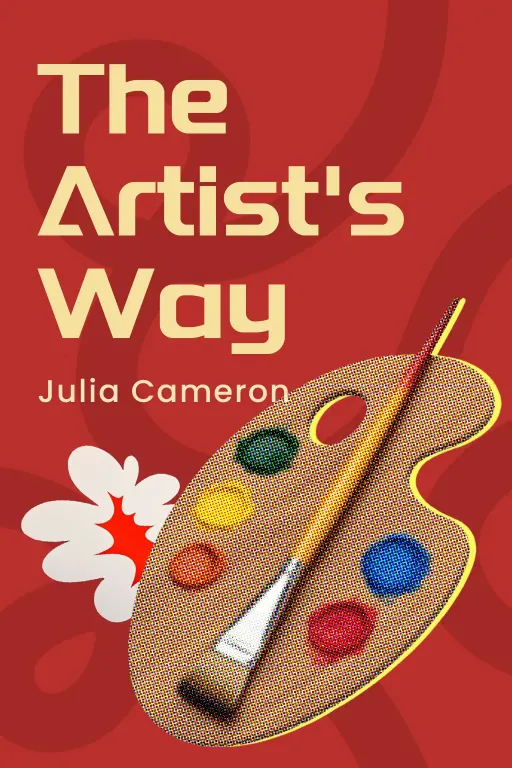
Nova: Perfect five. And honestly, that's exactly the mindset we're here to tackle today, with insights from a profound new synthesis titled, "Beyond the Canvas: Cultivating Creativity for Strategic Advantage." This isn't just another business book, Atlas; it’s a powerful distillation of wisdom. It draws from the deep insights of artists like Julia Cameron, the force behind "The Artist's Way," and visionary innovators like Tom and David Kelley from IDEO, who practically wrote the playbook on design thinking. It's about bridging that perceived gap you just articulated.
Atlas: Okay, that's a bold claim. "Fluffy but maybe necessary" is pretty much my mental model for creativity in the boardroom. How does this book even begin to bridge that chasm between painting and profit?
Nova: Well, it starts by directly addressing "The Feeling" – that deep-seated belief many strategic thinkers hold that creativity is somehow separate from the serious, analytical work of leadership. It’s the feeling of being stuck, uninspired, or just plain lacking the 'creative gene' when faced with complex problems. That's our first big idea. This book argues that this feeling isn't a personal failing, but a symptom of a systemic misunderstanding.
The Misconception of Creativity as an 'Arts-Only' Skill
SECTION
Atlas: I get that completely. It feels like, if I'm not sketching or writing poetry, I'm not 'creative.' And in a high-stakes meeting, talking about 'inner wisdom' or 'creative flow' just doesn't seem to fly. There's a real pressure to be data-driven, logical.
Nova: Exactly. And that pressure, that inherent bias, is precisely what holds us back. The book highlights how this compartmentalization – putting creativity in a separate, 'artsy' box – actively hinders breakthrough thinking. It's like having a powerful tool in your toolkit but refusing to use it because you think it's only for sculptors, not engineers.
Atlas: So, we're essentially self-sabotaging our own strategic potential by telling ourselves we're not 'creative enough'? That sounds rough. But how do you even begin to untangle that kind of deeply ingrained belief?
Nova: That’s where Julia Cameron's "The Artist's Way" comes in. The book references her work as foundational. Cameron, herself an artist and teacher with decades of experience guiding people through creative blocks, identifies common enemies to creativity: perfectionism, self-doubt, the inner critic. She doesn't just name them; she offers practices to dismantle them, even for people who've never picked up a paintbrush.
Atlas: Okay, but how does writing three pages of stream-of-consciousness every morning – 'Morning Pages,' I think it’s called – translate into a better Q3 strategy, or solving a complex supply chain issue? Are we talking about a direct line, or just a general sense of 'feeling better'?
Nova: That's a brilliant question, Atlas, and it gets to the core of it. Morning Pages isn't about you write, or even writing well. It’s about the of clearing mental clutter. Think of your mind as a busy highway. Morning Pages is like closing off a lane for 10 minutes every day to let all the junk, the anxieties, the to-do lists, and the self-criticism just flow out. It's a strategic detox.
Atlas: A strategic detox. I like that. So, it’s not about finding the solution the pages, but about creating the space for the solution to later?
Nova: Precisely. By consistently dumping all that mental noise, you’re creating bandwidth. You’re reconnecting with what Cameron calls your 'inner wisdom.' And when that wisdom is no longer buried under layers of static, you start seeing connections you missed, asking bolder questions, and approaching problems with a fresh perspective. That's directly transferable to strategic clarity and innovative problem-solving. It's the first rep for that creative muscle.
Cultivating Creativity: Practical Pathways to Breakthrough Thinking
SECTION
Nova: That idea of clearing the pipeline, that strategic detox, actually leads us perfectly to our next point. Once the mental clutter is gone, once we've acknowledged that creativity is a universal human capacity, how do we actively that creative muscle for strategic advantage?
Atlas: Right. Because 'unblocked' isn't the same as 'innovative.' How do we go from clearing the decks to actually generating those breakthrough ideas that everyone talks about? The ones that actually move the needle in business?
Nova: That's where "Creative Confidence" by Tom and David Kelley, the brothers behind the legendary design firm IDEO, becomes so powerful. Their core argument, which the book "Beyond the Canvas" fully embraces, is that everyone is creative. It's not some mystical gift bestowed upon a chosen few. It's a skill, a muscle, that can be developed and honed through practice.
Atlas: IDEO, okay, that's a name I recognize. They're like the rockstars of product design and innovation. Their work always felt... 'specialized,' though. Like something only a highly trained design team could do. Are you saying their creative process is something a regular strategic leader can actually implement, or is it more of a 'they do it for you' kind of thing?
Nova: That's a common misconception, and the Kelley brothers go to great lengths to debunk it. Their whole philosophy, what we call 'design thinking,' is a framework for creative problem-solving that can learn and apply. It starts with empathy – truly understanding the user or the problem from a human perspective – and moves through stages of ideation, prototyping, and testing. It's a structured approach to what often feels unstructured.
Atlas: So, it's a methodology, not just a talent. Can you give me an example of how that might look in a strategic context, not just designing a new gadget?
Nova: Absolutely. Imagine a company struggling with employee retention. A traditional strategic approach might look at compensation or benefits. A design thinking approach, as advocated by the Kelleys and highlighted in "Beyond the Canvas," would begin with deep empathy: interviewing employees, observing their daily routines, understanding their frustrations and aspirations, not just from a survey, but from a human perspective.
Atlas: So, instead of assuming why people are leaving, you're actually trying to why they're leaving. That's a different starting point.
Nova: Exactly. And that empathy leads to reframing the problem, generating radically different ideas for solutions – maybe it's not about salary, but about autonomy, or purpose, or recognition. Then, you rapidly prototype low-fidelity solutions – not spending millions on a new HR system, but trying out a small, experimental program. You test it, you get feedback, you iterate. It's a cycle of learning and evolving, which is fundamentally a creative act. It validates Nova's Take: creativity is a muscle, not a gift, and it absolutely enhances strategic problem-solving.
Synthesis & Takeaways
SECTION
Nova: So, what "Beyond the Canvas" beautifully synthesizes from these giants like Cameron and the Kelleys is this: creativity isn't an 'artsy' outlier for strategic thinkers. It's a core competency, a muscle that, when strengthened, fundamentally transforms how you approach and solve complex problems. It's about combining the internal clearing of mental clutter with structured, empathic problem-solving.
Atlas: That's a powerful shift in perspective. From "I'm not creative" to "I cultivate creativity for strategic gain." It's less about being 'born creative' and more about intentionally practicing it. It turns a potential weakness into a competitive edge for any aspiring leader.
Nova: Absolutely. And the good news is, it doesn't require a radical overhaul of your life. The book offers simple, actionable steps. Our 'Healing Moment' for today, for instance, is a direct application of this.
Atlas: What's the homework? I'm ready to flex this new muscle.
Nova: Dedicate just 10 minutes tomorrow to 'Morning Pages.' Write three stream-of-consciousness pages. Don't edit, don't judge, just write whatever comes to mind. It’s a small step, but it’s the first rep for that creative muscle. See what clarity emerges for your most pressing strategic challenge.
Atlas: That sounds... surprisingly doable. And if it clears the path for my next big idea, or helps me rethink a stubborn problem, it's definitely worth 10 minutes. It's about unlocking your own internal innovator, right?
Nova: Exactly. It’s about leveraging your innate capacity to see things differently. This is Aibrary. Congratulations on your growth!