

The Startup Battlefield: Sun Tzu's Guide to Deep Tech and Disruptive Innovation
Golden Hook & Introduction
SECTION
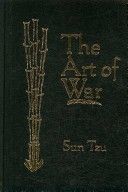
Nova: Imagine you are a small, resource-strapped startup trying to build a revolutionary deep tech product. On the other side of the field stands a multi-billion-dollar tech giant with infinite capital, thousands of engineers, and massive distribution. How do you win? You don't do it by fighting them head-on. Today, we are looking at a two-thousand-five-hundred-year-old text that holds the ultimate strategic blueprint for modern innovators: Sun Tzu's The Art of War. We are going to tackle this classic from three key angles. First, we will explore winning without fighting, and how deep tech startups can bypass direct competition entirely. Then, we will discuss tactical adaptability, learning how to treat your startup's strategy like water flowing around obstacles. And finally, we will focus on the human element, looking at how to build and lead a revolutionary team bound by a shared mission. I am Nova, and joining me today is Nike, a brilliant analytical thinker who is passionate about entering the deep tech world and becoming a future job provider. Welcome, Nike!
Nike: Thanks, Nova! I am so excited to be here. You know, when people think of deep tech and startups, they usually think of cutting-edge code, venture capital, and rapid scaling. They don't immediately think of ancient military strategy. But as I was reading Sun Tzu, I kept having these lightbulb moments. The parallels between ancient warfare and the high-stakes startup ecosystem are absolutely striking. If you are trying to change the world with limited resources, you are essentially engaging in asymmetric warfare.
Nova: Oh, absolutely! It is all about leverage, isn't it? We love that term 'asymmetric warfare' because it perfectly describes the startup struggle. You don't win by matching the giant dollar-for-dollar. You win by thinking differently. Let's dive right into that first big idea.
Deep Dive into Core Topic 1
SECTION
Nova: Sun Tzu wrote, 'The supreme art of war is to subdue the enemy without fighting.' He goes on to explain that the worst policy is to attack walled cities. In ancient times, a siege on a walled city was a nightmare. It took months to prepare the equipment, it drained resources, and it often resulted in massive casualties with very little to show for it. Sun Tzu says that a wise general avoids the walled city and instead attacks the enemy's strategy. Nike, how does this concept of avoiding the 'walled city' apply to a college student looking at the tech landscape today?
Nike: It is the ultimate guide for market entry, Nova. In the tech world, those 'walled cities' are the core businesses of the tech giants. Think of Google with search, or Microsoft with enterprise software. If a young startup tries to build a slightly better search engine, they are launching a direct siege on a heavily fortified walled city. It is a war of attrition, and the startup will lose every single time because they will run out of runway—their resources—long before the giant even feels a scratch.
Nova: That is such a vivid way to put it! A war of attrition is a death sentence for a startup. So, what is the alternative? How do we attack their strategy instead of their walls?
Nike: Well, Sun Tzu says to attack where they are unprepared, and to appear where you are not expected. In deep tech, this means looking for paradigm shifts. You don't build a better version of their product; you build something that makes their entire product category obsolete. Think about the transition from traditional computing to quantum computing, or from chemical synthesis to synthetic biology. By focusing on these deep tech frontiers, you are not competing with the giants on their home turf. You are creating a completely new battlefield where their existing advantages, like their massive legacy infrastructure, actually become liabilities.
Nova: Yes! Their size makes them slow, while your small size makes you agile. It is like Sun Tzu's advice on speed: 'Let your rapidity be that of the wind, your compactness that of the forest.' When you are small, you can move through the gaps in their defense before they even realize a new market is forming.
Nike: Exactly. And there is another layer to this. Sun Tzu talks about 'preventing the junction of the enemy's forces.' In business, that is about timing and positioning. If you can establish a strong foothold in a niche, deep tech application—say, a highly specialized AI model for a specific scientific breakthrough—you can build a defensive moat before the big players even decide to enter the space. You win the market by making it strategically unviable for them to compete with you. You have subdued them without a direct, costly fight.
Nova: I love that. It is about finding that blue ocean where you can establish your own rules. But to do that, you have to be incredibly smart about how you navigate. You can't just charge in blindly. That brings us to our second core topic: adaptability.
Deep Dive into Core Topic 2
SECTION
Nova: Sun Tzu has this beautiful metaphor. He says, 'Water shapes its course according to the nature of the ground over which it flows; the soldier works out his victory in relation to the foe whom he is facing.' He argues that there are no constant conditions in warfare, just as there are no constant conditions in nature. In the startup world, we talk a lot about the 'pivot.' But Sun Tzu was talking about this thousands of years ago! How do you see this fluid, water-like strategy playing out in deep tech?
Nike: This is incredibly critical for deep tech because the 'terrain' is constantly shifting. In deep tech, you are dealing with two types of uncertainty: technological uncertainty—meaning, will this science actually work?—and market uncertainty—meaning, does anyone actually want to buy this? If you are rigid, if you stick to your original business plan no matter what, you will crash against the rocks. You have to flow like water.
Nova: That makes so much sense. But how does a team actually do that without losing their way? How do you stay fluid but still have a direction?
Nike: Sun Tzu actually gives us a framework for this. He talks about the five constant factors that govern strategic conditions: the Moral Law, Heaven, Earth, the Commander, and Method and Discipline. If we translate these to the startup world, it gives us a perfect compass. 'Heaven' represents the external conditions you cannot control—like market timing, macroeconomic shifts, or sudden regulatory changes. 'Earth' represents the terrain—the technological landscape, the existing patents, and the physical limitations of the science you are working with. A great startup team is constantly analyzing Heaven and Earth, and adjusting their course accordingly.
Nova: That is a brilliant translation! So, 'Heaven' is the timing, and 'Earth' is the tech landscape. What about the other factors?
Nike: Well, 'The Commander' is the leadership—their wisdom, sincerity, and courage. 'Method and Discipline' are your operational execution, your agile development processes, and how you manage your resources. But the most important one, the one that keeps the water flowing in the right direction, is the 'Moral Law.' Sun Tzu defines this as that which causes the people to be in complete accord with their ruler, so that they will follow him regardless of their lives, undismayed by any danger. In a startup, that is your core mission. It is the 'why' behind what you are building.
Nova: Oh, that is beautiful! So, even if the product changes, even if you have to pivot your technology—which is the water adapting to the Earth—the core mission, the Moral Law, remains your North Star.
Nike: Exactly. If your mission is to, say, democratize clean energy using deep tech, the specific material science you use might fail. You might have to pivot from one battery chemistry to another. That is adapting to the terrain. But because the team is united by the Moral Law—the mission to solve clean energy—they don't give up. They just find a different channel to flow through.
Nova: That is incredibly encouraging for anyone starting out. It means a pivot isn't a failure; it is just strategic fluidness. It is you being smart enough to read the terrain and flow around the obstacle instead of smashing your head against it.
Nike: Yes, and it requires a deep level of self-awareness. Sun Tzu's most famous quote is, 'If you know the enemy and know yourself, you need not fear the result of a hundred battles.' In our context, 'knowing yourself' means being brutally honest about your startup's limitations, your technical debt, and your team's actual capabilities. 'Knowing the enemy' means deeply understanding your customers' pain points and what the incumbents are offering. If you have that clarity, you can adapt your strategy with absolute precision.
Deep Dive into Core Topic 3
SECTION
Nova: That transition to 'knowing yourself' and the 'Moral Law' brings us perfectly to our third topic: the human element. You mentioned that you want to be a job provider, Nike. You want to build and lead teams that actually change the world. Sun Tzu spent a lot of time talking about the relationship between the general and the soldiers. He wrote, 'Regard your soldiers as your children, and they will follow you into the deepest valleys; look upon them as your own beloved sons, and they will stand by you even unto death.' Now, that sounds very intense, but at its core, it is about deep empathy, trust, and shared destiny. How do you think about leadership and team building in the highly competitive tech sector?
Nike: It is everything, Nova. In deep tech, you are asking highly brilliant, highly educated people—often PhDs and top-tier engineers—to leave stable, high-paying jobs at big tech companies to join your risky, unproven startup. You cannot compete with Google or Meta on salary or perks. You just can't. So, how do you recruit them? How do you keep them motivated when the experiments are failing and the runway is getting short? You do it through trust, empathy, and a shared sense of purpose.
Nova: It really is about that 'Moral Law' we talked about, isn't it? It is about making them feel that they are part of something larger than themselves.
Nike: Absolutely. Sun Tzu says, 'He will win whose army is animated by the same spirit throughout all its ranks.' As a founder, your job is to cultivate that shared spirit. It is about transparency and mutual respect. If the team feels that the 'Commander' is in the trenches with them, sharing the hardships and genuinely caring about their personal and professional growth, they will bring their best minds to solve the hardest problems.
Nova: I love that image of being in the trenches together. It is not about top-down command and control. It is about collaborative leadership.
Nike: Yes, and Sun Tzu actually warns against over-regulation. He says, 'To govern a multitude is the same in principle as to govern a few men: it is a question of organizing them.' But he also warns that if a general interferes with the administration of the army, it causes restlessness. In startup terms, that is micromanagement. In deep tech, you are hiring experts who know more about their specific fields than you do. You have to give them the autonomy to innovate. Your job as the leader is to set the strategic direction, provide the resources, and then get out of their way so they can do their magic.
Nova: That is such a crucial point. Trusting your team's expertise is the ultimate form of respect. It builds that deep loyalty Sun Tzu was talking about. You are not just a boss; you are creating an environment where they can do the most meaningful work of their lives.
Nike: Exactly. And when you do that, you create a culture of resilience. Deep tech is hard. It is full of setbacks. But if you have built a team based on trust and a shared mission, those setbacks don't break you. They actually bring you closer together. You become a highly cohesive unit, capable of outmaneuvering any slow-moving corporate giant.
Synthesis & Takeaways
SECTION
Nova: This has been such an incredibly rich conversation, Nike. We have journeyed from ancient battlefields to the cutting edge of deep tech startups. We talked about subduing the enemy without fighting by choosing the right battles and avoiding head-on collisions with giants. We explored tactical adaptability, learning to shape our startup strategy like water adapting to the terrain of technology and markets. And finally, we looked at the human element—how a shared mission and empathetic leadership can build a revolutionary team capable of achieving the impossible.
Nike: It really shows that strategic wisdom is timeless, Nova. Whether you are leading an army in 500 BC or building a quantum computing startup today, the fundamental principles of human nature, resource constraints, and strategic positioning remain exactly the same.
Nova: They really do! So, Nike, for our listeners out there—especially the students, the aspiring founders, and the tech builders who want to make a real dent in the universe—what is one actionable takeaway from Sun Tzu that they can apply to their lives today?
Nike: I would say: find your own 'walled cities' and resolve to attack them. Look at your career, your projects, or your startup ideas, and ask yourself: 'Am I trying to compete where the giants are already strong, or am I finding the gaps where I can change the rules of the game?' Focus your energy on the paradigm shifts, build your strategic agility, and always, always start with 'why' to bring people along with you.
Nova: That is a powerful call to action. Don't fight their war; make them play your game. Nike, thank you so much for sharing your incredible insights with us today. This was absolutely inspiring!
Nike: Thank you, Nova! It was an absolute blast.
Nova: And to our listeners, thank you for tuning in. Go out there, read the terrain, flow like water, and build something that changes the world. We will see you next time!