Unpacking the Architectures of Power: Where Nations Are Forged and Unmade
Golden Hook & Introduction
SECTION
Nova: Atlas, if I told you that the shape of a mountain range or the flow of a river could predict the rise and fall of empires, what would you say?
Atlas: I'd say you've either been staring at a world map for too long, or you've stumbled onto some ancient, forbidden knowledge. Or, more likely, both.
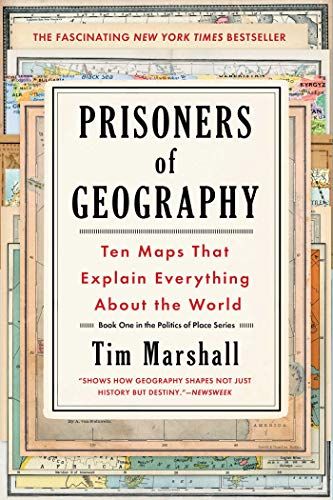
Nova: Close! We're diving into the geopolitical grand chessboard today, exploring how the very earth beneath our feet, and the strategic minds that navigate it, forge and unmake nations. And our guide today is none other than Tim Marshall’s highly acclaimed "Prisoners of Geography." It’s a book that became a global phenomenon, praised for its accessible yet profound insights into how physical features dictate human destiny. Marshall, a veteran foreign affairs journalist, brings decades of on-the-ground reporting to life, making complex geographical determinants feel incredibly personal.
Atlas: Oh, I've heard amazing things about that one. It’s supposed to be one of those books that permanently changes how you look at a news report. But wait, we’re also bringing in Sun Tzu’s "The Art of War." That’s a classic, obviously, but how do these two seemingly disparate works—one about physical geography, the other about ancient military strategy—connect? Are we saying generals just need a good map and a sharp mind to rule the world?
Nova: Exactly! It's not just about generals, it's about. These books, when viewed together, argue that understanding the physical world and the strategic mind are paramount to deciphering the enduring patterns of conflict and cooperation. They're two sides of the same coin: the immutable hand of geography setting the stage, and the strategic mind playing the game.
Atlas: That makes a lot of sense. So, we're talking about the fundamental forces that shape global power, not just the fleeting headlines. I like that. It speaks to the historian in me, looking for those deep, underlying currents.
The Immutable Hand of Geography
SECTION
Nova: Precisely. Let's start with Marshall. "Prisoners of Geography" argues that nations are, in a very real sense, prisoners of their physical environment. Think about Russia. Its vast, flat plains have historically made it vulnerable to invasion from the west. This geographical reality hasn't just shaped its military strategy; it's permeated its national psyche, its drive for buffer states, and its deep-seated sense of insecurity.
Atlas: So you're saying Russia's constant push for a warm-water port, or its historical expansion westward, isn't just about political ambition in a vacuum. It’s a direct consequence of its geography – a kind of geographical imperative?
Nova: Absolutely. Marshall vividly explains how their lack of natural barriers led to a strategic imperative to expand, creating those buffer zones for defense. The sheer scale of their landmass also makes governance incredibly difficult, fostering a strong, centralized state to maintain cohesion. It’s a recurring theme in history, from the Tsars to the Soviet Union and beyond. It's not just a historical curiosity; it's an active player in today's geopolitics, influencing everything from energy policy to military deployments.
Atlas: Wow. That's a powerful idea. It’s like the land itself has a will, guiding the actions of nations regardless of who's in charge. So, when we analyze a current global event, instead of immediately focusing on political rhetoric, we should first ask: "What are the geographical constraints at play here?"
Nova: Exactly! Take China, for instance. Its geography has blessed it with fertile river valleys, but also isolated it with mountains and deserts, fostering a unique sense of self-sufficiency and a focus on internal unity. Yet, its long, vulnerable coastline and reliance on sea lanes for trade create a different kind of strategic imperative—a drive for naval power and influence in the South China Sea. Marshall brings this to life by detailing how China's "nine-dash line" isn't just about resources; it's about securing its maritime flanks and trade routes, a direct response to its geographical vulnerabilities.
Atlas: That’s a crucial distinction. It helps explain why certain regions are always flashpoints, or why some nations seem to act in predictable ways, even across different political systems. It's not just about who's in power, but they're in power. So, the Himalayas aren't just pretty mountains; they're geopolitical barriers that have historically separated India and China.
Nova: Exactly. And it’s not just about barriers. Rivers like the Nile shaped ancient Egypt, providing both sustenance and a natural highway, influencing its early unification and prosperity. Or the Rhine in Europe, a historical artery for trade and- sometimes- conflict. Marshall shows how these features are not passive backdrops, but active players. This perspective is so refreshing because it moves beyond surface-level political analysis. It gives you a deeper, almost elemental understanding of why nations behave the way they do.
Atlas: I can see how that would be incredibly valuable for someone like a historian or an analyst, trying to connect national narratives and understand ideological conflicts. It’s like finding the hidden currents beneath the waves.
The Strategic Mind at Play
SECTION
Nova: And if geography sets the stage, then strategy, as laid out by Sun Tzu, is how the actors play their roles. "The Art of War" isn't just a military manual; it's a profound treatise on understanding terrain, knowing your enemy and yourself, and achieving victory through minimal direct confrontation.
Atlas: I’ve always thought of "The Art of War" as more about psychology and deception than just brute force. But how does an ancient text, written for warring states, apply to modern geopolitics, especially when we're talking about things like trade wars or cyber warfare?
Nova: That’s the genius of it. Sun Tzu’s principles are timeless. He emphasizes understanding the terrain – which, in modern terms, isn't just physical land, but the economic landscape, the technological environment, even the social and cultural terrain of a nation. Knowing your enemy means understanding their strengths, weaknesses, and intentions, but also their geographical imperatives, as Marshall would say. And knowing yourself means understanding your own resources, capabilities, and limitations. It’s about leveraging every advantage.
Atlas: So it's not about winning every battle, but about winning the war by avoiding unnecessary conflict. Like, if you understand your opponent's geographical vulnerabilities, you might not need to invade; you might just need to control a key chokepoint or influence their internal stability.
Nova: Precisely. Sun Tzu advocates for victory without fighting. Imagine a nation leveraging its economic power to gain influence over another, rather than deploying troops. That's a modern manifestation of achieving victory through minimal direct confrontation. Or a cyber attack that cripples infrastructure without a single bullet being fired. The "terrain" has evolved, but the strategic principles remain eerily relevant. "The Art of War" was written over two millennia ago, yet it continues to be one of the most widely studied strategy texts globally, influencing not just military leaders but also business executives and political strategists. It’s a testament to its enduring wisdom.
Atlas: That's fascinating. It really brings home the idea that strategy isn't just about military might. It’s about a holistic understanding of all the factors at play. And the book's enduring legacy means it's been field-tested, so to speak, across countless civilizations and conflicts. It's not just theory, it's proven wisdom.
Nova: Indeed. And it's not just about grand strategy. Sun Tzu's emphasis on flexibility, adaptability, and the importance of intelligence gathering are all crucial for navigating the complex, ever-shifting landscape of international relations. He argues that understanding the subtle shifts in power, anticipating your opponent's moves, and adapting your own strategy accordingly are far more effective than rigid adherence to a plan.
Atlas: That makes me wonder, how do today's technological advancements challenge or reinforce these geographical determinants of power? Because a drone can fly over a mountain, and a satellite can see through clouds. Does that make geography less important?
Nova: That's a deep question, and it's where these two books really start to dance together. While technology might seem to diminish geographical barriers, it also creates new "terrains." Cyber space is a new battleground, but it's still about controlling access, understanding vulnerabilities, and projecting power. Satellites can see over mountains, but they also highlight the strategic importance of orbital space. Geography remains fundamental, but its expression becomes more nuanced, more intertwined with technological capability.
Synthesis & Takeaways
SECTION
Nova: So, what we've really been talking about today, Atlas, is the profound interplay between the physical world and human ingenuity. It’s about recognizing that the "Architectures of Power" aren't just built by politicians or armies, but are deeply rooted in the very landscape we inhabit and the timeless strategies we employ.
Atlas: It’s a powerful reminder that history isn't just a series of random events, but often follows patterns driven by these fundamental forces. For someone keen on understanding present-day challenges, this framework is invaluable. It helps you look beyond the immediate headlines and see the deeper currents at play.
Nova: Exactly. Whether you're a historian, an analyst, or just someone seeking wisdom to understand the world, these books collectively argue that understanding the physical world and the strategic mind are paramount to deciphering the rise and fall of nations and the enduring patterns of conflict and cooperation. It's about developing that keen analytical mind to uncover the threads of cultural identity and connect national narratives.
Atlas: It really encourages you to embrace the nuance. Not every lesson is a direct translation, but the underlying principles are universal. It also makes you want to engage with diverse historical interpretations, because every perspective adds a layer to this grand chessboard.
Nova: And that’s the true takeaway: to understand the forces shaping nations, you must first understand their geographical confinements and the strategic choices made within those confines. As Sun Tzu would say, "Know yourself and know your enemy, and you need not fear the result of a hundred battles."
Atlas: And Marshall adds, "But also know the mountains, the rivers, and the oceans, because they are always playing their part." It’s a powerful combination. It makes you feel like you've unlocked a secret language for reading the world.
Nova: Indeed. It's about seeing the world not just as a collection of countries, but as a dynamic interplay of physical forces and strategic decisions. And that, my friend, is a journey worth taking.
Atlas: Absolutely. This is Aibrary. Congratulations on your growth!