

How to Navigate the 'Idea Storm' Without Drowning: Practical Steps to Creative Problem Solving
Golden Hook & Introduction
SECTION
Nova: Ever feel like your brilliant ideas vanish into thin air, or that your 'logical' solution just… isn't? What if I told you your own mind is actively sabotaging your best creative efforts?
Atlas: Oh man, Nova, that hits close to home. I’ve definitely had those moments where I thought I had the perfect answer, only for it to unravel spectacularly later. It often feels like drowning in a sea of half-formed thoughts.
Nova: Exactly! Today, we're dissecting a fascinating piece of wisdom that cuts right to the heart of this struggle, aptly titled "How to Navigate the 'Idea Storm' Without Drowning: Practical Steps to Creative Problem Solving." It’s less about waiting for inspiration and more about turning that mental chaos into clear, actionable solutions.
Atlas: I can see how that would appeal to so many of our listeners, especially those who are constantly looking to expand their knowledge and apply it practically. For our 'Well-being Seekers' out there, understanding this could really reduce the stress that comes with creative demands. How does this guide help us achieve that clarity and calm?
Nova: Well, it starts by pulling back the curtain on how our brains actually work, which can be surprisingly counterintuitive. We're going to explore two powerful frameworks. First, we’ll dive into how our own brains can trick us and what we can do about it. Then, we’ll discuss a proven framework to structure your creative process, and finally, we’ll wrap it up with a tiny step you can take right now to reclaim control.
Navigating the Internal Chaos: Understanding Our Biased Brains
SECTION
Nova: So, Atlas, think about a time you made a quick decision, maybe a gut feeling, that turned out to be completely off. What was that like?
Atlas: Oh, I know that feeling. I remember once I was trying to solve a tricky budget allocation problem at work. My gut screamed, "Just cut the marketing budget! It's always the easiest!" I almost went with it, but then something made me pause. Good thing I did, because it turned out marketing was actually driving our growth. My fast decision would have been disastrous.
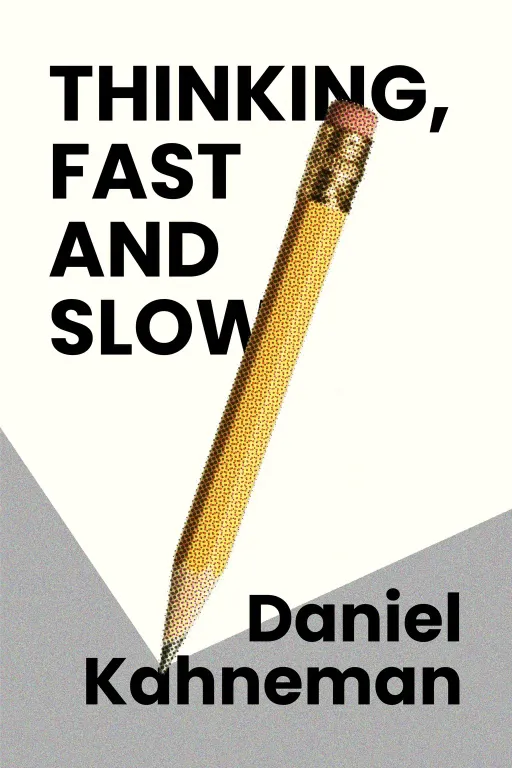
Nova: That's a perfect example of what Nobel laureate Daniel Kahneman explores in his seminal work, "Thinking, Fast and Slow." He reveals that our minds operate with two distinct systems. We have System 1, which is fast, intuitive, and emotional—your gut reaction to slash the marketing budget. And then there's System 2, which is slow, deliberate, and logical—the part that made you pause and question that initial impulse.
Atlas: So you're saying our brains have two speeds, like a car, but we often drive in the wrong gear? And System 1, the fast one, is where a lot of our biases live?
Nova: Precisely! System 1 is brilliant for quick judgments, like recognizing a familiar face or reacting to a sudden noise. But it’s also prone to shortcuts and biases, leading us to jump to conclusions, see patterns where none exist, or cling to information that confirms what we already believe. It’s what can turn an 'idea storm' into a chaotic mess, where we're just recycling the same flawed assumptions.
Atlas: Can you give an example? Like how does this play out in a real-world scenario, beyond just budget cuts?
Nova: Imagine a product development team trying to innovate. System 1 might lead them to quickly settle on a familiar solution because it worked before, or because the loudest person in the room suggested it. That's confirmation bias and availability heuristic at play – favoring easily recalled information or ideas that confirm existing beliefs. They might miss a truly novel approach because their fast thinking is steering them towards "safe" or "obvious" paths.
Atlas: Okay, but how does a 'Practical Strategist' actually System 2 when the clock is ticking, and System 1 just wants to get it done? It feels like we're constantly being pushed for speed.
Nova: That's the critical part. Engaging System 2 isn't about being slow all the time; it’s about knowing to slow down. It requires a conscious effort, a deliberate "pause" button. It means asking, "What if my initial reaction is wrong?" or "What other perspectives am I missing?" It's about seeking out disconfirming evidence, actively considering alternatives, and breaking down complex problems into smaller, analyzable parts. This intentional effort moves us beyond random flashes of insight to more reliable, well-reasoned solutions. It's about making our thinking, not just reactive.
Structuring the Storm: The Four Stages of Creative Thought
SECTION
Nova: Once we understand our mental gears—when to trust our gut and when to engage our deeper analytical thought—the next step is having a map for the creative journey itself. Because even with the best intentions, creativity can still feel like a whirlwind.
Atlas: That makes sense. Knowing your tools is one thing, but you still need a blueprint for the project. For someone who feels overwhelmed by the 'idea storm,' a map sounds incredibly appealing. What does this map look like?
Nova: This is where Graham Wallas's brilliant work, "The Art of Thought," comes in. He outlined four distinct stages of creative thought, making the often mysterious process of generating new ideas much more structured and manageable. It's preparation, incubation, illumination, and verification.
Atlas: Preparation, incubation, illumination, and verification... these sound almost scientific. How does this make creativity less chaotic for someone who feels like they’re constantly just hoping for a breakthrough?
Nova: Exactly! It’s about building a reliable process. Let's take the example of an entrepreneur trying to develop a completely new product.
Atlas: So, like gathering all the ingredients before you even think about cooking?
Nova: A perfect analogy! Then comes. This is often the most misunderstood stage. It's about stepping away from the problem, consciously thinking about it. Go for a walk, listen to music, sleep on it, work on something else entirely. This allows your subconscious mind to work in the background, making connections you wouldn't consciously force.
Atlas: Wow, that’s actually really inspiring. So it’s not just about grinding harder, it’s about strategic? For our 'Well-being Seekers,' that sounds like a fantastic way to reduce burnout and stress, too.
Nova: Absolutely. It's a crucial part of the process. And then, often unexpectedly, comes. This is the 'aha!' moment, the flash of insight where the solution or a key idea suddenly appears. It feels like magic, but it's the culmination of the previous two stages. It’s what happens when all those ingredients from preparation have marinated during incubation.
Atlas: Right, like when you’re in the shower and suddenly the answer to a problem you’ve been wrestling with just pops into your head.
Nova: Precisely! But the process isn't complete there. The final stage is. This is where you take that 'aha!' idea and critically evaluate it. You test it, refine it, see if it actually works, and prove its viability. Does the product meet customer needs? Is the solution practical? It’s about turning the raw insight into a robust, actionable plan.
Atlas: So it's not just about waiting for a lightning bolt, it's about setting up the storm to lightning in a more controlled way. This framework makes creativity feel less like a random act of genius and more like a skill that can be developed.
Nova: Exactly. It's about intentionality. By understanding and consciously moving through these stages, we can reliability generate innovative ideas and solutions, rather than just hoping they strike. It transforms the chaotic 'idea storm' into a powerful, structured engine for progress, giving you a sense of control and reducing the anxiety that often accompanies creative demands.
Synthesis & Takeaways
SECTION
Nova: So, by combining Kahneman's insights into our dual thinking systems with Wallas's four stages of creative thought, we get a truly powerful approach to problem-solving. First, we understand our minds might trick us, learning to engage our deliberate System 2 when intuition isn't enough. Then, we apply a structured process to guide our creative journey, moving from preparation through verification.
Atlas: It sounds like we're moving from hoping for good ideas to good ideas, making creativity a dependable skill, not just a fleeting gift. It's about becoming a master navigator in that 'idea storm.' So, what’s one tiny step our listeners, our curious explorers and practical strategists, can take right now to put this into practice?
Nova: Here’s your tiny step, something you can do today. Next time you face a complex decision, one where you really need to think creatively, write down your initial gut reaction. That’s your System 1 speaking. Then, list three distinct reasons why that initial gut reaction might be wrong. This forces your System 2 to engage, to question, and to break free from those immediate biases.
Atlas: That’s brilliant because it’s so simple yet so powerful. It directly combats that fast, biased thinking we just talked about. I’m definitely trying that this week.
Nova: Give it a shot, and see how it transforms your approach to problems. It's a small shift, but it can lead to monumental clarity.
Atlas: Absolutely. For all our listeners out there, give that tiny step a try, and let us know how it goes. It’s all about continuous growth.
Nova: This is Aibrary. Congratulations on your growth!