

Beyond the Canvas: The Hidden Structure of Artistic Genius
Golden Hook & Introduction
SECTION
Nova: We often romanticize creative genius as a sudden, bolts-from-the-blue inspiration. You know, the muse strikes, and, a masterpiece. But what if that 'aha!' moment is actually the culmination of a much deeper, more structured dance between two very different modes of thought?
Atlas: Oh, I love that. So, you're saying my 'lightbulb moments' aren't just pure magic? Because honestly, sometimes they feel like they are. I mean, where else would that spark come from?
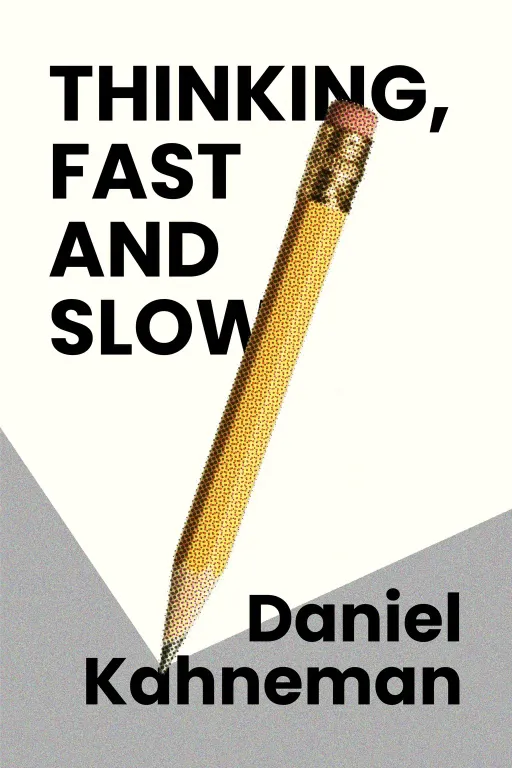
Nova: Well, Atlas, that spark is definitely real, but its journey to becoming a roaring fire is what we're dissecting today. We're diving into the brilliant insights from a fascinating work called "Beyond the Canvas: The Hidden Structure of Artistic Genius." It's a book that masterfully synthesizes foundational psychological theories from giants like Daniel Kahneman, author of "Thinking, Fast and Slow," and Graham Wallas, who penned "The Art of Thought." What's remarkable is how this book bridges the gap between cognitive science and the very human, often messy, process of creativity, making these complex ideas incredibly accessible for anyone who creates, whether they're painting a canvas or designing a new strategy.
Atlas: Okay, so it's not just about waiting for inspiration, it's about actively understanding and working with how our brains actually work? That makes me wonder how much potential we leave on the table by just hoping for genius to strike.
Nova: Exactly. And that brings us to our first deep dive: the dual engine of creative thought.
The Dual Engine of Creative Thought: Intuition Meets Deliberation
SECTION
Nova: Kahneman introduced us to System 1 and System 2 thinking. System 1 is our fast, intuitive, almost automatic thought process – it's what generates gut feelings, quick associations, and those sudden flashes of insight. System 2 is slower, more deliberate, analytical, and requires effort. For a long time, creativity was often pigeonholed as a purely System 1 endeavor – the spontaneous flash. But "Beyond the Canvas" argues that true, impactful genius arises when these two systems collaborate.
Atlas: But wait, isn't the whole point of art to be free-flowing and uninhibited? Doesn't System 2, that slow, deliberate analysis, just get in the way of that initial, raw spark? It sounds like trying to plan spontaneity.
Nova: That's a common misconception, and a great question. Let me give you an example. Think of a visionary architect, let's call her Elena, who's tasked with designing a new, iconic museum. Her initial System 1 'aha!' moment might be a breathtaking, almost organic shape that perfectly complements the landscape. It's innovative, audacious, and utterly captivating on paper. That's the raw brilliance.
Atlas: The intuitive spark, the pure creative leap. That's what we imagine when we think of genius.
Nova: Precisely. But here's where System 2 steps in, not to stifle, but to elevate. Elena and her team then spend months in deliberate, painstaking analysis. They’re scrutinizing structural integrity, testing materials for sustainability, optimizing light flow, ensuring accessibility for every visitor, and meticulously refining acoustics for the galleries. They're asking: The emotional stakes are high – a beautiful drawing is one thing, a functional, safe, and inspiring building is another entirely. The initial vision is refined, strengthened, and made real through an arduous, deliberate process. The true genius isn't just the intuitive spark, but the conscious engagement that transforms it into a masterpiece that stands the test of time, both aesthetically and practically.
Atlas: Wow. So it’s not about choosing between intuition and deliberation, but about a dynamic partnership. That makes sense. I can definitely relate to having a great initial idea, but then the real work, the System 2 work, is what makes it impactful. So it’s like a conductor and an orchestra – one has the vision, the other makes sure every note is played perfectly.
Nova: That’s a perfect analogy, Atlas. And it's true for any creative endeavor, from writing a novel to cooking a meal. System 1 gives you the delicious flavor combination, System 2 helps you perfect the recipe and plating.
Navigating the Creative Labyrinth: Wallas' Four Stages of Genius
SECTION
Nova: Speaking of orchestras, what if we had a roadmap for these creative processes? That's where Graham Wallas comes in with his four stages of creative thought, which "Beyond the Canvas" integrates to provide a structured approach to what often feels like chaos. Wallas gives us Preparation, Incubation, Illumination, and Verification.
Atlas: That sounds incredibly structured for something that feels so chaotic. How do you incubate? Or verify? It sounds a bit like trying to schedule a dream. And for our listeners who are facing a creative block right now, how does this actually help them find a new path?
Nova: That's the beauty of it. It’s not about scheduling inspiration, but understanding the natural phases and creating the for each. Let's follow a struggling screenwriter, Sarah, as she tries to crack the ending of her script.
Nova: First,. Sarah immerses herself. She reads dozens of detective novels, studies film noir techniques, researches historical police procedures, interviews actual detectives. She outlines her characters, their motivations, the plot points she so far. She's filling her mind with all the necessary ingredients. She's deeply frustrated because a crucial plot twist just isn't landing.
Atlas: So, System 2 heavy, right? Gathering all the data, the facts, the context.
Nova: Exactly. But then she hits a wall. Total creative block. Instead of forcing it, she moves to. She steps away from the script completely. She goes for long hikes, she gardens, she meets friends for coffee and talks about anything but screenwriting. Her conscious mind is relaxed, but subconsciously, all those prepared ingredients are still churning. This is where System 1 is working behind the scenes.
Atlas: That's the part that always feels like "doing nothing" but is actually essential. I imagine a lot of our listeners, especially those leading creative teams, struggle with giving themselves permission to "incubate."
Nova: Absolutely. And then, the magic moment:. Sarah is doing dishes, completely disengaged from her script, when suddenly, A critical plot twist, a missing character motivation, a way to tie all the threads together, flashes into her mind with stunning clarity. It's her 'aha!' moment. She rushes to jot it down, the solution feeling both sudden and inevitable.
Atlas: Wow! That's the "lightbulb" moment, the pure intuitive hit. But then what? You can't just ship the dishes.
Nova: That leads to. Sarah returns to her script, now with this brilliant new insight. She doesn't just blindly insert it. She meticulously rewrites, testing the new ending against her existing plot, ensuring it makes sense, strengthens character arcs, and elevates the story. She gets feedback from trusted colleagues, looking for any logical gaps or inconsistencies. She refines, polishes, and ensures this intuitive flash integrates perfectly into the deliberate structure she's built. The emotional journey here is profound: from frustration and doubt, through a period of quiet reflection, to the exhilarating rush of discovery, and finally, the meticulous, satisfying work of bringing it to life.
Atlas: So it's less about a rigid checklist and more about understanding the natural rhythm of creative work. That's a huge shift from just waiting for lightning to strike. It makes creative blocks feel less like a failure and more like a necessary stage.
Synthesis & Takeaways
SECTION
Nova: Precisely. And what "Beyond the Canvas" ultimately reveals is how Kahneman's two systems underpin Wallas's stages. System 2 is dominant in Preparation and Verification – the hard, analytical work. System 1 shines in Incubation and delivers the Illumination. True creative mastery is about consciously moving between these, knowing when to push, when to step back, and when to meticulously refine.
Atlas: So, if I'm understanding this right, true creative genius isn't just being 'gifted' with inspiration. It's about consciously engaging these two thinking systems throughout a structured, albeit fluid, process. It's almost like building the perfect machine for 'aha!' moments, for anyone who wants to bridge logic and emotion in their work.
Nova: Exactly! It's about becoming the architect of your own insights. And when you next encounter a creative block, remember that it's not a dead end, but an invitation to intentionally engage both your quick insights and deeper reflection to find a new path. It means giving yourself permission to step away, to let your subconscious work, and then to come back with that deliberate, critical eye.
Atlas: That's a powerful reframe. It transforms creative blocks from frustrating obstacles into strategic opportunities. It makes them feel less like a failure and more like a signpost.
Nova: Indeed. It transforms what many consider a 'blind spot' in their creative process into a strategic advantage, a deliberate path to deeper, more impactful artistic expression. It's about empowering yourself to not just ideas, but to genius.
Atlas: What an incredible way to look at it. It really makes you think about how you approach every creative challenge, every problem that seems insurmountable.
Nova: Absolutely. This is Aibrary. Congratulations on your growth!