

The Rationality Paradox: When Logic Meets Human Nature
Golden Hook & Introduction
SECTION
Nova: Atlas, I was reading this wild statistic. Did you know that people are more likely to buy a product if it's placed at eye level in a supermarket, even if they explicitly prefer the brand on the bottom shelf?
Atlas: Huh. Really? So, our 'rational' shopping lists are battling against the primal urge to grab what's easiest? That's kind of depressing for my grocery budget.
Nova: Exactly! It’s this constant, subtle tug-of-war in our minds. And that’s exactly what we’re dissecting today, pulling back the curtain on the invisible forces guiding our decisions, with insights from two incredible books.
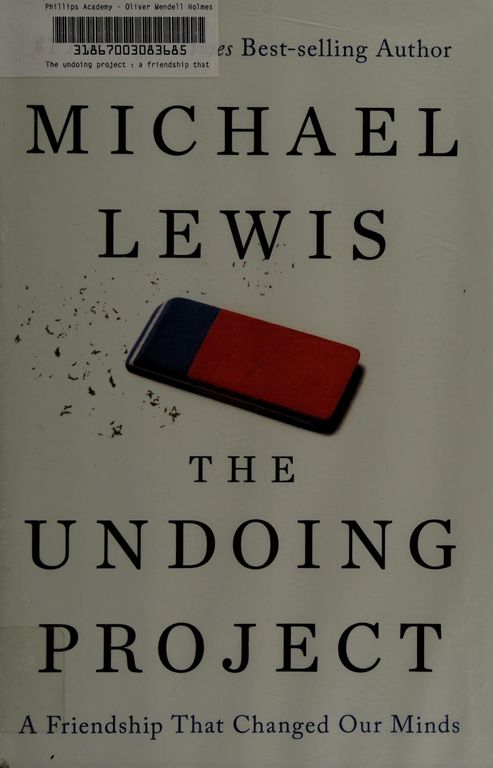
Atlas: Oh, I like that. We're talking about Michael Lewis's "The Undoing Project," which brilliantly chronicles the partnership of Daniel Kahneman and Amos Tversky, and then Rolf Dobelli’s "The Art of Thinking Clearly."
Nova: Absolutely. Lewis’s book is a masterclass in narrative, showing us the human story behind the revolutionary ideas of Kahneman and Tversky. It’s not just about their theories; it’s about this incredible intellectual friendship that fundamentally reshaped our understanding of human judgment.
Atlas: Right, like, Kahneman was this deeply reflective, often pessimistic thinker, and Tversky was his optimistic, charismatic counterpoint. Their dynamic, almost like a scientific buddy cop movie, is what made their work so accessible and powerful. It’s fascinating how their personal styles influenced their groundbreaking discoveries about how we make choices.
Nova: And then Dobelli comes in, taking those complex ideas and packaging them into this incredibly practical guide. It’s like, 'Here are all the ways your brain tries to trick you, and here's how to fight back.'
Atlas: So basically, we’re unpacking the rationality paradox: how we pride ourselves on logic, but our brains are actually wired for beautiful, predictable irrationality. This is going to resonate with anyone who's ever made a decision they immediately regretted.
The Dual-Process Mind: System 1 vs. System 2 Thinking
SECTION
Nova: Let's jump straight into the heart of Kahneman and Tversky’s work, which Lewis so eloquently brings to life: the dual-process mind. They essentially showed us that our brains have two modes of thinking, System 1 and System 2.
Atlas: Okay, so what do you mean by 'systems'? Are we talking about different parts of the brain, or more like different operating modes?
Nova: Great question! Think of them as different operating modes. System 1 is our fast, intuitive, emotional, almost automatic thinking. It's what allows you to instantly recognize a face, understand a simple sentence, or slam on the brakes if a car swerves. It’s effortless.
Atlas: So, my gut reaction? That's System 1.
Nova: Exactly. And it’s incredibly efficient. Most of our daily decisions are handled by System 1. But then there’s System 2. This is the slow, deliberate, effortful, logical part of your brain. It kicks in when you’re solving a complex math problem, trying to parallel park, or concentrating on a difficult task.
Atlas: I can definitely relate to that. System 2 sounds like it takes actual work. Like, I can feel my brain cells firing when I'm doing my taxes.
Nova: Precisely. The genius of Kahneman and Tversky, as Lewis illustrates, was showing that while System 1 is brilliant for speed, it's also prone to systematic errors, or cognitive biases. And these aren't random mistakes; they're predictable patterns of irrationality.
Atlas: Give me an example. How does System 1 trick us?
Nova: One of my favorites is the "anchoring effect." Kahneman and Tversky demonstrated that people tend to rely too heavily on the first piece of information offered—the 'anchor'—when making decisions. Even if that anchor is completely arbitrary.
Atlas: Wait, like how?
Nova: They did experiments where they'd ask participants to estimate something, like the percentage of African countries in the UN. But first, they'd spin a wheel of fortune that was rigged to land on either 10 or 65.
Atlas: Okay... and?
Nova: People who saw the wheel land on 10 gave much lower estimates for African countries in the UN than those who saw it land on 65. The random number from the wheel acted as an anchor, subtly influencing their 'rational' estimate.
Atlas: That’s wild! So, even though they knew the wheel was random, their System 1 latched onto that number and pulled their estimate towards it. It’s like my brain just can’t help but be influenced by the first thing it hears, even if it's irrelevant.
Nova: Exactly. And this isn't just an academic curiosity. Think about negotiation, or pricing strategies. The first offer, the initial price tag—that’s your anchor. It profoundly shapes subsequent offers and perceptions of value, whether it's for a car or a software license.
Atlas: So basically, our default mode, System 1, is a brilliant shortcut artist, but sometimes those shortcuts lead us off a cliff. And System 2, our logical side, is often too lazy or too busy to correct System 1’s mistakes.
Nova: You've got it. Lewis really paints this picture of Kahneman and Tversky as these intellectual detectives, uncovering these universal quirks of the human mind. Their work was so revolutionary because it challenged the long-held belief in economics that humans are fundamentally rational actors. They showed us we’re beautifully, predictably irrational.
Atlas: That makes me wonder, then, if our behavior is so predictably irrational, what ethical responsibilities do we have when designing systems that influence choices? Especially in, say, consumer contexts, or even in how we build teams?
Crafting Choice Architectures for Ethical Impact
SECTION
Nova: That’s a perfect segue, Atlas, because understanding this predictable irrationality isn't just about avoiding personal pitfalls; it's about a profound ethical responsibility. If we know how people are 'nudged,' either intentionally or unintentionally, then we have to consider the impact of those nudges.
Atlas: So, you're talking about 'choice architecture'? Like, how the environment or the way options are presented influences our decisions?
Nova: Precisely. Richard Thaler and Cass Sunstein popularized the term 'choice architecture' in their book 'Nudge,' building directly on Kahneman and Tversky's insights. It's the idea that every decision we make happens within a specific context, and that context is designed, whether consciously or not.
Atlas: Give me an example that isn't about supermarket shelves.
Nova: Think about organ donation. In some countries, you have to explicitly opt-in to be an organ donor. In others, you're automatically opted-in and have to explicitly opt-out. The opt-out countries have significantly higher donation rates.
Atlas: Oh, I see. So the default option, the 'architecture' of the choice, has a massive impact. It's not about forcing anyone, but about how the path of least resistance is structured.
Nova: Exactly. And this is where the ethical considerations become paramount. If we can design systems that make it easier for people to save for retirement, or eat healthier, or donate organs, that seems like a good thing, right?
Atlas: Well, yeah, on the surface. But it also sounds a bit like manipulation. Who decides what the 'better' choice is? For our listeners who are managing high-stakes projects or developing new products, this concept might feel like a slippery slope.
Nova: That’s the core tension, isn't it? Dobelli, in "The Art of Thinking Clearly," while focusing on individual biases, implicitly highlights this. If we're aware of these biases, we have a duty not to exploit them. The ethical innovator, as our user profile suggests, seeks to understand the 'why' not to exploit, but to empower.
Atlas: So, the goal isn't to trick people into doing what we want, but to design systems that align with their long-term best interests, even when their System 1 might lead them astray?
Nova: That's the ideal. Think about designing a user interface. If you want people to read the terms and conditions, you don't make the 'I Agree' button huge and the 'read more' link tiny and hidden. You make the beneficial choice, the informed choice, as easy as possible. It's about designing for human nature, not against it.
Atlas: That gives me chills. So, it's about acknowledging that people are predictably irrational, but then using that knowledge to build more empathetic and effective systems. Not just for consumer psychology, but for ethical marketing and even how we build AI and automation, ensuring these new technologies don't inadvertently exploit our biases.
Nova: Exactly. It's about creating choice architectures that are transparent, that preserve autonomy, and that genuinely help people achieve their goals, rather than just serving the designer's agenda. It's about trust.
Atlas: That’s a powerful distinction. It shifts the entire conversation from 'how do we get people to do X' to 'how do we design X so that people can make their best choice, given how their brains actually work.'
Synthesis & Takeaways
SECTION
Nova: So, what we've really explored today, drawing from the profound insights in "The Undoing Project" and "The Art of Thinking Clearly," is this incredible tension between our aspiration for rationality and the reality of our mental shortcuts.
Atlas: Yeah, and it’s not about judging people for being 'irrational.' It's about gaining a more accurate model of reality, as you said earlier, Nova. Understanding that our System 1 is running the show most of the time means we can be more strategic about when to engage System 2.
Nova: And more importantly, it means we have a duty, especially for those who are designing systems, products, or even conversations, to be mindful of how we're shaping those choices. The simple act of observing your own decisions, identifying where System 1 or System 2 is at play, is the first tiny step.
Atlas: And for anyone out there who's thinking about how to create meaningful impact and drive positive change, this understanding is crucial. It’s about building systems that don't just optimize for efficiency, but also for human flourishing and ethical outcomes.
Nova: It’s a call to conscious design, really. To leverage our understanding of human behavior not to manipulate, but to elevate. It's about designing for better decisions, for a better future, by respecting the beautiful, complex, and yes, predictably irrational human mind.
Atlas: That’s actually really inspiring. It means that being an ethical innovator isn't just about good intentions, but about a deep, analytical understanding of human psychology. It’s what connects theory to practice for real, positive growth.
Nova: This is Aibrary. Congratulations on your growth!









