

The Hidden Architect: Crafting Your Vision with Mental Models
Golden Hook & Introduction
SECTION
Nova: So, you've got a brilliant vision, a groundbreaking idea, ready to disrupt an industry. You're pouring your energy into it, protecting your focus. But what if the very way you're thinking about that vision is actually setting you up for predictable, avoidable failure?
Atlas: Oh man, that's a gut punch right out of the gate, Nova. For anyone trying to build something new, scale an idea, or just stay ahead of the curve, that question hits hard. We're all looking for that edge, that secret sauce to make our innovations more robust.
Nova: Exactly. Because true architects of disruption, the ones who genuinely change the game, they don't just work harder. They think. And today, we're diving into the intellectual toolkit they use, drawing wisdom from two absolute titans: Charlie Munger and Rolf Dobelli.
Atlas: These are names that resonate. Munger, the legendary partner to Warren Buffett. I'm curious, what's the most distinctive thing about his approach that we should know?
Nova: Well, Munger, whose insights are beautifully compiled in "Poor Charlie's Almanack," is renowned for his polymathic approach. He's not just an investor; he's a deep thinker who synthesizes knowledge from psychology, history, economics, even physics, to make decisions. It's utterly unique in the financial world, and it's what gives him such profound foresight.
Atlas: That's a fascinating background. It's not just about being smart, but about being smart.
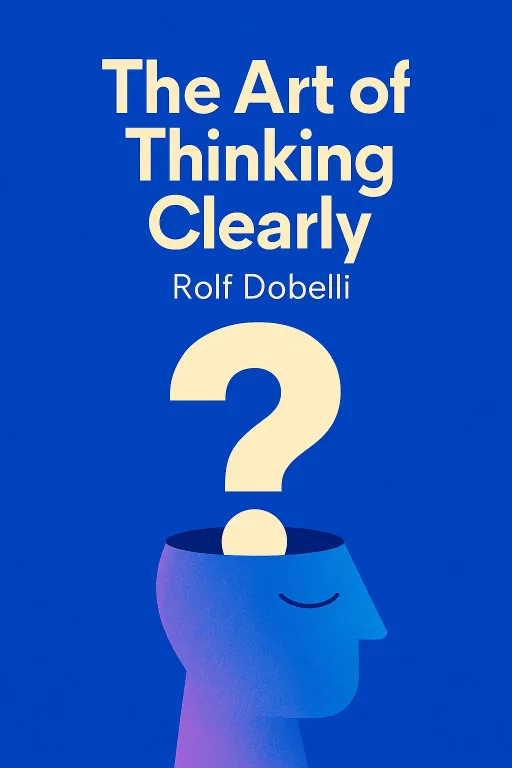
Nova: Precisely. And then we have Rolf Dobelli, a Swiss entrepreneur and author, who, in "The Art of Thinking Clearly," masterfully distills 52 common cognitive biases. He makes complex psychological traps shockingly accessible, turning academic research into a practical toolkit for everyday decision-making. He truly helps you avoid stepping on those intellectual landmines.
Atlas: So, we're essentially talking about building a superior operating system for your brain. I like that.
The Latticework of Wisdom: Munger's Multidisciplinary Toolkit
SECTION
Nova: That’s a great way to put it, Atlas. And that superior operating system starts with Munger’s core concept: the 'latticework of mental models.' He argues that to truly understand the world and make sound decisions, you need to build a framework of diverse mental models, drawing from major discipline.
Atlas: But what does that actually look like for someone trying to build a new product or scale a company? Is it just reading a lot of books from different fields? Because I imagine a lot of our listeners already do that.
Nova: It's more than just consumption; it's about. Think of it like a fishing net. Each knot is a mental model from a different field – say, one from thermodynamics, one from psychology, one from biology. The more connections, the stronger the net, and the better you can catch complex problems.
Atlas: Okay, so give me an example. How does a model from, say, physics, help me build a better app?
Nova: A classic Munger model is 'inversion.' It comes from mathematics and logic. Instead of asking, "How do I succeed with this new app?", you invert the problem: "How do I horribly with this app?" You list every catastrophic scenario.
Atlas: Inversion! That's fascinating. It’s like stress-testing your vision for failure points before they even happen. For disruptors, that's gold. It forces you to look at potential weaknesses you might otherwise overlook in your enthusiasm.
Nova: Exactly. It's a pre-mortem. By thinking backward from failure, you proactively identify pitfalls and build safeguards. Another model is the 'circle of competence,' from investing. It's about knowing the boundaries of what you genuinely understand. As a disruptor, it means knowing when to stay within your expertise and when to bring in outside perspectives.
Atlas: I see. So it's not just about knowing many things, but about knowing how to apply them and, crucially, knowing what you know. How does this multidisciplinary approach foster resilience, especially for founders navigating constant uncertainty?
Nova: It creates robustness. If you only have one hammer, every problem looks like a nail. But with a latticework of tools, if one model or approach fails to explain a situation, you have others to draw upon. It reduces blind spots, helps you anticipate shifts, and ultimately leads to more robust and resilient innovations because you've considered problems from multiple angles. It’s a powerful engine for strategic foresight.
Navigating the Mind's Minefield: Dobelli's Cognitive Bias Defense
SECTION
Nova: And speaking of blind spots, this naturally leads us to the hidden traps our own minds set for us, the very biases Rolf Dobelli so brilliantly exposes in "The Art of Thinking Clearly." Our brains are wired for efficiency, but sometimes that efficiency leads us astray.
Atlas: Oh, I know that feeling. It's like your brain is actively working against you sometimes, especially when you're under pressure trying to make big decisions. What are some of those insidious biases that trip up smart, innovative people, the ones who are constantly pushing boundaries?
Nova: One of the most dangerous, especially for disruptors, is. It's our tendency to seek out, interpret, and remember information in a way that confirms our existing beliefs or hypotheses. If you fall in love with your own idea, you're subconsciously looking for evidence that it's brilliant and ignoring anything that suggests otherwise.
Atlas: Wow, confirmation bias is a killer for innovation. You need to question your assumptions constantly, not just validate them. That's a huge one for anyone trying to build something truly new.
Nova: Absolutely. It blinds you to contradictory evidence, which can be fatal for a startup or a new product launch. Then there's the. We tend to overestimate the likelihood of events that are easily recalled or vivid in our minds. If you just had a huge success, you might overestimate your chances on the next venture, ignoring underlying risks. Or if a competitor recently failed spectacularly, it might make you overly cautious.
Atlas: That's a great point. You focus on the last thing that happened, not the broader data. And I imagine for founders, the must be a particularly painful one.
Nova: Oh, it's brutal. The sunk cost fallacy is continuing to invest resources – time, money, effort – into a failing project simply because of what you've already put into it, rather than making a rational decision based on future prospects. You've invested so much, you can't bear to let it go, even when all signs point to cutting your losses.
Atlas: I imagine a lot of our listeners building ambitious projects have felt the pull of that one. It threatens your founder resilience, draining resources and energy from truly viable opportunities. How do you actively fight these biases when they're literally baked into how our brains work?
Nova: It starts with conscious awareness. Simply knowing these biases exist is the first step. Then, you proactively build systems to counteract them: actively seeking out dissenting opinions, even if they're uncomfortable. Establish clear, objective exit criteria for projects you start them. And in a team, cultivate a culture where challenging assumptions is celebrated, not penalized. This also feeds into designing compelling user journeys by understanding how these very biases influence user behavior – it’s behavioral nudges in action.
Synthesis & Takeaways
SECTION
Nova: So, what we're talking about today is a two-pronged approach to crafting your vision: Munger's proactive model-building gives you the offensive tools to see patterns and build robust strategies, while Dobelli's insights provide the defensive playbook to avoid the mental traps that can derail even the best plans.
Atlas: It's not just about having great ideas, it's about having great to both generate and validate those ideas, and then protect them from our own internal blind spots. That's a powerful combination for anyone trying to lead with strength and sustain energy in a disruptive market. It’s about being an architect, not just a builder.
Nova: Absolutely. And the tiny step we want to leave our listeners with today, directly from Munger's toolkit, is to apply 'inversion' to one significant challenge you're facing right now. Instead of asking how to achieve success, ask: "What's the absolute worst way this could go wrong? What are all the ways this could utterly fail?"
Atlas: That's an excellent, actionable step. It helps you see around corners, identify vulnerabilities, and build in resilience proactively. It's about building that strategic foresight we're always talking about, protecting your vision from the inside out.
Nova: This intellectual toolkit, these mental models and bias awareness, are your secret weapons for robust, resilient innovation. They ensure your strategic foresight is sharp, your decisions are sound, and your path to disruption is built on solid ground.
Atlas: It’s clear that the journey of disruption and innovation is as much about mental mastery as it is about market mastery.
Nova: This is Aibrary. Congratulations on your growth!









