

Beyond the Lab: Connecting Your Research to Real-World Impact
Golden Hook & Introduction
SECTION
Nova: Alright, Atlas, rapid-fire word association. I say "Research." What comes to mind?
Atlas: Oh, easy. Lab coat, late nights, the comforting hum of expensive machinery, and probably a lot of coffee.
Nova: Good, good. Now, "Impact."
Atlas: Hmm, that’s trickier. Sometimes a press release that no one reads. Or a very polite nod from someone who clearly didn't understand a word you said.
Nova: And "Societal benefit"?
Atlas: Crickets. Or, if you're lucky, maybe a very, very polite, slightly confused nod. It’s like, the intention is there, but the connection… often isn’t.
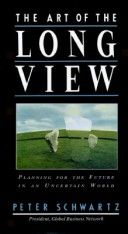
Nova: Exactly! And that disconnect, that chasm between brilliant scientific discovery and profound societal impact, is precisely what we're dissecting today. We're diving deep into how researchers can bridge that gap, making their work resonate far beyond the confines of the lab. And to guide us, we're pulling insights from two absolute titans: Peter Schwartz's seminal work, "The Art of the Long View: Planning for the Future in an Unpredictable World," and Chip and Dan Heath’s masterclass in communication, "Made to Stick: Why Some Ideas Survive and Others Die."
Atlas: Both incredible books, and what a pairing! Schwartz, a co-founder of Global Business Network, practically invented the modern approach to scenario planning, famously guiding Shell through the turbulent 1970s oil crisis with his foresight. And the Heath brothers, with "Made to Stick," took academic principles of communication and made them accessible, creating a widely acclaimed bestseller. It’s like we’re getting the ultimate playbook for both seeing the future and then actually talking about it in a way people will remember.
Nova: Absolutely. Because what Schwartz teaches us is how to anticipate the future implications of our work, and what the Heath brothers teach us is how to make those implications stick in people's minds. Without both, even the most groundbreaking research can fall into what we're calling "The Blind Spot."
The Blind Spot: Overcoming Lab Isolation
SECTION
Atlas: The blind spot. I like that. For our listeners in highly technical fields, who live and breathe data and precision, it almost feels like a natural trap to fall into, doesn’t it? You’re so focused on the exactness of your experiment, the integrity of your data, the nitty-gritty of the "how," that the "why" and the "so what" for the rest of the world can just… fade away.
Nova: That's spot on. Imagine Dr. Anya Sharma, a brilliant biotechnologist. She's spent ten years developing a revolutionary new diagnostic tool for a rare genetic disease. It's faster, more accurate, and less invasive than anything else out there. Her lab is a hive of activity, publishing in top-tier journals, presenting at niche conferences. But when it comes to securing major public funding or getting widespread adoption, she hits a wall.
Atlas: Why? Because her grant proposals are probably filled with acronyms and highly specific methodologies that make perfect sense to a peer reviewer, but leave a general funding committee member utterly bewildered?
Nova: Precisely. Her presentations are a symphony of technical specifications, P-values, and enzyme kinetics. She's so immersed in the scientific rigor – which is, of course, essential – that she forgets to translate the of her invention. She talks about the sensitivity and specificity metrics, but rarely about the child who will get an early diagnosis, or the family spared years of uncertainty.
Atlas: Oh man, I know that feeling. It’s like building a meticulously crafted, beautiful, and incredibly powerful engine, and then trying to sell it by just showing people the spark plugs and the carburetor. You need to show them the car winning a race, or safely driving a family across the country!
Nova: Exactly! The science speaking, but it's speaking in a language only a handful of specialists understand. This blind spot isn't a lack of intelligence; it's a lack of perspective. It's the assumption that the inherent value of the discovery is self-evident, when in reality, it needs a bridge to the broader societal narrative. This biotech breakthrough could change millions of lives, but if Dr. Sharma can’t articulate its long-term societal benefit to a non-scientist, it risks remaining a well-kept secret within scientific circles.
Atlas: But wait, looking at this from a precision analyst's perspective, isn't there a risk of oversimplifying the science when you try to 'bridge' it? If you strip away too much of the technical detail, are you still being true to the rigorous science? It almost feels like you're being asked to be a marketer, not a scientist.
Nova: That's a critical question, and it's where the tension lies. It's not about the science; it's about the communication. It’s about understanding your audience and tailoring your message, not compromising the integrity of your findings. The goal isn't to be less precise, but to be precisely about the impact. And that leads us perfectly into the two skills that can help researchers navigate this challenge.
Strategic Foresight & Compelling Narrative for Impact
SECTION
Nova: You got it. While the science speak for itself, as you said, humans often need a little help to hear it. And that help comes in two powerful forms: strategic foresight, as illuminated by Peter Schwartz, and compelling narrative, championed by the Heath brothers. Think of them as the binoculars and the megaphone for your research.
Atlas: Binoculars and a megaphone. I like that analogy. So, for our growth-seeking listeners, how do you even begin to apply something like Peter Schwartz's scenario planning to, say, a very specific, perhaps even microscopic, lab experiment? It sounds like something for CEOs and governments, not a researcher in a clean room.
Nova: It's all about shifting your perspective. Schwartz's "Art of the Long View" encourages us to think not just about what happen, but what happen. For a researcher, this means asking: "If my discovery succeeds, what are the five most plausible futures it could create in 10, 20, 50 years?" And crucially, "What are the five plausible futures if it or takes an unexpected turn?"
Atlas: So, for Dr. Sharma and her diagnostic tool, instead of just saying, "My tool detects Marker X with Y% accuracy," she'd be asking, "What does a future look like where every child with this disease is diagnosed early? What are the societal implications for healthcare systems, for families, for quality of life?"
Nova: Exactly! And conversely, "What if the tool has unforeseen ethical implications? What if it creates a new form of discrimination? What if the cost makes it inaccessible?" By exploring these "scenarios," researchers can not only anticipate challenges but also frame their current work within a much larger, more compelling narrative of future possibilities and needs. It transforms a technical achievement into a crucial step towards a desired future, or a safeguard against an undesirable one.
Atlas: That's a great way to link precision with societal impact, like our ethical explorer listeners are always looking for. But foresight alone isn't enough, right? You still have to that story effectively. That's where the Heath brothers come in with "Made to Stick." What's the one SUCCESs principle that most scientists, in your experience, completely miss?
Nova: Ah, the SUCCESs principles – Simple, Unexpected, Concrete, Credible, Emotional, Stories. The one most often missed by scientists? "Concrete." They often stay in the abstract. They talk about "novel therapeutic approaches" instead of "a pill that could replace daily injections." They describe "statistical significance" instead of "the difference between a child thriving and a child struggling."
Atlas: That makes so much sense. We heard about Dr. Sharma earlier, struggling to get funding. Tell me about a researcher who manage to make their complex work concrete and compelling.
Nova: Let's consider Dr. Ben Carter, a climate scientist working on incredibly complex atmospheric models. For years, he presented his data, charts, and projections to policymakers. It was all technically sound, but it wasn't moving the needle. He was hitting the same blind spot. Then, he read the Heath brothers and applied Schwartz's long view.
Atlas: Okay, so what did he do differently?
Nova: Instead of just presenting the models themselves, he started telling "future histories." He created scenarios. One scenario was called "The Coastal Retreat," a vivid, concrete narrative describing what a city like Miami would look like in 50 years under current emissions trends – not just rising sea levels, but the impact on insurance, property values, infrastructure, even cultural identity. He described specific neighborhoods underwater, specific industries collapsing.
Atlas: So he made it personal, emotional. He wasn't just talking about gigatons of carbon; he was talking about grandma's house being gone.
Nova: Precisely. And then he presented an alternative scenario, "The Green Renaissance," detailing a future where strategic investments in renewable energy and carbon capture led to vibrant, resilient coastal communities, new industries, and cleaner air. He used analogies, concrete examples, and tapped into the emotional desire for a better future, or the fear of a worse one. He essentially gave policymakers a choice between two compelling stories, both rooted in his precise scientific models.
Atlas: That's powerful. He wasn't just showing them data; he was showing them future. And because he had done the foresight work, he could back up those stories with scientific rigor. For our ethical explorer listeners, though, does framing research this way ever risk oversimplification or even manipulating the narrative? How do we stay true to the science while making it 'sticky'?
Nova: That's a crucial ethical line to walk. The key is that the "story" must be an accurate, accessible representation of the "science." Dr. Carter didn't invent data; he simply translated its implications into a human-understandable format. The Heath brothers emphasize "Credibility" for a reason. Your message must be grounded in facts, but presented in a way that resonates emotionally and concretely. It's about revealing the truth, not distorting it. It's about using narrative as a flashlight, not a funhouse mirror.
Synthesis & Takeaways
SECTION
Nova: So, what we're really talking about today isn't just better communication tactics. It's a fundamental shift in the scientific mindset. It's moving from merely discovering what to actively shaping what. It's about seeing the ripple effects of a single experiment, not just across the lab bench, but across decades, across societies, across generations.
Atlas: That's actually really inspiring. It means the intricate work our precision analysts are doing in their labs right now isn't just for a niche journal. It has the potential to rewrite the future. It’s about being proactive visionaries, not just reactive observers.
Nova: Absolutely. It's about recognizing that intellectual curiosity, precision, and ethical impact are all intertwined. And the bridge between them is foresight and narrative. So, for our listeners, here’s one concrete step: the next time you're writing a grant proposal, or preparing to present your findings, try writing a "future history." Imagine it's ten years from now, and your project has succeeded beyond your wildest dreams. What does the world look like because of it? Write that story first.
Atlas: I love that. It forces you to connect those dots, to think beyond the immediate measurements and into the human element. It's a powerful way to ensure your growth as a researcher is always linked to real-world relevance.
Nova: Exactly. It's about making your indispensable work, well, indispensable to everyone.
Atlas: This is Aibrary. Congratulations on your growth!