

The Strategic Mindset: Navigating Complexity in R&D.
Golden Hook & Introduction
SECTION
Nova: What if I told you that your brilliant, innovative R&D project, the one you're pouring your heart and soul into, might actually be doomed to fail? Not because it’s bad, but because you're playing the wrong game entirely.
Atlas: Whoa, Nova, that’s a pretty bold claim to kick us off! Are you saying all that hard work, all that ingenuity, could be for nothing if we don't understand the... the 'game,' as you put it? Lay it on me, what's the secret?
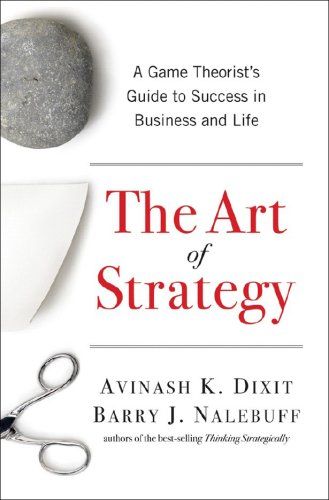
Nova: Absolutely, Atlas! It’s less about a secret and more about a mindset shift. And it's a shift beautifully articulated in two books we're diving into today. First up, we have "The Art of Strategy" by Avinash K. Dixit and Barry J. Nalebuff. Now, these aren't just any academics; they're titans in game theory who've made complex strategic thinking accessible, showing how anticipating your competitors' moves can totally reshape your own decisions. It's like they give you a crystal ball for the marketplace.
Atlas: Right, so we're talking about thinking several steps ahead, not just one. And then, complementing that, we have "Playing to Win" by A. G. Lafley and Roger L. Martin. What I love about this one is that Lafley, as a former CEO of Procter & Gamble, brings that real-world, in-the-trenches experience to the table. This isn't just theory; it's battle-tested strategy from someone who actually led a massive company to victory. He shows us that strategy isn't vague aspiration; it's about making precise choices.
Nova: Exactly! Together, these books offer a powerful lens for strategic thinking, moving us beyond just the 'how' of building, to the 'what' and 'why' of winning. It's about transforming that pioneering spirit our listeners possess into a strategic advantage.
Deep Dive into Core Topic 1: Anticipating the Game: Game Theory in R&D
SECTION
Nova: So, let's start with "The Art of Strategy." At its core, game theory is about understanding interdependent decisions. It's not just what do, but what your competitors do in response, and what do knowing. Think of it like a high-stakes chess match, but instead of pawns and rooks, you have product launches, pricing decisions, and R&D investments.
Atlas: I get the chess analogy, but how does a practical engineer, someone designing an innovative new tractor, actually apply this? Are we expected to map out every single possible move from every competitor? That sounds like a fast track to analysis paralysis.
Nova: That's a great point, and it’s a common misconception. It’s less about predicting every single permutation and more about identifying the players and their responses. Let's imagine our listener is indeed building this innovative, self-driving, AI-powered tractor. You're deep in R&D, focused on making this machine incredible. But while you're optimizing the algorithms, what are your competitors doing?
Atlas: They're probably not sitting still, that's for sure. They might be developing their own AI, or maybe they're doubling down on making their traditional tractors even cheaper.
Nova: Precisely. So, if your winning move is superior AI, and a competitor responds by accelerating their own AI development, what's your counter-move? Or, if they decide to lower prices on their traditional models to squeeze your market entry, what then? Game theory helps you anticipate these reactions. It introduces ideas like a 'dominant strategy' – a move that's best for a player regardless of what others do – or a 'Nash Equilibrium,' where no player can improve their outcome by unilaterally changing their strategy.
Atlas: So, you're saying I need to ask myself, "If I do X with my AI tractor, how will John Deere or Case IH react, and what's my plan for reaction?" That's a lot more complex than just building the best tech.
Nova: It is, but it’s also empowering. It’s about moving from being reactive to being proactive. It helps you design your R&D and market entry not just for your own success, but to neutralize or even leverage your competitors' predictable responses. For example, if you anticipate a price war, you might invest more in features that justify a premium, rather than trying to compete on cost. It’s about not getting caught in the technical weeds and overlooking the broader strategic landscape.
Atlas: That resonates. For visionaries building something new, it's easy to get tunnel vision on the creation itself. But if you don't consider the battlefield, your brilliant invention might just get outmaneuvered.
Deep Dive into Core Topic 2: Strategic Choices: Defining Your Winning Edge
SECTION
Atlas: Okay, so we're thinking like chess masters, anticipating moves. But even in chess, you have to decide game to play, board you want to be on. And that naturally leads us to our second big idea from "Playing to Win" – making clear choices about where to play and how to win.
Nova: Absolutely. Lafley and Martin argue that strategy isn't about being all things to all people. It’s about making explicit, sometimes difficult, choices. 'Where to play' refers to the specific market segments, geographies, product categories, or customer groups you’ll target. And 'how to win' is about defining your unique value proposition and the distinctive capabilities that will allow you to outperform competitors in that chosen space.
Atlas: "Where to play and how to win." It sounds deceptively simple, but I imagine it's where many brilliant ideas falter. What does that look like for our AI tractor project?
Nova: Let's stick with our self-driving AI tractor. 'Where to play' could mean: Are you targeting small, independent farms focused on precision agriculture? Or large, industrial-scale operations that need maximum efficiency? Are you focusing solely on North America, or are you looking at emerging markets? Every choice here has massive implications for your R&D, your manufacturing, and your sales strategy.
Atlas: And the 'how to win' part? Is it just about having the best AI? Because 'best' can be subjective, and technology advances so fast.
Nova: Exactly! 'How to win' isn't just about being "better"; it's about being better in a way that matters to your chosen customers and is hard for competitors to copy. For our AI tractor, is your winning edge superior predictive analytics that reduce fertilizer use by 20%? Is it an unparalleled user interface that makes complex farming tasks simple for any generation? Or perhaps it's a subscription model that offers continuous software updates and support, creating a recurring revenue stream and customer loyalty?
Atlas: But what if your 'winning move' can be easily copied? What's the point of defining it if a competitor can just replicate it next season, especially in fast-moving tech? This is the core of the deep question for me: "What is your winning move that they cannot easily counter?"
Nova: That’s the crux, isn’t it? Lafley and Martin emphasize building "distinctive capabilities" and "virtuous cycles." A distinctive capability isn't just a feature; it's something your organization does uniquely well that creates value. For P&G, that was often their brand management and distribution. For our tractor, it might be proprietary AI that's been trained on millions of acres of specific crop data, or a unique manufacturing process that allows for unprecedented customization at scale. A virtuous cycle makes your winning move stronger over time – like more users leading to more data, leading to better AI, leading to more users.
Atlas: So, it's not just about building a better mousetrap; it's about building a better mousetrap that only can build, or at least build exceptionally well, and then making sure you put it in the right house.
Nova: Precisely. It’s about having a clear, integrated set of choices that create a sustainable advantage. It moves you from just creating to strategically dominating.
Synthesis & Takeaways
SECTION
Nova: So, let's bring it all back to that deep question: If your innovative tractor project were a game, what are the key players, and what is your winning move that they cannot easily counter?
Atlas: What I’m hearing is that it’s about anticipating the game choosing your game wisely. It’s not enough to be a visionary builder; you also have to be a strategic architect.
Nova: Absolutely. Dixit and Nalebuff give us the tools to understand the moves our competitors make, helping us play defense and offense intelligently. Lafley and Martin then push us to define our own game, to choose our battlefield and our weapons, ensuring our winning move isn't just temporary, but deeply ingrained in our capabilities. It's about moving from a reactive builder to a proactive, insightful strategist.
Atlas: For anyone out there with that pioneering spirit, ready to build, ready to make it real, this isn't just theory. It's an invitation to pause, think deeply, and design your victory, not just your product. It’s about making deliberate choices that differentiate your innovation, making it truly uncounterable.
Nova: Embrace that learning curve, make those clear strategic choices, and watch your vision become an undeniable reality.
Atlas: This is Aibrary. Congratulations on your growth!