

Beyond the Lab: Cultivating Your Scientific Vision
Golden Hook & Introduction
SECTION
Nova: What if the very thing that makes you an incredible scientist – your laser focus, your precision – is also holding you back from true impact? We’re talking about the scientific blind spot.
Atlas: Whoa, Nova, that's a bold claim! Are you saying my meticulous spreadsheets are actually my Achilles' heel?
Nova: Not your Achilles' heel, Atlas, but perhaps a blind spot. Today, we're diving into how to cultivate true scientific vision, inspired by giants like Daniel Kahneman, whose groundbreaking work on cognition won him a Nobel Prize, and Simon Clews, who gives us actionable frameworks for strategic thinking. It’s about seeing beyond the immediate technical trees to the entire strategic forest.
Atlas: Okay, so this isn't about ditching the trees, but understanding how they fit into the ecosystem. I'm intrigued. Where do we even begin with this 'blind spot'?
The Scientific Blind Spot: Beyond Technical Trees to Strategic Forests
SECTION
Nova: We begin by acknowledging that intense focus, while critical for deep scientific work, can sometimes obscure the broader strategic landscape. Imagine a brilliant surgeon who has perfected a revolutionary new technique. They can execute it flawlessly, with unparalleled precision. But if that surgeon is so fixated on the that they don't see the evolving needs of the healthcare system, or if a less invasive, equally effective treatment is emerging, their technical brilliance might become obsolete, or worse, misdirected.
Atlas: But seriously, isn't deep focus exactly what we're to do? I mean, that's how breakthroughs happen. How do you maintain that rigor without losing sight of the details? It feels like a paradox.
Nova: It absolutely feels like a paradox, but true scientific leadership demands a dual perspective: deep analytical rigor expansive visionary thinking. It's not an either/or situation; it's a both/and. Think of a biotech firm that developed an incredibly sophisticated drug delivery system. Technically, it was a marvel – stable, efficient, targeted. But they were so engrossed in the engineering challenge that they didn't adequately consider market access in developing countries, or the ethical implications of its cost, or even if the existing infrastructure could support its deployment. Despite its technical brilliance, the project floundered because they missed the forest for the incredibly well-engineered trees.
Atlas: That's actually really sobering. So, it's not enough to build the best mousetrap if you haven't considered if anyone actually a mousetrap, or if there's a better, more ethical way to deal with the mice. For our precision analysts and growth seekers out there, this means connecting their lab work to a bigger picture, seeing the human element. How do we even begin to cultivate that broader vision when we're so deep in the daily grind?
Activating System 2: Cultivating Strategic Vision for Impact
SECTION
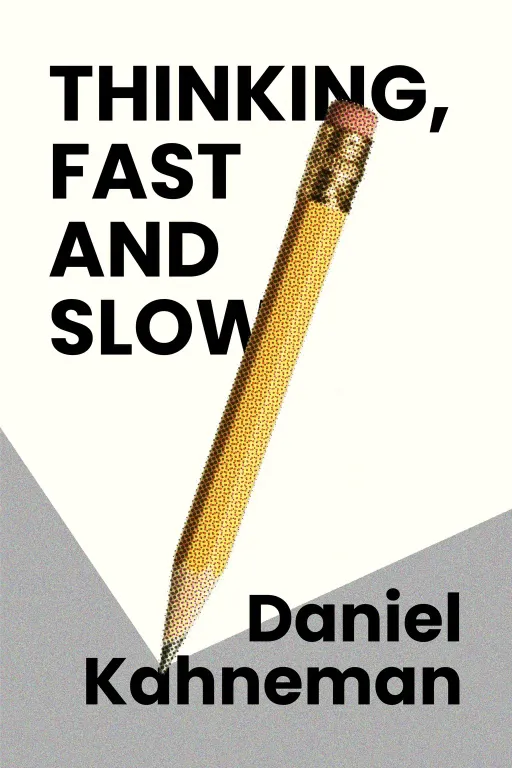
Nova: That's where we turn to the 'how.' Daniel Kahneman, in his seminal work "Thinking, Fast and Slow," introduces us to System 1 and System 2 thinking. System 1 is fast, intuitive, emotional – it's what kicks in when you instantly recognize a pattern or make a snap judgment. System 2, however, is slow, deliberate, analytical, and effortful. Our day-to-day technical work often engages System 1; we're efficiently solving immediate problems based on learned patterns. But strategic vision, foresight, and long-term planning? Those System 2.
Atlas: Hold on, so my gut feeling about an experiment is System 1, but deliberately stepping back to ask 'What's the problem we're solving here, and for whom?' is System 2? That makes sense. But how do you yourself into System 2 when System 1 is so much easier and often feels more productive in the short term?
Nova: You don't necessarily force it; you cultivate it. Simon Clews, in "The Art of Strategic Thinking," gives us actionable frameworks for exactly this. It's about consciously building practices that demand System 2 engagement. This could be dedicated 'thinking time' away from the lab bench, where you're not allowed to do hands-on work but think about long-term implications. It involves scenario planning – actively imagining multiple futures for your research, not just the ideal one. It means defining clear, long-term impact statements for your projects, and then working backward.
Atlas: I see how that shifts the mindset from 'optimize this' to 'what's the ultimate goal?' That's a huge difference. Can you give an example of how this plays out in real scientific work?
Nova: Absolutely. Consider a research team initially focused on optimizing a specific protein for a single, rare disease. Their System 1 thinking was finely tuned to the immediate biochemical challenges. But then, they deliberately engaged System 2. They started asking: "What if this protein has broader applications? What other diseases share similar pathways? What are the long-term societal benefits if we scale this beyond our initial scope?" This deliberate, strategic questioning led them to envision its therapeutic applications across multiple, more common diseases, attracting a much larger, more impactful grant, and significantly expanding their patent portfolio. That's System 2 thinking directly enhancing long-term research planning and societal impact.
Atlas: That’s a perfect example. For our listeners who are natural problem-solvers and growth seekers, this sounds like a powerful tool. But what about the ethical dimension? How does System 2 thinking help us navigate the complex ethical landscapes in biotechnology, where precision and impact often collide with profound questions?
Nova: That's a crucial point, Atlas. System 1 thinking, being fast and intuitive, can sometimes lead to 'tunnel vision' on technical feasibility – "Can we do this?" becomes the dominant question. System 2, by its very nature, allows for deliberate, effortful consideration of societal impact, unintended consequences, and diverse stakeholder perspectives. It's about consciously building ethical checkpoints and philosophical reflections into the strategic planning process, not as an afterthought, but as an integral part of shaping the vision. It ensures that your precision serves a truly ethical and beneficial purpose.
Synthesis & Takeaways
SECTION
Nova: So, what we've really explored today is that true scientific leadership isn't just about being brilliant in the lab, or perfecting a technique. It's about intentionally shaping the future through thoughtful, ethical foresight. It’s about making your precision count for something bigger, by consciously applying that slower, more deliberate System 2 thinking.
Atlas: I guess that makes sense. It's about channeling that precision and analytical strength not just into the immediate problem, but into consciously designing the future. It's almost like a scientist becoming a futurist. For anyone wanting to master their field and truly make an impact, this isn't just a nice-to-have, it's essential.
Nova: Absolutely. And the deep question from our content really hits home here: How might deliberately engaging System 2 thinking, as described by Kahneman, enhance your long-term research planning and societal impact? Think about that in your own work. What small step can you take this week to activate your System 2 and look beyond the immediate?
Atlas: That's a powerful challenge. For our listeners, take a moment this week to consciously step back from your immediate tasks and ask: What's the bigger picture I'm missing? What long-term impact am I truly aiming for? It might just change everything.
Nova: Indeed. And that’s a wrap for today’s deep dive. Thank you for joining us.
Atlas: This is Aibrary. Congratulations on your growth!