

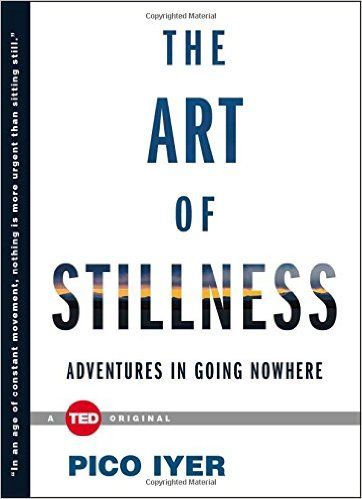
Finding Focus: The Power of Intentional Stillness
Golden Hook & Introduction
SECTION
Nova: What if the secret to achieving more, innovating faster, and truly optimizing your career... isn't about doing? What if it's about doing?
Atlas: Whoa, hold on. As a driven builder, my brain is screaming 'heresy' right now. Less? In this economy, with innovation cycles shrinking and demands escalating? My whole professional life has been about optimizing for.
Nova: Exactly! That's the paradigm we’re conditioned to, isn't it? But today, we're flipping that on its head with insights from a profound book: by Dr. Eleanor Vance.
Atlas: Dr. Eleanor Vance. That's a name I haven't come across. What's her angle?
Nova: What's fascinating about Dr. Vance is her journey. She's a former high-flying Silicon Valley executive who transitioned into neuroscience after experiencing severe burnout despite immense professional success. Her personal story imbues the book with a deeply pragmatic yet scientifically rigorous perspective, perfectly bridging the gap between high-performance demands and human well-being. She understands the pressure to constantly deliver and innovate.
Atlas: Oh, I like that. So, she's not just theorizing from an ivory tower; she's walked the walk and then reverse-engineered the science. That speaks directly to the kind of clarity and worth a focused learner looks for.
Nova: Absolutely. And her core argument is revolutionary: intentional stillness isn't a luxury for the privileged or a spiritual retreat; it's a powerful, often overlooked, strategy for achieving profound focus and impact in our hyper-connected world.
Atlas: So, for the pragmatic innovator who's always seeking to sharpen their professional edge and reclaim valuable hours, this isn't about meditating on a mountaintop, but something tangible for their daily grind?
Nova: Precisely. Today, we'll dive deep into this from two perspectives. First, we'll challenge the modern obsession with constant motion and reveal why stillness is essential for true focus. Then, we'll unpack practical principles and practices to integrate intentional stillness into your high-demand life.
The Illusion of Constant Motion & The Necessity of Stillness
SECTION
Nova: Let’s start with the big myth: the idea that busyness equals productivity. We've all been there – a calendar packed with back-to-back meetings, an inbox overflowing, multiple projects open, and a constant stream of notifications. We productive because we're always.
Atlas: I know that feeling all too well. It’s like a badge of honor, right? If you’re not swamped, you’re not working hard enough. But wait, so are you saying my always-on, multi-tasking approach is actually my progress? That feels counter-intuitive for someone trying to get ahead and build something meaningful.
Nova: Dr. Vance would argue it's not just hindering it; it's actively sabotaging it. She introduces the concept of "attentional residue." Every time you switch tasks – from an email to a spreadsheet, from a meeting to a quick chat – your attention doesn't fully disengage from the previous task. A little bit of your cognitive processing power lingers, like a ghost in the machine.
Atlas: Oh man, I feel that. It’s like when you close a hundred browser tabs, but your brain is still trying to load them all in the background. So, that fragmented attention... what does it actually to our focus?
Nova: It prevents deep work. Imagine an executive, let's call her Sarah, who starts her day by checking emails, then jumps into a strategy meeting, then quickly drafts a proposal, then responds to a Slack message, then takes a client call, all before lunch. She’s moving at lightning speed. At the end of the day, she's exhausted, but when she reviews her output, she realizes she hasn't made significant progress on any single, high-impact task. Her brain has been in constant reactive mode, never truly settling into the sustained concentration needed for complex problem-solving or innovative thinking.
Atlas: That sounds rough, but what about innovation? Doesn't constant input, constant connection, fuel creativity? How do you innovate without things, without bouncing ideas off people, without being in the thick of it? Isn't that how new frameworks emerge?
Nova: That's a brilliant question, and it gets to the heart of Dr. Vance's insight. She explains that true innovation often doesn't come from the phase, but from the phase. Think about it: many of history's greatest breakthroughs, from Archimedes' "Eureka!" in the bathtub to Poincaré's mathematical insights on a bus ride, happened during moments of diffused attention, when their minds were relaxed and not actively grappling with the problem.
Atlas: So, stillness isn't inaction, it's a different of action. It's giving your brain the space to connect the dots you've already gathered, rather than constantly trying to gather more.
Nova: Exactly. Stillness creates the mental whitespace for those "aha!" moments. When your prefrontal cortex is constantly engaged in task-switching and decision-making, it experiences decision fatigue. It's like trying to run a marathon while also solving complex algebra problems. You might move, but you won't move efficiently or strategically. Intentional stillness allows that mental space to clear, allowing for clarity, deeper insights, and ultimately, more impactful work.
Practices & Principles of Intentional Stillness
SECTION
Nova: So, if constant motion is a trap, how do we actually stillness in a world that demands our attention, for the pragmatic innovator who needs to deliver results?
Atlas: Exactly. For many of us, 'stillness' sounds like an hour-long meditation session we don't have, or a silent retreat that feels completely out of reach. How does this apply to someone with a packed schedule, who's trying to optimize their time, not find more of it to sit still?
Nova: Dr. Vance is incredibly practical here. She advocates for what she calls "micro-stillness" practices. These aren't about dropping everything for an hour, but rather integrating brief, intentional pauses throughout your day. For instance, she highlights the power of a 15-minute "focus block." This isn't just about work for 15 minutes; it's about deliberately 15 minutes to engage with a single task, completely free from distractions, followed by a conscious break.
Atlas: I can definitely relate to protecting 15 minutes. That’s one of my growth recommendations – schedule 15 minutes daily for focused reading and protect that time. So you're saying these aren't just 'nice-to-haves,' but essential tools for a sharper professional edge, for someone trying to build?
Nova: Absolutely. Think of it as recalibrating your internal compass. Another micro-stillness practice is conscious transitions. Instead of slamming one meeting shut and immediately opening another email, take 60 seconds. Close your eyes, take three deep breaths, or simply look out the window. This brief pause signals to your brain that the previous task is complete and prepares it for the next, reducing that attentional residue we talked about.
Atlas: That’s a great way to put it. It’s like hitting refresh on your mental browser. But does this actually translate into tangible benefits for career optimization or developing new innovation frameworks? Can you give me an example of someone actually putting this into practice in a high-stakes environment?
Nova: Certainly. Consider a product manager, let's call him David, working at a fast-paced tech startup. His days were a blur of sprint reviews, team stand-ups, and user feedback sessions. He felt constantly overwhelmed. After reading Dr. Vance's work, he implemented a "no-meeting Wednesday morning" rule for himself, dedicating those three hours to deep, uninterrupted product strategy. He also started a 5-minute pre-coding ritual, using that time to mentally outline his approach and clear his mind of any lingering distractions.
Atlas: And what happened? Did he suddenly become a Zen master?
Nova: Not quite, but the results were striking. David found that his strategic thinking became clearer, his code had fewer errors, and he started identifying innovative solutions he’d previously missed because his mind was too fragmented. He wasn't working more hours, but his output quality, his decision-making clarity, and his overall impact significantly improved. He was able to build better, faster, and with more foresight.
Atlas: That’s a great example. It sounds like it's less about stopping everything, and more about your attention, about being strategic with your mental energy. It's about proactive focus, not reactive busyness.
Nova: Exactly. It's about choosing where your attention goes, rather than letting it be hijacked by the constant demands of the digital world. It's a deliberate act of reclaiming your mental sovereignty, which, for a driven builder, is the ultimate form of time management and efficiency. It allows you to move from simply to the next thing, to consciously the next thing with purpose and precision.
Synthesis & Takeaways
SECTION
Nova: So, what we've discovered through Dr. Vance's work is that intentional stillness isn't a luxury; it's an essential tool for high performance. It's the whitespace that allows clarity, innovation, and truly impactful work to emerge.
Atlas: So, for the driven builder who values impact and seeks clarity, intentional stillness is actually a shortcut to progress, not a detour? It's about being more effective, not just busy.
Nova: Precisely. It’s the ultimate productivity hack, allowing you to not just more, but the right things with greater precision and innovation. It’s about cultivating a mindset where deep work, strategic thinking, and genuine insight can flourish. It’s about building a foundation of mental resilience in a world that constantly tries to pull you in a million directions.
Atlas: That’s actually really inspiring. It reframes how I think about my 'breaks' and those moments between tasks. They're not empty time; they're opportunities for mental recalibration, for building better focus.
Nova: Exactly. So, our challenge to you, our focused learners and driven builders, is to try just one 15-minute intentional stillness practice this week. Schedule it, protect it, and see what clarity emerges.
Atlas: And if you do, we’d love to hear about it. Share your experiences; tell us how intentional stillness is helping you find your focus and make a greater impact.
Nova: This is Aibrary. Congratulations on your growth!