

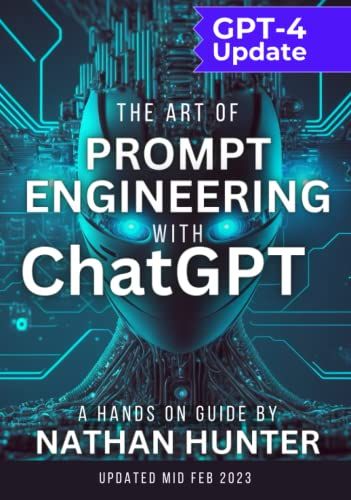
The Art of Prompt Engineering with chatGPT
Introduction
Nova: ChatGPT reached one million users in just five days. To put that in perspective, Netflix took 41 months to hit the same milestone. Instagram needed two and a half months. Five days. That's the opening stat Nathan Hunter drops in his book, The Art of Prompt Engineering with ChatGPT, and it tells you everything about the era we're living in.
Nova: That's exactly the problem Hunter set out to solve. He realized that while everyone was excited about ChatGPT, most people kept hitting roadblocks. The missing piece? Prompt engineering. And today we're diving deep into his book to understand what that actually means and why it matters.
Nova: And I'm Nova. Together we're unpacking The Art of Prompt Engineering with ChatGPT by Nathan Hunter — a hands-on guide that transforms complex AI concepts into practical, actionable skills. Let's get into it.
Beyond the Buzzword
What Is Prompt Engineering Really?
Nova: So Sky, when you first heard the term prompt engineering, what came to mind?
Nova: That's exactly the beginner's mindset Hunter addresses right at the start. He says prompt engineering is the process of designing prompts that elicit the desired response from a language model. But the key phrase is designed. Most people just ask ChatGPT something off the top of their head and accept whatever comes back. Hunter argues that's like walking into a library, mumbling a few words, and hoping the librarian hands you the perfect book.
Nova: He spends significant time explaining how large language models actually work. Not in a super technical way, but enough to build intuition. He wants you to understand that ChatGPT isn't thinking — it's predicting the next most likely word based on patterns it learned from massive amounts of text. Think of it as an incredibly sophisticated autocomplete, not a conscious mind.
Nova: Exactly. Hunter's whole philosophy is built on one core principle: the quality of your questions dictates the quality of the AI's responses. He calls it the single most important lesson in the entire book. If you only remember one thing, it's that. Garbage in, garbage out — but also, precise in, precise out.
Nova: Yes, he spent a decade helping NGOs build leadership skills and five years in SaaS companies making technical training engaging. So the book is built as a hands-on guide, not a lecture. Every chapter has exercises. He wants you at your keyboard, trying things as you read. One reviewer on LinkedIn even mentioned their 14-year-old daughter found the book genuinely insightful because of how accessible Hunter makes everything.
Hunter's Core Framework
The Five Pillars of Prompt Engineering
Nova: At the heart of Hunter's book are what he calls the five pillars of prompt engineering. These are the foundational techniques that work together to transform your prompts from basic to powerful.
Nova: Let's start with pillar one: Iteration. Hunter says the biggest mistake people make is treating prompting as a one-shot deal. You write a prompt, get a response, and either accept it or give up. Instead, he teaches you to treat it like a conversation — a feedback loop. You prompt, you evaluate, you refine, you prompt again. His whole mantra is iteration for excellence.
Nova: Perfect analogy. Pillar two is Roleplay — or persona prompting. This is Hunter's favorite technique. Instead of just saying help me write an email, you say act as a senior marketing director with 20 years of experience. Write an email to a skeptical client. That role assignment completely transforms the tone, vocabulary, and strategic thinking in the output.
Nova: And Hunter encourages you to get creative with it. In the book he even shows an example of summarizing a technical article as Rick from Rick and Morty — complete with burps and sayings. It's memorable, and it makes the point that persona dramatically shapes output.
Nova: Pillar three is Training ChatGPT — which in technical terms is few-shot prompting. You give the model examples of what you want before asking it to produce something new. So instead of saying summarize this article, you might first show it two examples of summaries you like, then ask it to follow the same style.
Nova: Exactly. Pillar four is Creating Lengthy Content — Hunter devotes an entire section to using ChatGPT as a writing assistant for articles, blogs, even books. He wrote and published this very book on Amazon in just ten days, using ChatGPT and MidJourney. But he's very clear: ChatGPT is an assistant, not a replacement. It helps you rephrase, brainstorm, break through blocks — but your unique ideas and perspective are what make the content valuable.
Nova: Pillar five is about Format and Context Control. It's about being explicit about how you want the output structured — bullet points, paragraphs, tables, specific word counts, reading level. Hunter shows how the same article summarized with different format instructions yields radically different results. He even demonstrates asking for a summary a 10-year-old would understand, and the output transforms completely.
Nova: That's Hunter's point. Master these five, and you can handle almost any prompting scenario. The rest is refinement.
Deep Dive
Iteration and Roleplay — The Game Changers
Nova: Let's zoom in on the two techniques Hunter seems most passionate about: iteration and roleplay. These are the ones that, in his experience, create the biggest leaps in output quality.
Nova: Hunter gives a great example in the book. He was working on translating a Japanese poem. The first translation was accurate but flat. So he iterated. He asked for a rhyming version. Then he tweaked the tone. Then he asked for specific constraints — don't change the structure, but make it rhyme. Each iteration got closer to what he actually wanted. The key insight is that you don't need the perfect prompt on the first try. You need a good starting prompt and the willingness to refine.
Nova: That's brilliant. And that leads perfectly into roleplay. Hunter treats ChatGPT almost like a method actor. When you assign a persona, you're giving it a character to inhabit. He shows examples where the same task — summarizing a technical article — produces wildly different results depending on whether the persona is a corporate executive, a university professor, or Rick from Rick and Morty.
Nova: It absolutely improves accuracy for domain-specific tasks. When you tell ChatGPT to act as an experienced patent attorney rather than just help me with legal stuff, you get terminology, structure, and nuance that matches real patent law. Hunter emphasizes that specificity in the role matters. Don't say you are an expert. Say you are a data scientist with 15 years of experience in healthcare analytics, skilled at explaining complex findings to non-technical executives. That level of detail focuses the model's predictions into a much narrower, more relevant space.
Nova: Exactly. And Hunter encourages readers to run A/B tests. Take one task, run it with no role, a generic role, and a highly specific role. The differences in tone, depth, and usefulness are striking. He wants you to experience that firsthand, not just read about it.
Nova: Very much so. One reviewer called it a guide to unlocking a new level of communication, not just a technical manual. And I think that blend — practical exercises wrapped in an inviting, conversational tone — is what makes the book stand out in a sea of AI guides.
From Workplace to Personal Life
Real-World Applications
Nova: Hunter doesn't just teach techniques in the abstract. The third part of his book is entirely dedicated to real-world applications — in the workplace, in writing, and in personal life.
Nova: A big one is summarizing lengthy content. Hunter shows how most people just say summarize this and get a wall of text back. Instead, he demonstrates asking for bullet points, then key quotes, then a single paragraph, then a version for a 10-year-old — all from the same article. By varying the format, you extract different kinds of value from the same source material.
Nova: Right. He also covers using ChatGPT for writing assistance — not to write for you, but with you. He describes how he used it throughout the book-writing process: rephrasing paragraphs to be more accessible, brainstorming when he got stuck, generating options for how to complete a thought. He calls it an editing assistant, not an author replacement.
Nova: Hunter covers translation work extensively — and this is where his iterative approach really shines. He walks through translating a Japanese poem, showing how you can prioritize accuracy versus rhyme versus natural flow by tweaking your prompts. He also covers using ChatGPT for learning, creative projects, and even just making tedious tasks more fun through roleplay.
Nova: Exactly. And the point isn't that you should always use cartoon characters. The point is that Hunter wants you to experiment. Try different styles, find what works, and build your own personal prompt library. He recommends saving your best prompts as templates you can reuse and adapt.
Nova: Hunter's philosophy is that consistency comes from structure. The prompt engineering mindset means approaching every interaction with intention: What role should the AI play? What context does it need? What format do I want? How will I iterate if the first response isn't right?
The Human Element
AI Will Not Replace You — But Here's What Will
Nova: One of the most striking sections of Hunter's book is the final part, where he tackles the big existential question: will AI replace us?
Nova: Yes, but he doesn't stop there. He makes a more nuanced argument. AI won't replace you — but someone who knows how to use AI effectively might. That's the real takeaway. Prompt engineering isn't just a cool skill; it's becoming a competitive advantage.
Nova: That's exactly his framing. And he grounds this in a really important distinction. ChatGPT can generate ideas, rephrase content, and help you break through creative blocks — but it cannot have your unique perspective, your lived experience, or your original vision. He shares how he tried to use ChatGPT to create the outline for his book, gave it feedback multiple times, and it still didn't produce the outline he wanted to write. His vision, his structure, his ideas — those remained irreducibly human.
Nova: Hunter's advice is refreshingly simple. Start with curiosity. Experiment constantly. Run A/B tests. Build your own prompt library. Don't wait until you feel like an expert — the whole point of the book is that you learn by doing. He even ends by looking beyond ChatGPT, discussing the broader AI landscape and where things are headed, but his core message stays the same: the human in the loop is not a weakness of the system — it's the point.
Nova: And that's what makes The Art of Prompt Engineering with ChatGPT more than just a technical manual. It's really a book about communication in the age of AI. About learning to be clear, specific, and intentional — not just with machines, but as a general skill that transfers everywhere.
Conclusion
Nova: So let's bring it all together. Nathan Hunter's The Art of Prompt Engineering with ChatGPT is built on a simple but powerful premise: the quality of your output depends on the quality of your input. And he gives you a complete toolkit to improve that input dramatically.
Nova: Right. Iteration is probably the single most important habit to build. Your first prompt is rarely your best prompt. Refine, redirect, and reshape the output through conversation.
Nova: Hunter also leaves us with a reassurance that's worth holding onto: AI will not replace you. Your ideas, your perspective, your lived experience — those remain uniquely valuable. But the ability to amplify them through effective prompt engineering? That might be the most important meta-skill of the coming decade.
Nova: Hunter wrote this book in ten days with the help of ChatGPT and MidJourney, but he's the first to say the AI didn't write it — he did, with AI as his assistant. That distinction is everything. The art of prompt engineering is really the art of knowing what you want to say and learning how to ask for it.
Nova: Congratulations on your growth! Keep prompting, keep iterating, and keep bringing your unique voice to everything you create.