

The 'Specific Shift': Stop Viewing Culture as Static, Start Seeing Its Dynamic Evolution.
Golden Hook & Introduction
SECTION
Nova: You know, Atlas, most people think of culture like a mountain range. It's just – ancient, imposing, fixed. You climb it, you live around it, but you don't really change it.
Atlas: Oh, I like that analogy. Pretty much. It’s the backdrop, the inherited operating system we're all running on. You just adapt to the terrain, right?
Nova: Exactly! But what if I told you that entire mountain range is actually more like a giant, slow-motion sandcastle being constantly built, reshaped, and even sometimes intentionally bulldozed by generations of human hands?
Atlas: Whoa. That’s a fundamentally different landscape. So, we're not just passive inhabitants of culture; we're its architects, its engineers, its... sandcastle builders?
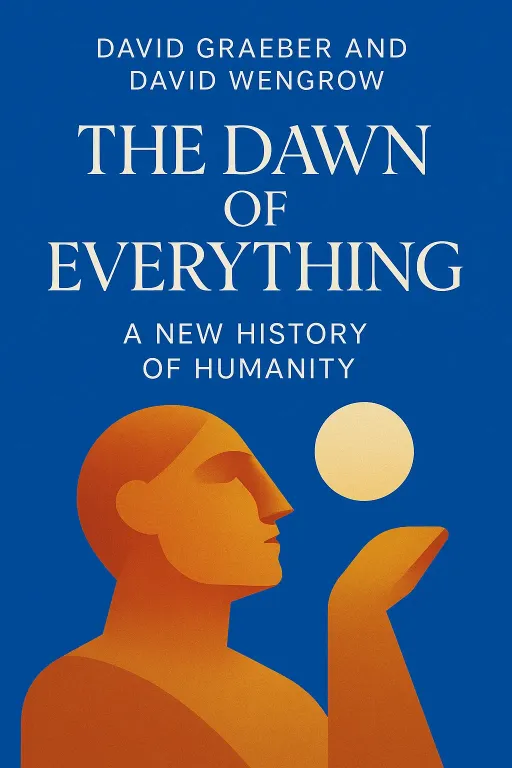
Nova: Precisely. And that's the 'Specific Shift' we're exploring today: stopping the static view of culture and embracing its dynamic evolution. We’re doing this through two incredible lenses. First up, we're diving into the monumental "The Dawn of Everything" by the late, brilliant anthropologist David Graeber and archaeologist David Wengrow. Graeber, known for his work on debt and anarchism, was a true intellectual provocateur, and this book, released posthumously, is a paradigm-shifter that literally rewrites human history.
Atlas: Rewrite human history? That’s not a small claim. I mean, we're talking about challenging foundational narratives here. What kind of fundamental shifts are we talking about?
The Myth of Static Culture: Reclaiming Human Agency in History
SECTION
Nova: Well, the biggest blind spot they tackle is our ingrained idea of cultural evolution as a linear escalator – from simple hunter-gatherers, to settled farmers, leading inevitably to cities, states, and hierarchies. It's the story we've been told for centuries.
Atlas: Right, the classic 'progress narrative.' But if culture fixed, doesn't that simplify things for leaders, for instance? You just navigate the existing structure, rather than trying to invent something new?
Nova: That’s the seductive appeal of the 'fixed' view. It removes agency. But Graeber and Wengrow completely dismantle this. They show that early human societies were incredibly diverse, experimental, and often their social structures. They weren't just passively evolving up a ladder.
Atlas: So, they weren't just passively evolving? They? What does that say about human nature? That’s going to resonate with anyone who’s ever felt trapped by an inherited system.
Nova: It’s a profound shift in perspective. Take, for example, the incredibly complex seasonal cities found in ancient Ukraine, like Maydanets. These were massive, sprawling settlements, larger than any European city for thousands of years, but people only lived in them for part of the year. The rest of the time, they dispersed into smaller, egalitarian groups. They to switch between hierarchical urban living and decentralized egalitarianism, often on an annual cycle.
Atlas: That’s incredible. So, they could literally just hit the reset button on their social structure? How did they even coordinate something like that across such large populations? It sounds like a logistical nightmare, let alone a cultural one.
Nova: It wasn't always seamless, but it required immense intentionality and a deep understanding of social mechanics. Or consider the Wendat Confederacy in North America, a sophisticated indigenous society that systematically rejected many European notions of hierarchy and authority, even when those ideas were introduced. They actively maintained a decentralized, consensus-driven culture for centuries. They were often highly critical of European social structures, seeing them as oppressive.
Atlas: Wow. That’s fascinating. It sounds like culture is more like an operating system they could just... reboot. How does that relate to resisting inherited culture today? Because resisting established norms, especially in a large organization, feels like swimming upstream.
Nova: It highlights that resistance and creation are two sides of the same coin. These societies weren’t just resisting; they were alternatives. They understood that their culture was a product of their choices, not some unchangeable destiny. It means that the 'way things have always been done' is actually a series of choices that can be revisited, challenged, and reshaped. It's about recognizing that human agency has been at the heart of cultural formation.
Culture as Everyday Creation: Intentional Community & Local Interaction
SECTION
Nova: And this active, dynamic process of cultural creation isn't just ancient history. It's happening right now, in our immediate communities, in our teams, in our homes. And that brings us to our second book, "The Art of Neighboring" by Jay Pathak and Dave Runyon.
Atlas: Wait, from ancient cities to... my cul-de-sac? How do these two ideas connect? One sounds like grand history, the other like a local community project. It feels like a massive leap in scale.
Nova: It’s a leap in scale, but a profound connection in principle. "The Art of Neighboring" argues that the fundamental unit of cultural creation, the place where culture is most tangibly built and felt, is often right next door. It's about rediscovering the ancient human need for local connection and intentional community building, which is often overlooked in our increasingly globalized, digital lives.
Atlas: Okay, so it’s about micro-culture. For someone trying to cultivate a strong team culture, for instance, what's the 'neighboring' equivalent? Is it just about being friendly, or is there a strategic framework for intentional connection? Because 'being friendly' doesn't usually lead to 'strategic impact.'
Nova: It goes far beyond just being friendly. The book challenges us to know our actual neighbors – not just the ones across the street, but the 8-10 households closest to us. It's about intentional presence: learning their names, knowing their stories, sharing meals, offering help. They argue that these small, consistent acts of intentional interaction are the bedrock upon which real, resilient community culture is built. They're essentially saying, stop trying to fix the whole world and start by fixing your block.
Atlas: That’s a perfect example. I imagine a lot of our listeners, especially those leading teams, might think, "But my team is global, we're remote, we don't 'neighbor' in the traditional sense." How does this translate for them?
Nova: It translates beautifully. Think of your closest collaborators as your 'cultural neighbors.' It’s not about physical proximity, but intentional connection. It means moving beyond transactional interactions to genuine curiosity about their lives, their challenges, their aspirations. It’s about creating shared experiences, even virtually, that build trust and a sense of belonging. It's the micro-actions that create the macro-culture.
Atlas: But isn't it easier to just inherit a culture, be it in a society or a company? Actively creating it sounds like a lot of work. What's the payoff for this intentionality? Because leaders are looking for sustainable success, not just more busywork.
Nova: The payoff is a culture that is robust, adaptable, and deeply resonant. Inherited cultures can feel hollow, unmotivating, or even toxic. Actively created culture, whether by ancient Wendat or modern neighbors, fosters genuine ownership, resilience, and a sense of shared purpose. It’s a culture built from the ground up, not imposed from the top down. It’s about building a foundation of human connection that allows for dynamic evolution, rather than rigid adherence.
Synthesis & Takeaways
SECTION
Nova: So, the 'Specific Shift' is realizing culture is always being made, from the grandest historical experiments to the smallest, most intentional community interactions. It’s about recognizing our inherent agency.
Atlas: So, the deep question from the book content was, 'Where in your own life or work do you see culture being actively created or resisted, rather than just inherited?' For our listeners, especially those leading teams, what's one practical way they can apply this 'specific shift' tomorrow?
Nova: Start by intentionally mapping your 'cultural neighbors' – the 5-10 people whose interactions most directly shape your daily culture, whether at home or work. Then, identify one small, consistent action you can take this week to foster connection, shared purpose, or even gentle resistance to an unhelpful norm with them. It could be a five-minute check-in, a shared coffee break, or a specific question that opens up a dialogue.
Atlas: That's a tangible first step. It's about remembering that culture isn't something that just us; it's something we, every single day, through our intentional actions and interactions. It’s about reclaiming that agency.
Nova: It’s about embracing our roles as cultural architects, whether we're aware of it or not. The future of our cultures, big and small, rests on our active participation.
Atlas: This is Aibrary. Congratulations on your growth!