

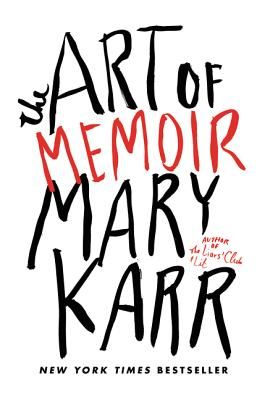
The art of memoir
Introduction: The Unflinching Guide to the Self
Introduction: The Unflinching Guide to the Self
Nova: Welcome back to 'The Scripted Life.' Today, we're diving into a book that is less a how-to guide and more a boot camp for the soul: Mary Karr’s seminal work, The Art of Memoir.
Nova: : I've heard it described as the essential text for anyone who thinks they have a story worth telling. But what makes Karr the definitive voice on this? She’s a poet, a recovering alcoholic, a professor, and someone who has laid her own messy life bare in books like The Liars' Club.
Nova: Exactly. That blend of the academic and the deeply, sometimes painfully, personal is her superpower. She’s not just teaching craft; she’s teaching survival through craft. She tells us memoir isn't just about what happened, but how you survived telling it. The book is packed with rules, but they feel less like mandates and more like hard-won wisdom.
Nova: : I’m curious about the tension right out of the gate. Memoirists always grapple with memory. Did Karr offer any immediate comfort or just more anxiety about getting it right?
Nova: She offered a bracing dose of reality. She essentially tells you that your memory is a faulty narrator, a pinball machine of fragments, and that’s okay. The comfort comes when she shows you how to use literary tools to build a structure sturdy enough to hold that shaky memory. It’s about transforming the raw material of your life into something that resonates universally.
Nova: : So, we're not looking for a diary entry; we're looking for literature born from life. I’m ready to dissect her approach. Where should we start unpacking this masterclass?
Nova: Let's start with the biggest hurdle every memoirist faces: the uncomfortable, unavoidable question of truth.
Key Insight 1: Honesty vs. Narrative Necessity
The Truth Conundrum: Liar, Liar, Pants on Fire
Nova: Karr dedicates significant space to the concept of honesty, which is fascinating because memoir is, by definition, non-fiction. But she quickly complicates that. She knows memory is subjective, and sometimes, for the sake of a compelling narrative, you have to make choices.
Nova: : That sounds dangerous. If I start fudging details for better pacing, haven't I just written fiction and called it a memoir? Where does Karr draw the line between artistic license and outright fabrication?
Nova: She doesn't draw a clean line; she draws a boundary. She insists that while you must be truthful about the emotional core—the of the event—you have the right to shape the scene. If you can't remember the exact words spoken at a pivotal argument twenty years ago, you have the right to reconstruct the dialogue to capture the of that fight.
Nova: : So, it’s about emotional fidelity over photographic recall. She’s giving us permission to be imperfect historians of our own lives.
Nova: Precisely. She argues that the reader is coming to a memoir for an, not a deposition. If you’re stuck on a minor factual detail that stalls the momentum, Karr suggests you must be willing to sacrifice that detail for the sake of the larger truth the story needs to convey. It’s a high-wire act.
Nova: : I remember reading about a famous case where a memoirist was called out for inventing a character or a major event. How does Karr advise writers to protect themselves from that kind of public reckoning?
Nova: Her advice is twofold. First, know your facts well enough that you can defend the behind your choices. Second, and this is crucial, she advises writers to focus intensely on the sensory details of the moments they remember perfectly. If the scene is rich, immediate, and feels true in the reader’s gut, they are far less likely to nitpick the exact date or the color of the wallpaper.
Nova: : That makes sense. If I’m smelling the stale coffee and feeling the tension in the room, I’m less concerned with whether the character was wearing a blue shirt or a green one.
Nova: Exactly. She wants you to be a faithful witness to the. She often uses the analogy of a dream—dreams are emotionally true even when factually absurd. Memoir should live in that space between waking reality and dream logic.
Nova: : What about the opposite problem? When you remember something clearly, something so painful or embarrassing that you want to bury it. Does Karr force you to include it?
Nova: She forces you to confront it, but not necessarily to publish it raw. She says the act of writing about the difficult material—the alcoholism, the trauma, the family secrets—is cathartic in itself. The book you publish is the of that confrontation. If you’ve wrestled with the material honestly on the page, even if you cut the most salacious bits, the reader will sense the integrity underneath.
Nova: : It sounds like the real work isn't the writing, but the self-excavation that precedes the writing.
Nova: It is. She frames memoir as an act of moral courage. You are not just telling a story; you are making a covenant with the reader that you have looked into the abyss of your own past and are reporting back what you saw, without flinching too much.
Nova: : So, Pillar One: Be emotionally honest, even if it means being factually flexible. It’s a powerful starting point that immediately separates the literary memoirist from the casual diarist.
Nova: It sets the bar high. But once you’ve decided what you’re to say, the next question is you say it. And that brings us to Karr’s obsession with sensory detail.
Key Insight 2: The Power of Vivid Detail
Carnality and Scene: Writing with All Five Senses
Nova: If truth is the foundation, Karr’s concept of 'carnality' is the mortar. She hammers home the idea that abstract statements kill memoir. You cannot tell us your childhood was 'lonely'; you must show us the specific, physical manifestation of that loneliness.
Nova: : Carnality—that’s such a visceral word. It sounds almost physical, almost carnal. What does she mean by applying that to prose?
Nova: It means engaging every sense available. She demands that writers paint a physical reality so immediate that the reader feels they are standing right there in the scene. It’s the difference between saying, 'The bar was depressing,' and describing the specific, sticky residue on the mahogany countertop, the smell of stale beer mixed with cheap disinfectant, and the way the fluorescent light hummed just above your head.
Nova: : I see. It’s about grounding the reader in the and the before you get to the.
Nova: Exactly. She’s a huge proponent of scene over summary. A summary tells the reader, 'I was angry for three weeks.' A scene shows the reader the clenched jaw, the slammed door, the food you refused to eat, and the specific, cutting remark you rehearsed in the shower. Karr insists that scene is the engine of memoir.
Nova: : How much detail is too much? I can imagine a writer getting bogged down trying to describe every single object in a room, turning the prose into a tedious inventory.
Nova: That’s the tightrope walk. Karr warns against 'decoration'—listing things just to sound poetic. The detail must be. It must carry emotional weight or advance the narrative. If the description of the chipped porcelain teacup doesn't hint at your grandmother's fragility or your family's decline, cut the teacup.
Nova: : So, every sensory detail must serve a dual purpose: grounding the scene revealing character or theme.
Nova: Precisely. Think about her own writing. When she describes her descent into alcoholism, it’s not just about the drinking; it’s about the specific, gritty texture of the dive bars, the taste of cheap whiskey burning a path down her throat, the way the cigarette smoke clung to her hair. That physical reality makes the emotional reality undeniable.
Nova: : It sounds like Karr is essentially saying, 'Show, don't tell,' but with a much more aggressive, almost demanding tone.
Nova: She is. She’s telling you that if you don't make the reader the grit under their fingernails, they won't trust the story of your soul. She wants the writing to be so immediate that the reader forgets they are reading and starts.
Nova: : This requires intense observation, not just of the past, but of the present moment while writing. You have to train yourself to notice the texture of things.
Nova: Absolutely. She encourages writers to keep notebooks dedicated solely to sensory observations—the sound of a specific type of rain, the exact shade of a bruise, the way someone holds their hands when they lie. These become your ammunition when you sit down to write the actual narrative.
Nova: : It shifts the focus from 'What profound thing did I learn?' to 'What did I actually see, hear, smell, taste, and touch during that profound moment?'
Nova: That’s the key transition. And when you master that, you start developing the third pillar: the voice that delivers these sensory truths.
Key Insight 3: Developing an Unmistakable Narrative Persona
Voice as Anchor: The Personality Holding the Story
Nova: If carnality is the engine, voice is the chassis of the memoir. Karr emphasizes that your voice—that unique way you see and report the world—is what keeps the reader tethered, especially when the subject matter gets dark or confusing.
Nova: : I always thought voice was just about having a distinct vocabulary or sentence rhythm. Karr seems to suggest it’s deeper than that, tied to identity.
Nova: It is deeply tied to identity. She links voice directly to where you grew up, your family dynamics, your values, and your entire worldview. Your voice is the accumulated result of your life experiences filtered through your personality. If you try to adopt a voice that isn't authentically yours, Karr says it will sound hollow, like a costume.
Nova: : So, if I’m a naturally cynical person, my memoir voice should probably lean into that cynicism, rather than trying to sound like a relentlessly optimistic self-help guru?
Nova: Precisely. She champions the voice that emerges naturally from the material. If your material is chaos, your voice might be sharp, fragmented, and darkly humorous—like Karr’s own voice, which is often self-deprecating yet fiercely intelligent. The voice must match the emotional landscape of the story.
Nova: : But how do you that voice if you don't know what it is yet? It feels like a chicken-and-egg problem.
Nova: Karr suggests you find it through imitation and then subtraction. Read writers whose voices you admire—poets, novelists, essayists—and try to mimic their structures and rhythms. Then, slowly, strip away the elements that feel borrowed until only the essential, unique cadence of remains. It’s a process of refinement, not invention.
Nova: : That’s practical. It’s not just waiting for inspiration; it’s active work. She must have specific advice on sentence structure, too, right? The mechanics of voice.
Nova: She does. She loves the power of the well-placed, surprising adjective or adverb, but she warns against excess. She champions clarity and punch. A great Karr-esque sentence often has a strong, declarative opening, followed by a cascade of sensory detail, and then ends with a sharp, often witty, concluding thought that reframes the entire observation.
Nova: : It’s rhythmic. It has a musicality to it, even when discussing difficult subjects.
Nova: It does. And this voice is what allows you to handle the heavy themes—addiction, grief, family dysfunction—without crushing the reader. The voice acts as a kind of emotional buffer. It lets the reader get close enough to feel the pain, but the intelligence and humor in the voice keep them from drowning in it.
Nova: : It’s the difference between a cry for help and a testimony. One demands pity, the other earns respect.
Nova: Beautifully put. And this voice, combined with the sensory detail, is what allows the memoir to move beyond the personal anecdote and into the realm of universal experience. Which leads us to the underlying architecture Karr suggests.
Key Insight 4: Structuring the Narrative Arc
Material, Memory, and Myth: The Three M's
Nova: We’ve covered the truth and the technique. Now let’s look at the scaffolding. Karr often discusses the three M’s that hold a memoir together: Material, Memory, and Myth. This is where the craft becomes structural engineering.
Nova: : Material, Memory, Myth. That sounds almost philosophical. Can you break down what she means by each term in the context of a book?
Nova: Material is the raw stuff—the events, the letters, the photographs, the facts you’ve gathered. It’s the evidence. Memory, as we discussed, is your subjective recollection of that material. But Myth is the crucial third piece. Myth is the story you are telling your life, the thematic meaning you are extracting from the chaos.
Nova: : So, the Material is the bricks, Memory is how I remember laying them, and Myth is the blueprint I’m using to build the house now?
Nova: That’s a fantastic analogy. A weak memoir is just a pile of bricks—a chronological recounting of events without meaning. A strong memoir uses the bricks filtered through the lens of recollection to build a compelling, resonant story.
Nova: : For example, if my material is a series of bad breakups, the myth might be, 'I am a person who confuses intensity with love.' That myth then becomes the thread that connects all those disparate events.
Nova: Exactly. The myth is the argument you are making to the reader about what your life. Karr stresses that you must know your myth before you start writing seriously, because it dictates what you keep and what you cut. Everything must serve the myth.
Nova: : This sounds like the ultimate editor’s tool. If a scene doesn't illuminate the myth, it gets the axe, regardless of how beautifully written the carnality is.
Nova: That’s the discipline. And it’s why Karr’s book is so valuable to professors—it teaches writers to be ruthless editors of their own experience. She points out that many aspiring memoirists get stuck because they are trying to write that happened. Karr says, 'No, you are writing the story that can tell, and that story has a specific shape.'
Nova: : And that shape is often non-linear, right? It’s not just birth to present day.
Nova: Absolutely. The myth often demands flashbacks, thematic loops, or starting in the middle of the action. The structure serves the meaning. If your myth is about a sudden realization, you might start with the realization and then use the rest of the book to show the reader how you arrived at that point, piece by piece.
Nova: : It sounds like Karr is giving us permission to be architects of our own past, rather than just passive recorders.
Nova: That’s the ultimate takeaway. She takes the vulnerability of memoir and arms it with the rigor of literary craft. You are not just confessing; you are constructing a lasting piece of art from the wreckage of your history.
Conclusion: The Catharsis of Craft
Conclusion: The Catharsis of Craft
Nova: We’ve covered a lot of ground today, moving from the ethical tightrope of truth to the sensory demands of carnality, and finally to the structural necessity of finding your myth.
Nova: : It’s overwhelming, but in the best way. The biggest realization for me is that Karr treats memoir not as therapy, but as a highly disciplined art form. The catharsis comes from the, not just the.
Nova: Precisely. The actionable takeaway here isn't just 'write vividly.' It’s: Define your emotional truth, commit to sensory immersion, find the unique rhythm of your voice, and establish the overarching myth that gives your specific story universal weight.
Nova: : If a listener takes one thing away, it should be that memoir is hard work, but Karr provides the blueprint for making that hard work beautiful and enduring. It’s about honoring the material by treating it with the utmost respect for craft.
Nova: And remember, Karr herself is a testament to this process. Her own journey through recovery and self-examination is woven into the fabric of this book, making every piece of advice feel earned, not just taught. It’s a book that demands you look inward, but equips you with the tools to build something outward from that gaze.
Nova: : It’s a necessary read for writers, but honestly, it’s a fascinating read for anyone interested in how human beings make sense of their own messy narratives.
Nova: Agreed. So, go pick up The Art of Memoir. Wrestle with Karr’s rules, find your own voice in the process, and start building your myth. This is Aibrary. Congratulations on your growth!