

The Systems Behind the Spectacle: F1, Hockey & Human Performance
Golden Hook & Introduction
SECTION
Nova: Atlas, quick game. I'll throw out a high-pressure scenario, you tell me the first thing that comes to your mind. Ready?
Atlas: Oh, I like that. Hit me.
Nova: Last lap, Monaco Grand Prix, your tires are gone, someone just pitted. What’s your gut telling you?
Atlas: My gut is screaming, “Don't crash! Just… don’t crash!” And probably a string of expletives. Definitely not optimal decision-making.
Nova: Exactly! And that visceral, immediate reaction is exactly what we're dissecting today. We’re diving into the systems behind the spectacle, exploring how the human mind operates under extreme pressure, not just in Formula 1 or ice hockey, but in our everyday lives, especially when we’re trying to master complex skills or create something new.
Atlas: That makes me wonder, how much of that gut reaction is genius, and how much is just… well, instinct leading us into trouble?
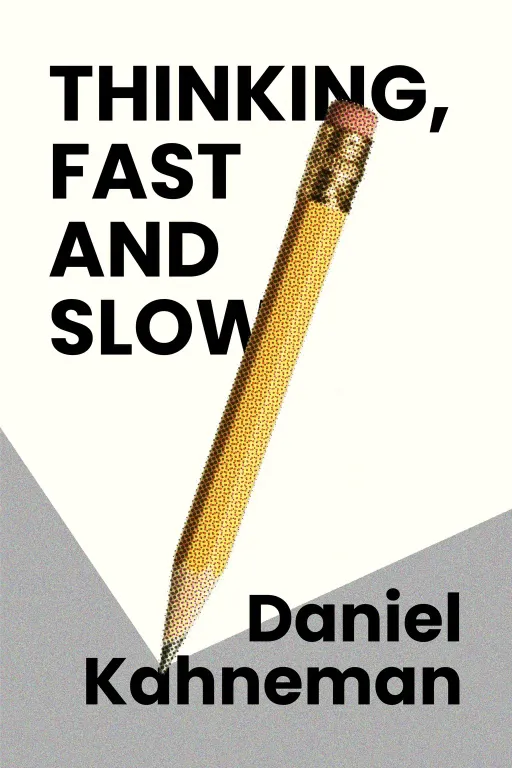
Nova: That's the million-dollar question, and it's precisely what Nobel laureate Daniel Kahneman unpacks in his groundbreaking work,. Kahneman, a psychologist who won the Nobel Memorial Prize in Economic Sciences, completely reshaped our understanding of human judgment and decision-making. His work is revered for bringing psychological insights into economics, showing how irrational we often are. And then, we're also going to explore by Josh Waitzkin, a chess prodigy and martial arts champion whose unique path to mastery offers a powerful counterpoint to Kahneman’s theories.
Cognitive Biases and Decision-Making in High-Stakes Systems
SECTION
Nova: So, let's start with Kahneman. He introduces us to two systems that govern our thinking: System 1 and System 2. System 1 is our fast, intuitive, emotional, almost automatic thinking. It's what tells you to slam on the brakes when a car cuts you off. It’s also what gives you that gut feeling during the Monaco Grand Prix.
Atlas: Oh, I see. So my 'don't crash' instinct is pure System 1. It's efficient, but not always… strategic.
Nova: Exactly. It's incredibly efficient because it uses mental shortcuts, or heuristics, but these shortcuts can lead to cognitive biases. Think about an F1 pit crew. They have to make split-second decisions, but those decisions are backed by thousands of hours of System 2 training, which is slow, deliberate, logical, and effortful thinking. System 2 is what you use to solve a complex math problem or analyze a chess board.
Atlas: So you’re saying, in a high-stakes F1 race, a driver might like they should push harder, but their System 2, through training and data, knows that conserving tires for two more laps is the smarter play?
Nova: Precisely. Or consider the 'anchoring effect' bias. If a commentator mentions a specific lap time, it can unconsciously influence how a driver or even a team strategizes, even if it's not the optimal target. Another huge one is 'hindsight bias.' After a big play in hockey, everyone looks back and says, 'Oh, they have passed the puck there.' But in the moment, with limited information and under pressure, System 1 takes over.
Atlas: That sounds rough, but it makes sense. I imagine a lot of our listeners, especially those in high-pressure creative fields, feel this. You're trying to design a complex architectural structure, and your gut screams 'go with this visually appealing but structurally unsound idea.' How do you train that System 1 to be more reliable, or at least, how do you let System 2 catch up?
Nova: That's a fantastic question and it bridges beautifully into our next topic. Kahneman isn't saying System 1 is bad; it's essential. The key is knowing when to trust it and when to engage System 2. For instance, in F1, teams spend immense amounts of time analyzing data, running simulations—that's pure System 2 work. They're trying to pre-program the best responses so that when System 1 takes over in the heat of the moment, it's making an intuitive decision, not just a random one.
Atlas: So it's about building a robust mental framework through deliberate, slow thinking, so your fast thinking has better data to pull from?
Nova: You've nailed it. It's about training your intuition, making it an educated guess rather than a wild one. And this applies directly to anyone trying to master a craft, whether it's writing code, composing music, or designing buildings. You need to understand the biases that can derail your creative process or lead to flawed judgments. For example, 'confirmation bias' can make you only seek out information that supports your initial design idea, even if there are better alternatives.
Atlas: That’s a great way to put it. I imagine that would be particularly dangerous in a field like architecture, where a single bias could literally lead to a building falling down, or at least being incredibly inefficient. So, how do we actively cultivate that System 2, that slow, deliberate thinking, so it can inform our faster, intuitive responses more effectively?
The Art of Deliberate Practice and Resilient Performance
SECTION
Nova: That's where Josh Waitzkin steps in with. Waitzkin isn't just a chess grandmaster and a martial arts world champion; he's a philosopher of performance. He's known for his unique approach, emphasizing deep learning over rote memorization, and he really highlights the importance of what he calls 'soft spots' – those areas where you're weakest – as opportunities for growth.
Atlas: Oh, I love that. So instead of just grinding away at what you're good at, you actively seek out and develop your weaknesses? That sounds counterintuitive to the 'always be winning' mentality.
Nova: It absolutely is, and it's a profound shift. Waitzkin's core philosophy revolves around deliberate practice and incremental gains. He talks about 'making the small bigger'—focusing on the micro-details, mastering the fundamentals so deeply that they become unconscious competence, almost a part of your System 1, but a highly refined and accurate one. Think of a hockey player practicing the same shot hundreds, thousands of times, not just to score, but to understand the exact angle, the precise pressure, the subtle body mechanics.
Atlas: So it's not just practice, it's practice with a microscope on the details. That makes me wonder, how does he handle setbacks or failures? Because in F1 or hockey, or any creative project, you hit walls constantly.
Nova: He views setbacks as critical feedback, not failures. He calls it 'losing to learn.' For Waitzkin, resilience isn't about ignoring the pain of defeat; it's about embracing it as a data point, an opportunity to deconstruct what went wrong, adapt, and come back stronger. He’s famous for his 'investing in loss' concept – actively putting himself in situations where he might lose, just to learn and grow.
Atlas: That’s actually really inspiring. I think a lot of us, myself included, tend to avoid those situations where we might 'lose,' especially in public creative work. We want to present perfection. But he's saying you should actively seek discomfort?
Nova: Exactly. He advocates for what he calls 'the internal journey' – it’s not just about winning or achieving external goals, but about cultivating a calm, focused, and resilient internal state. He talks about 'the slow game' – understanding that true mastery is a long-term process, not a series of quick wins. This allows you to detach from immediate outcomes and focus on the process of continuous improvement.
Atlas: So, for our listener who's, say, an architect trying to develop a new design language, this would mean not just drawing pretty pictures, but deeply understanding the structural physics, the material science, the human interaction with space, and then actively pushing boundaries, even if it means some designs don't see the light of day.
Nova: Precisely. And it means being comfortable with discomfort, with the struggle of learning something new, with the frustration of not getting it right the first time. That's where resilience is forged. And this connects back to Kahneman too. When you deliberately practice, you're building those System 2 foundations so deeply that your System 1, your intuition, becomes incredibly powerful and accurate. You’re essentially programming your fast thinking with superior data.
Synthesis & Takeaways
SECTION
Nova: So, what we're really seeing here is a powerful interplay. Kahneman gives us the map of our mental landscape, showing us the pitfalls and shortcuts of our innate thinking. Waitzkin then offers us the training manual, showing us how to navigate that landscape, how to build the skills and the mindset to achieve optimal performance, even under extreme pressure.
Atlas: It's almost like Kahneman explains we sometimes fail or make suboptimal choices, and Waitzkin teaches us to overcome those inherent human tendencies through deliberate effort and a resilient mindset. So, for anyone crafting a complex project or pushing for mastery, it means being aware of your cognitive biases, but then actively training your intuition through deep, intentional practice.
Nova: Absolutely. It’s about being a strategic crafter, someone who understands the systems at play, both external and internal. It's about knowing when to trust your gut, when to slow down and analyze, and how to build the inner game that allows for sustained excellence. It’s a powerful combination for anyone who seeks understanding and is driven by mastery.
Atlas: That gives me chills. The idea that you can consciously refine your subconscious decision-making through deliberate practice – that's a game-changer. It makes the pursuit of mastery feel less like an innate gift and more like a learnable skill, accessible to anyone willing to put in the mindful work.
Nova: Exactly. And that's a message we hope resonates deeply. It's not about being born a genius; it's about understanding the game, both internal and external, and playing it with intention.
Atlas: This is Aibrary. Congratulations on your growth!