

The 'Comfort Zone' Paradox: Why Growth Happens Beyond What You Know.
Golden Hook & Introduction
SECTION
Nova: If you want to truly grow, to master anything, you need to stop chasing comfort. In fact, you need to actively seek out the friction, the awkwardness, those moments that make you want to just… quit.
Atlas: Whoa. Hold on, Nova. That sounds like a recipe for constant stress, not growth. I think a lot of our listeners, myself included, are often to reduce friction and find more comfort. Are you saying our natural instinct is actually wrong?
Nova: Absolutely. And that, Atlas, is the 'Comfort Zone Paradox.' We’re naturally wired to seek ease, but true personal and professional development rarely, if ever, occurs within those familiar boundaries. It’s what we call the 'blind spot' of growth. Today, we're diving deep into why our pursuit of comfort often stifles our greatest potential, and how intentionally seeking discomfort is the true engine of profound growth and mastery.
Atlas: Okay, I'm intrigued. So, how do we even begin to unpack something that feels so counter-intuitive?
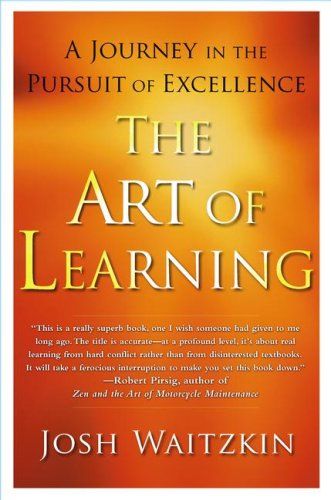
Nova: We turn to two incredible works. First, "The Art of Learning" by Josh Waitzkin, a book that completely redefined my understanding of peak performance. And then, to ground it in science, "Peak" by Anders Ericsson and Robert Pool. What’s fascinating about Waitzkin is his journey. He isn't just an author; he’s a living testament to these principles. He was a child chess prodigy, became a national champion, and then, instead of resting on those laurels, he switched to martial arts and became a world champion in Tai Chi Push Hands.
Atlas: That’s amazing. So he’s not just theorizing about mastery; he’s embodied it across wildly different disciplines. That gives him a unique perspective.
Nova: Exactly. His unique background gives him a profound, embodied understanding of learning far beyond traditional academic frameworks. He’s experienced what it takes to reach the top, not once, but twice, by constantly pushing his own edges. And that leads us directly into the heart of the paradox: our natural inclination towards ease.
The Blind Spot & Waitzkin's Philosophy
SECTION
Nova: Most of us believe a smooth path is the most productive. We want to feel competent, in control, and comfortable. But this desire for comfort creates a significant blind spot. It leads to stagnation and missed opportunities for significant development because true growth only happens when we're challenged.
Atlas: That sounds rough, but I can see how that would be true. If you're always doing what you're good at, you're not learning anything new. But how do you step into that discomfort without just feeling overwhelmed or, frankly, like a failure?
Nova: That's where Waitzkin’s philosophy of 'investing in loss' comes in. It’s one of the most powerful concepts from "The Art of Learning." He argues that true mastery isn’t about avoiding mistakes; it’s about and to achieve peak performance.
Atlas: "Investing in loss"? That sounds terrifying! How do you even begin to 'invest in loss' without just… losing all the time and feeling completely demotivated? Is he saying we fail?
Nova: Not failing indiscriminately, Atlas, but deliberately seeking out the edge of your ability where mistakes are most informative. Think about a pivotal moment in his chess career. Instead of playing it safe to win, he would sometimes choose a more aggressive, riskier line – one that might lead to a temporary disadvantage or even a loss – because he knew that particular line would expose a weakness in his understanding, or force him to develop a new intuition.
Atlas: So he’d deliberately put himself in a position to be uncomfortable, to struggle, to potentially lose, just to learn more deeply? That takes an incredible amount of guts—and trust in the process.
Nova: It absolutely does. He wasn’t looking to win every single game; he was looking to. He understood that the most profound lessons often come from those moments of intense struggle and perceived failure. He'd analyze those losses with an almost scientific rigor, extracting every ounce of information on where his understanding faltered. It’s an intentional embrace of vulnerability for the sake of long-term growth.
Atlas: I can see how that would expose your blind spots, but doesn't that just breed anxiety for someone who already feels stretched or insecure about their abilities? For someone trying to learn a new skill, that sounds like a fast track to giving up.
Nova: Interestingly, Waitzkin argues the opposite. He says this approach, when done intentionally, is the path to confidence, not anxiety. By understanding your own breaking points, by knowing you can recover and learn from a 'loss,' you build a deeper, more resilient self-belief. It's about reframing mistakes not as indicators of inadequacy, but as invaluable data points for improvement. It’s a shift from protecting your ego to prioritizing your evolution.
The Shift & Ericsson's Deliberate Practice
SECTION
Nova: And that idea of intentional engagement at the edge of our abilities perfectly segues into the scientific backbone provided by Anders Ericsson and Robert Pool in their seminal book, "Peak." This book fundamentally debunks the myth of innate talent.
Atlas: The myth of innate talent? So, the idea that some people are just 'born with it' is… wrong? That’s going to resonate with anyone who’s ever felt like they're just not naturally gifted at something.
Nova: Exactly! Ericsson, a world-renowned researcher on expertise, spent decades studying top performers across every domain imaginable—musicians, athletes, doctors, chess players. His conclusion, backed by rigorous scientific research, is that expert performance comes not from innate talent, but from what he termed 'deliberate practice.' The book was widely acclaimed for its research-backed approach to understanding expertise, shifting the conversation from 'talent' to 'training.'
Atlas: So it's not just practicing for hours; it's you practice. What's the difference between just practicing and practice for someone trying to learn a new skill, like a language or a new software?
Nova: That’s the crucial distinction. Regular practice can be mindless repetition. Deliberate practice is highly intentional, often uncomfortable, and specifically designed to push you just beyond your current abilities. Think about a professional violinist. They don't just play their favorite pieces over and over. They isolate a single, difficult passage, slow it down, practice it hundreds of times, identify exactly where their fingers slip, get immediate feedback from a teacher or by recording themselves, and then systematically address that specific weakness.
Atlas: I see. So it’s specific, it’s targeted, and it’s about constant feedback. But how do you that 'just beyond your current ability' sweet spot without getting completely overwhelmed? That sounds like a tightrope walk.
Nova: It absolutely is, and that's the art of it. Ericsson outlines a framework: first, you need a clearly defined, specific goal that’s just out of reach. Not 'get better at guitar,' but 'play this specific, challenging chord transition smoothly at tempo.' Second, you need focused attention; you can't multitask. Third, you need immediate and informative feedback, whether from a coach, a mentor, or even self-assessment. And finally, you need to be willing to repeat this cycle, making small, incremental adjustments. It's about systematically improving in any domain by actively seeking out challenges just beyond your current abilities.
Atlas: That makes so much sense. It connects back to Waitzkin’s 'investing in loss' too. You’re not just hoping to improve; you’re deliberately creating scenarios where you improve, or else you’ll make a mistake that provides valuable data.
Nova: Precisely. Waitzkin’s philosophical insight is beautifully complemented by Ericsson’s scientific framework. Both show that consistent, intentional effort—especially effort that involves engaging with discomfort and mistakes—is the true engine of growth. It's about embracing the friction, not avoiding it, because that friction is where the learning happens.
Synthesis & Takeaways
SECTION
Nova: So, what we've really uncovered today is that our comfort zones are not safe havens for growth; they’re actually traps for stagnation. True mastery, whether in chess, martial arts, or any skill you want to develop, is forged in the fires of deliberate discomfort and intentional learning from our 'losses.'
Atlas: It's a fundamental shift in perspective. Instead of seeing mistakes as failures, you see them as essential data points. Instead of avoiding challenges, you seek them out as opportunities for precise, targeted growth. For our listeners who are curious and always wanting to grow, this isn't just theory; it's a blueprint for unlocking deeper potential.
Nova: It’s about recognizing that the 'smooth path' is often the slowest path to true development. The insights from Waitzkin and Ericsson fundamentally shift your view on personal development, showing that consistent, intentional effort outside your comfort zone is the true engine of growth.
Atlas: So, Nova, if you had to leave our deep-thinking, curious listeners with one actionable thought from all of this, what would it be? What is one skill they want to develop, and what tiny, uncomfortable step can they take this week to practice it deliberately?
Nova: I would challenge everyone listening right now to think about exactly that. What’s one skill you genuinely want to elevate, and what’s the smallest, most uncomfortable step you can take this week to deliberately practice it? It might be asking for critical feedback, attempting a task you've been avoiding, or intentionally slowing down to analyze a mistake. That tiny uncomfortable step is your gateway to profound growth.
Atlas: I love that. It’s not about a giant leap, but a consistent series of deliberate, slightly uncomfortable steps.
Nova: Absolutely. Take that step, analyze the feedback, and then take another. That’s where the magic, and the mastery, truly happens.
Nova: This is Aibrary. Congratulations on your growth!