

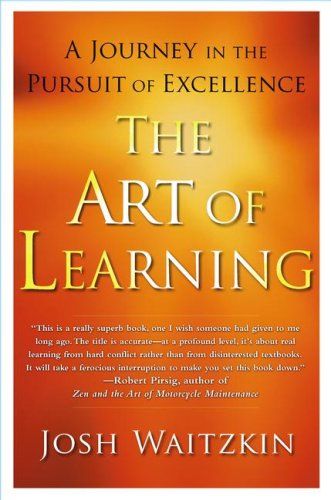
The Art of Learning: Mastering the Unseen Skill of Growth
Golden Hook & Introduction
SECTION
Nova: What if I told you that the real secret to becoming truly great at anything isn't about innate talent, or even just 'working harder,' but about a hidden skill you've probably never consciously practiced?
Atlas: Hold on, Nova. A? That sounds like something out of a spy movie, but I'm intrigued. Are you saying there's a cheat code to mastery that we've all been missing?
Nova: Absolutely, Atlas. We spend so much energy on we learn, the subjects, the facts, the data. But the profound impact, the lasting value, comes from mastering we learn. It’s a deliberate strategy for acquiring and applying knowledge, a skill in itself.
Atlas: That makes me wonder, for our listeners who are constantly building robust systems, cultivating communities, or creating tangible impact, how does optimizing this 'how' translate into concrete solutions for them?
Nova: That's exactly what we're diving into today, exploring two incredible minds who’ve cracked this code. We're talking about "The Art of Learning" by Josh Waitzkin, a man who became a chess prodigy and then a martial arts champion, showcasing a living embodiment of this learning process. And "Ultralearning" by Scott H. Young, known for mastering complex skills in record time. Their work isn't just theory; it's a blueprint for rapid, profound skill acquisition.
The Foundational Mindset: Deliberate Practice & Incremental Growth
SECTION
Nova: So, let's start with Waitzkin. His philosophy is less about the grand slam and more about the relentless, deliberate single. He emphasizes that true mastery isn't about being born brilliant, but about a specific way of engaging with challenges, transforming them into opportunities for deeper understanding.
Atlas: Okay, but when I hear "deliberate practice," I imagine endless drills, rote memorization. For someone trying to innovate or lead, where the challenges are often unstructured, how does this translate? Isn't "failure" in those environments a much higher stake than, say, a chess game?
Nova: That’s a great push, Atlas. Waitzkin reframes failure entirely. He talks about "losing to learn." It’s not about avoiding mistakes; it’s about them as the richest source of feedback. Imagine a chess player, after a match, not just seeing they lost, but dissecting every single move, understanding a particular strategy failed, and then designing specific, tiny exercises to shore up that weakness.
Atlas: That makes sense. It’s like a system architect, when a system fails, doesn't just patch it up, but does a post-mortem to understand the foundational flaw and build a more resilient system for the future. So it's about the deep analysis of the process.
Nova: Exactly. And it’s not just intellectual. Waitzkin, in his martial arts journey, describes the intense psychological resilience this builds. He learned to manage his mental state under pressure, to flow with the chaos of a fight, not just react to it. That's sustainable growth right there – the ability to adapt and thrive through constant challenge. He wasn't just learning moves; he was learning under extreme duress.
Atlas: So it sounds like Waitzkin's core idea is that the path to mastery is less about avoiding struggle and more about consciously designing your engagement with that struggle, seeing it as feedback for continuous, incremental improvement. It’s about building a robust internal system for learning.
Accelerated Mastery: Principles of Ultralearning
SECTION
Nova: If Waitzkin gives us the deep game of learning, then Scott Young gives us the playbook for hyper-speed mastery. Young’s "Ultralearning" provides a framework for intense, self-directed learning, allowing you to master hard skills quickly. He outlines nine principles, but let's zero in on two pivotal ones: metacognition and directness.
Atlas: Metacognition and directness. For our listeners managing high-pressure teams, those concepts might sound a bit academic. How do you actually ultralearning in a real-world, high-stakes environment? Can you give an example of how someone applies these principles to, say, build a new product or cultivate a community faster?
Nova: Absolutely. Metacognition is simply learning about learning. It’s stepping back and asking, "How do I best absorb this information? What are my blind spots? What strategies are working or not working?" It's like an architect analyzing the foundational assumptions of their design before even breaking ground. Directness, on the other hand, means learning by doing the thing itself. If you want to build a product, you build a product. If you want to speak a language, you speak it from day one.
Atlas: So instead of spending months reading about product management, you start with a minimum viable product and get feedback immediately. That resonates with the drive for tangible impact. It's not just theory; it's active application. But isn't ultralearning just a fast track to burnout if you're not careful? It sounds incredibly intense.
Nova: That’s a really fair point. It’s about being intensely, not just working longer hours. Young emphasizes strategic intensity. You design your learning sprint, you immerse yourself, but you also plan for rest and reflection. It's about maximizing efficiency in short, intense bursts, then integrating that learning. It's not a marathon of constant effort; it's a series of highly effective sprints that build robust, lasting skill sets. Think of it as cultivating a high-yield garden rather than just planting more seeds aimlessly.
Synthesis & Takeaways
SECTION
Nova: So, bringing it all together, Waitzkin gives us the deep philosophical grounding, the resilience, the for continuous growth through deliberate engagement with challenges. Young then provides the tactical, accelerated for mastering new skills rapidly and efficiently. The synergy is profound.
Atlas: It really is. What strikes me is that both approaches ultimately lead to a more foundational, sustainable way of operating. It’s not about quick fixes, but about building an internal system for consistent, lasting value. For anyone looking to grow, to cultivate better systems, to be more resilient, mastering the itself is the ultimate lever.
Nova: Exactly. It's the unseen skill that underpins all other skills. And the tiny step for our listeners this week? Choose one skill you want to develop. Just one. Then, spend 15 minutes planning you will practice it this week. Focus on how you'll get feedback, how you'll engage in focused repetition, and how you’ll treat challenges as opportunities to learn.
Atlas: That’s a concrete solution I can get behind. I imagine a lot of our listeners are already thinking of that one skill. Take Nova’s advice, plan that 15 minutes, and then share your chosen skill and your plan with us. Let's cultivate a community of conscious learners.
Nova: This is Aibrary. Congratulations on your growth!