

Stop Learning Words, Start Living Language: The Guide to Conversational Fluency.
Golden Hook & Introduction
SECTION
Nova: What if the very thing you think you need to do to learn a language – meticulously studying vocabulary lists, agonizing over grammar rules – is actually holding you back from truly it?
Atlas: Oh man, that's a direct hit. I think anyone who's ever tried to learn a new language, especially for travel or cultural immersion, has felt that exact frustration. You collect all these words, but when it comes time to actually them, it’s like your brain freezes up.
Nova: Exactly. And that's what we're dissecting today with a fascinating book titled, "Stop Learning Words, Start Living Language: The Guide to Conversational Fluency." It’s a powerful guide that argues true fluency isn't about accumulating more theoretical knowledge, but about building a new identity through active, often uncomfortable, engagement. It challenges that fundamental notion that language is just a collection of nouns and verbs.
Atlas: That's a huge shift in perspective. Most of us are taught language in a very academic, almost clinical way. So, you're saying it's less about the 'what' and more about the 'how to be' in that language?
Nova: Precisely. It's about bridging that gap between knowing Spanish, for instance, and actually it. It’s about that moment when you stop translating in your head and just… speak. And to unpack this, we're going to look at two brilliant minds who, though not primarily language teachers, offer profound insights into this very process.
The Benny Lewis Approach – Embrace Imperfection, Speak Now!
SECTION
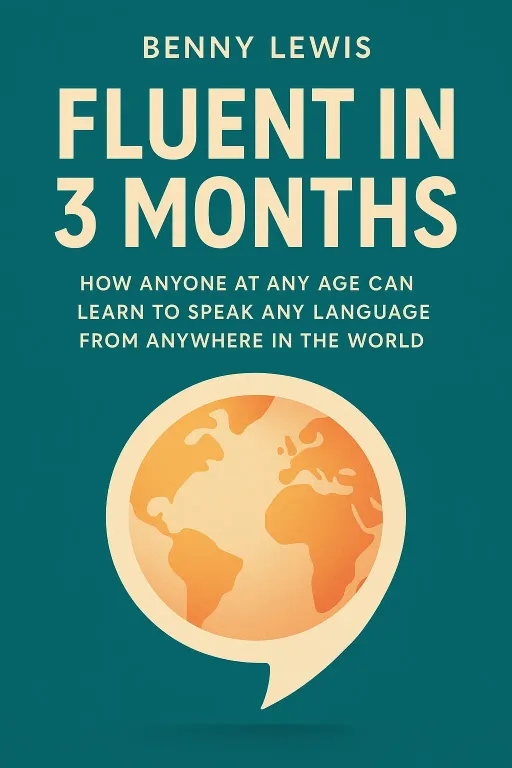
Nova: The first perspective comes from Benny Lewis, author of "Fluent in 3 Months." Now, Lewis is famous, or perhaps infamous, for his audacious claim that you can become conversational in a new language in just three months. His core philosophy? Speak from day one. Make mistakes. Lots of them.
Atlas: Hold on. Speak from day one? I imagine a lot of our listeners, especially those who prioritize clear communication and authentic connection, might find that terrifying. The idea of stumbling through conversations, sounding foolish, it's a huge barrier. How does that build confidence? It sounds like the opposite.
Nova: That's the counterintuitive genius of it, Atlas. Lewis argues that the fear of making mistakes is the single biggest impediment to fluency. By forcing yourself to speak immediately, even with just a handful of words, you desensitize yourself to that fear. He essentially says, "Your job isn't to be perfect; your job is to communicate." It's a radical immersion, regardless of your physical location. He'll show up in a new country, know almost nothing, and immediately start trying to order coffee, ask for directions, or introduce himself, butchering the language all the way.
Atlas: So, it's like exposure therapy for language learning. You just jump in the deep end and eventually, you learn to swim because you have to. But for someone driven by cultural connection, wouldn't that initial awkwardness actually forming those connections? It feels like you'd be constantly apologizing.
Nova: He'd argue the opposite. People appreciate the effort. They see you trying, and that itself is a form of connection. The book highlights how Lewis prioritizes over. He even suggests having a few phrases ready to explain that you're learning and to ask for corrections. The goal is to build momentum, to get comfortable with the of speaking, rather than waiting until you feel "ready," which for many, never arrives. Every fumbled interaction becomes a mini-learning laboratory.
Atlas: I see. It's not about being grammatically flawless; it's about breaking through that internal barrier that says, "I can't do this yet." It's the ultimate practical application. So, for our listeners who want conversational Spanish for immediate use, he'd say don't wait for the perfect sentence structure; just open your mouth.
Nova: Exactly. You're building a new 'language identity' by performing it. You're teaching your brain that this isn't just theoretical knowledge; it's a tool for interaction. And the more you interact, the more natural that identity becomes. It’s about active, deliberate practice in the wild.
The Josh Waitzkin Approach – Master the Core, Build Intensely!
SECTION
Nova: Now, while Lewis champions immediate, bold action, our second perspective offers a complementary strategy for making that action incredibly effective: Josh Waitzkin, author of "The Art of Learning." Waitzkin, a chess prodigy and martial arts champion, talks about 'making the smallest possible circle.'
Atlas: Oh, I like that. 'Making the smallest possible circle.' It sounds like a way to prevent overwhelm, which is a huge issue for anyone trying to learn something complex. For language, it could feel like there’s an infinite amount to learn. What does he mean by that?
Nova: He means identifying the most fundamental, core principles of any discipline and mastering them intensely before expanding. In chess, it's not memorizing every opening; it's understanding the essential dynamics of pawn structure or king safety. In language learning, this translates to mastering key conversational patterns. Think about it: what are the 50 most common phrases you use in your native language every day? Greetings, asking for directions, ordering food, expressing basic needs, agreement, disagreement.
Atlas: So, for conversational Spanish, this isn't about memorizing a dictionary. It’s about identifying those high-leverage phrases and structures that give you the most bang for your buck in real-world interactions. Like "How much does this cost?" or "Where is the bathroom?" – the things you to say.
Nova: Precisely. And then, you apply them intensely. You practice those core patterns until they're second nature, until they flow without conscious thought. It’s about deep integration of a few critical components, rather than superficial exposure to many. This creates a strong base, which is something our listener profile values, knowing that grammar fundamentals are important for long-term growth. It's about efficiency in your active engagement.
Atlas: That makes sense. It’s like Lewis says, "speak immediately," but Waitzkin adds, "and when you speak, make sure you're intensely practicing the most essential building blocks." So you're not just flailing; you're actively building a robust, albeit small, foundation. It’s about directed practice.
Nova: Exactly. Imagine combining them: Lewis gets you speaking, getting over the fear. Waitzkin then helps you refine you're speaking, ensuring you're internalizing the most impactful patterns. You're not just speaking for the sake of it; you're speaking with a purpose, to master those critical conversational units. It fundamentally shifts the focus from passive consumption of endless textbooks to active, deliberate practice, making every interaction a learning opportunity.
Atlas: So, it's about building that new identity not just by being brave enough to speak, but by being smart about what you choose to master first. This would definitely help someone connect culturally, because you’re not just trying to survive; you’re engaging with purpose.
Synthesis & Takeaways
SECTION
Nova: What both Lewis and Waitzkin ultimately teach us is that language fluency isn't a destination reached by accumulating words like coins in a jar. It's a journey of identity transformation, where you continuously step into the role of a speaker, even when it feels uncomfortable. The profound insight here is that language isn't just a tool; it's a way of being. The more you like a speaker of that language, the more you one. It's about courageously embracing the messy, imperfect process of living the language.
Atlas: That's actually really inspiring. Because it means the power to become fluent isn't in some textbook or grammar guide; it's within us, in our willingness to engage and to be uncomfortable. It’s about trusting your voice, knowing every mistake is a step forward, just like our growth recommendations suggest. So, for our practical communicators and cultural connectors out there, what's a tiny step they can take tonight to start living this?
Nova: Tonight, I challenge you to find one Spanish phrase you'd normally avoid, one that makes you feel a little bit of that hesitation, and use it in a conversation. Even if it's just with yourself in the mirror, or narrating your own actions in Spanish. It could be something simple like "Estoy cansado" or "Necesito un café". Just use it.
Atlas: That's a perfect, actionable 'smallest possible circle' for anyone listening. It pushes you to practice speaking daily, even for five minutes, and to embrace that little bit of discomfort. Because that's where the real growth, and the real fluency, begins.
Nova: Absolutely. It’s about taking that tiny, uncomfortable step towards living, not just learning.
Atlas: This is Aibrary. Congratulations on your growth!