

Mastering Your Craft: The Path from Practice to Intuitive Mastery
Golden Hook & Introduction
SECTION
Nova: Forget the 10,000-hour rule. What if the very way you've been practicing, the endless repetition you've been told is the path to mastery, is actually holding you back from truly intuitive, profound skill?
Atlas: Whoa, Nova, are you serious? That's quite a statement. I mean, the idea of just putting in the hours, grinding it out, that's practically gospel in every field, especially for creators trying to perfect their craft.
Nova: Absolutely serious, Atlas. And it's a concept that hits at the heart of what we explore today on Aibrary, diving into the core philosophy of "Mastering Your Craft: The Path from Practice to Intuitive Mastery." It's not about how you practice, but you practice.
Atlas: That’s going to resonate with anyone who’s ever felt stuck despite pouring their soul into their work. You hit a plateau, you think, "I just need to do more," but the frustration builds. So, this book is basically saying that endless repetition isn't just inefficient; it can actually be counterproductive?
Nova: Precisely. The core idea, what we're calling the "Cold Fact," is that true mastery in any domain, whether you're a musician, a dancer, or a software engineer, doesn't come from mindless, endless repetition. It stems from a focused, intentional approach that builds deep, truly intuitive skill. It's about quality over sheer quantity.
Beyond Repetition: The True Nature of Intuitive Mastery
SECTION
Nova: Think about a jazz musician. They can improvise effortlessly, create something wholly new and beautiful in the moment. That's not because they've just played scales for 10,000 hours. It's because they've internalized musical theory, harmony, rhythm, and emotion to such a profound degree that it becomes second nature—intuitive. They've built a deep internal model.
Atlas: I guess that makes sense. I can see a difference between someone who just plays the notes from sheet music and someone who the music. But how do you get to that intuitive place without repetition? Isn't muscle memory important, especially in something like playing an instrument or a physical routine?
Nova: Yes, muscle memory is a component, but it's the of repetition that matters. Mindless repetition creates rote skill, but intentional practice builds what we call "deliberate intuition." It's about constantly challenging yourself, making small adjustments, and learning from every single attempt.
Atlas: Can you give an example? Let's say you're a sound engineer, a "Rhythmic Architect" as some of our listeners might identify, trying to get the perfect kick drum sound in a mix. What's the difference between mindless and intentional practice there?
Nova: Okay, great example. Mindless repetition would be just cycling through different EQ presets or randomly boosting and cutting frequencies, hoping something clicks. You might eventually stumble upon a good sound, but you wouldn't necessarily understand it works or how to replicate it consistently across different tracks.
Nova: Intentional practice, however, would involve isolating that kick drum, listening intently to reference tracks, and understanding the acoustic properties of a great kick. You might spend an hour just on that one element, making tiny, precise adjustments to the attack, decay, sustain, and release, listening to how each tweak impacts the groove. You're not just; you're with every turn of the knob. You're building an intuitive understanding of the sonic landscape.
Atlas: Ah, I see. So it's about understanding the at a deep level, not just memorizing the. That makes me wonder about physical routines. When a dancer repeats a movement for the hundredth time, how do they make it intentional instead of just going through the motions?
Nova: For a dancer, it's about focusing on the internal sensations. It’s not just about the external form—hitting the pose or completing the spin. It’s about feeling the engagement of specific muscles, the breath, the alignment of the spine, the connection to the floor. They are making micro-adjustments, seeking efficiency, grace, and expression in every single repetition. It's feeling the movement, rather than just performing it. This builds a profound body-mind connection, an embodied intuition.
The Art of Learning: Practical Principles for Intentional Practice
SECTION
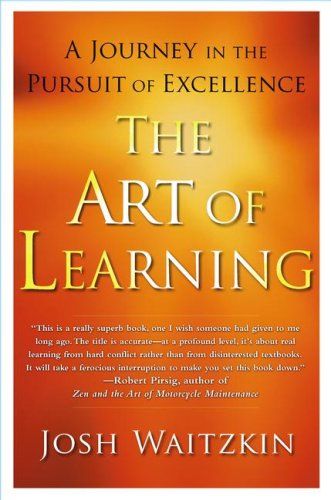
Nova: This brings us perfectly to we cultivate that intuitive depth. Our insights for today draw heavily from a master of learning, Josh Waitzkin. He's a chess prodigy and a martial arts world champion, which immediately tells you he understands mastering both the intellectual and the physical.
Atlas: Wait, the chess guy? What does chess have to do with mastering a physical routine or producing music? That sounds like a bit of a leap.
Nova: It's not a leap at all, Atlas. Waitzkin's genius lies in his ability to extract universal principles of learning that apply across disciplines. He emphasizes 'making smaller circles' and 'investing in loss' to build robust, adaptable skills. These are tactical insights that can transform any practice session.
Atlas: Okay, 'making smaller circles' sounds intriguing. Can you break that down?
Nova: Imagine a musician trying to master a complex guitar solo, or a drummer working on a difficult polyrhythm. A common mistake is to try to play the whole thing at full speed, repeatedly failing. 'Making smaller circles' means isolating the single most difficult phrase, or even just two notes, and slowing it down to an excruciating crawl. You perfect those two notes, understanding every nuance, every transition, before gradually increasing speed and adding complexity.
Atlas: So it's like a sculptor refining a tiny detail before stepping back to see the whole, rather than trying to carve the entire statue at once and getting frustrated.
Nova: Exactly! You're building mastery from the ground up, ensuring each foundational piece is deeply understood and integrated. It’s about depth over breadth in the initial learning phase. This builds a truly skill.
Atlas: That makes sense. But what about 'investing in loss'? That sounds counter-intuitive. Aren't we supposed to avoid loss, especially in creative work where every mistake feels like a failure?
Nova: That's a profound question, and it's where the true innovation lies. 'Investing in loss' means intentionally putting yourself in situations where you are likely to fail, specifically to learn and adapt. For a martial artist, it might mean sparring with someone far superior, not to win, but to expose their weaknesses and force new adaptations.
Atlas: So, for a music producer, that might be intentionally trying a mixing technique they've never used, knowing it might sound terrible initially, but learning it fails and gaining new insights? Or for a dancer, trying a new, awkward movement sequence that pushes their current physical limits?
Nova: Precisely. It's embracing the "ugly" stage of creation, the discomfort of failure, because that's where the most profound learning happens. Instead of protecting your ego, you're exposing it to grow. This mindset transforms fear of failure into a powerful learning tool, allowing you to build truly adaptable skills and foster creative innovation. It resonates so deeply with the "Embodied Creator" and "Soulful Innovator" in all of us, isn't it? It's about letting your art lead, through the triumphs and the perceived failures.
Synthesis & Takeaways
SECTION
Nova: Ultimately, what Waitzkin and this entire idea of intuitive mastery teach us is that practice isn't just about doing; it's about acutely present, learning from every micro-interaction, and cultivating a profound relationship with your craft.
Atlas: So, it's about cultivating a relationship with your craft where you're constantly seeking deeper understanding, not just surface-level performance. It’s about letting your art lead, as our listeners might put it, by trusting that intuitive wisdom that emerges from truly intentional practice.
Nova: Absolutely. And if you're looking for a tiny step to start this journey, consider this: identify one specific skill in your music production or physical routine you want to improve. For your very next practice session, focus intensely on just that one element, even if it means slowing down dramatically. Make it a deliberate, tiny circle.
Atlas: And perhaps, as you do that, dedicate a few minutes to explore the 'why' behind your creative choices in that moment. What are you truly trying to express with that kick drum sound, or that dance movement? That's where the intuitive wisdom really starts to blossom, and your profound connection to expression deepens.
Nova: Exactly. It's about trusting that internal compass.
Nova: This is Aibrary. Congratulations on your growth!