

Mastering the Mental Game: Focus, Flow, and Inner Calm
Golden Hook & Introduction
SECTION
Nova: You know, Atlas, there’s this common idea that to truly excel, especially in demanding fields like elite sports, you have to be this unshakeable, emotionless machine. That pressure is something to be just… endured.
Atlas: Oh, I like that. The stoic warrior myth. The idea that if you just grit your teeth hard enough, you'll magically become immune to doubt or fear. It sounds impressive on paper, but I imagine it leaves a lot of driven people feeling like they're failing when their human emotions inevitably surface.
Nova: Exactly! It's a huge misconception, and frankly, a recipe for burnout. What if I told you that the path to sustained excellence and true inner calm isn't about your feelings or becoming a robot, but about deeply understanding and your mental and emotional landscape?
Atlas: Now that's a concept I can get behind. Especially for anyone who's ever felt that intense drive to achieve, but also the equally intense internal chatter that comes with it. Where are we digging into this today?
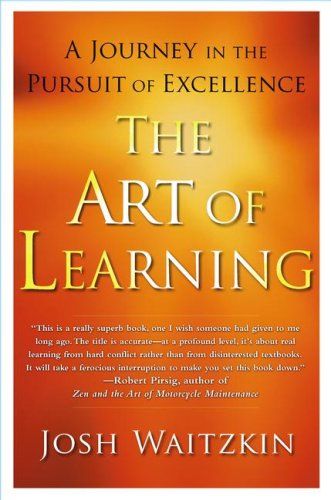
Nova: Today, we're diving into two absolute titans of mental mastery: "The Art of Learning" by Josh Waitzkin, and "Flow" by Mihaly Csikszentmihalyi. What's fascinating about Waitzkin is his journey – he wasn't just a child chess prodigy, he then became a world champion martial artist. He literally took the lessons from one intensely cerebral, competitive domain and applied them to a completely different physical one, proving that mental processes for excellence are universal.
Atlas: That makes me wonder, how does someone go from the quiet intensity of a chessboard to the dynamic, physical chaos of martial arts and find common ground for peak performance? It’s not just about being smart; it's about a transferable mental architecture.
Nova: Absolutely. And then we have Mihaly Csikszentmihalyi, the father of positive psychology, who gave us the groundbreaking concept of 'flow state.' He spent decades researching human optimal experience, not just in high-stakes arenas, but in everyday life, showing us how to intentionally tap into those moments when we feel our best and perform at our peak.
Atlas: So, we're talking about frameworks here that bridge intense mental discipline with profound human enjoyment. That’s a powerful combination, especially for any aspiring athlete trying to navigate the high-pressure world of competition. How do these two seemingly different approaches connect?
Nova: Well, the connection is profound, Atlas. Waitzkin shows us how to build the mental fortitude and resilience to the pressure, to learn from every experience. And Csikszentmihalyi gives us the blueprint for what happens when that mental game is truly mastered: you enter a state of effortless, focused performance. Let's start with Waitzkin and the art of cultivating deep focus and mental toughness.
Cultivating Deep Focus and Mental Toughness
SECTION
Nova: Waitzkin's core insight, honed through countless chess tournaments and martial arts championships, is that true excellence isn't about perfection, but about the quality of your learning process, particularly from moments of failure or intense pressure. He calls it "making the soft more firm."
Atlas: That sounds like a fancy way of saying "get tough," but I imagine it's more nuanced than that. What does that actually look like in practice for someone who feels deeply, someone for whom a setback can feel like a personal blow?
Nova: It's precisely you feel deeply that this is so powerful. Waitzkin teaches that instead of viewing a mistake as a personal failing, you learn to see it as invaluable data. He talks about "the internal battle" – the moments where self-doubt creeps in, or the pressure mounts, and how you train yourself to respond. For instance, in a high-stakes chess match, he recounts a time he was playing against a grandmaster, feeling overwhelmed, making a crucial error.
Atlas: Oh, I've been there. That feeling when you know you've just messed up, and the whole game is hanging in the balance. It’s like a cold wave washes over you. What did he do?
Nova: Instead of crumbling, he used that feeling, that error, as a trigger. He didn't just ignore it; he processed it. He slowed down his breathing, refocused, and systematically analyzed he made the mistake, not just he made it. He saw it as a moment to deepen his understanding of the game, rather than a sign of his inadequacy. It was a conscious decision to transform a potential meltdown into a learning opportunity, right there in the moment.
Atlas: So, it's not about being emotionless, but about acknowledging the emotion and then consciously redirecting that energy. For an athlete, that's huge. Because in a race or a game, that moment of internal collapse can cost you everything. How does he train that kind of resilience? Is it just about "trying harder"?
Nova: Far from it. It's about deliberate, systematic practice of presence and recovery. Think of it like this: if you're an athlete and you have a bad training session, instead of just dismissing it or getting angry, Waitzkin would say you need to meticulously dissect it. What led to the poor performance? Was it sleep? Nutrition? A specific technical flaw? Emotional distraction? And then, crucially, you design drills to under pressure, to make that "soft spot" more firm.
Atlas: So, it’s not just about pushing through, but about intelligently adapting and rebuilding. It sounds like he's advocating for a kind of meta-learning, where you're not just learning your sport, but learning and under duress.
Nova: Precisely. And this builds what he calls "soft barriers" – mental safeguards that prevent you from spiraling. He even talks about training in suboptimal conditions, like practicing chess with loud music or martial arts when tired, specifically to build resilience against distraction and fatigue. It's about inoculating yourself against the things that typically break focus.
Atlas: That’s actually really inspiring. It reframes "failure" not as a dead end, but as a crucial part of the curriculum. For someone driven to excel, but also sensitive to setbacks, it turns those moments of vulnerability into a powerful training ground. It's like saying, "Your feelings are valid, now let's use them as fuel for growth."
Achieving and Leveraging Flow State
SECTION
Nova: And that naturally leads us to the second key idea, which often acts as the ultimate reward for cultivating that mental toughness: the 'flow state.' When you've built that inner resilience, you're far more likely to experience what Mihaly Csikszentmihalyi describes as peak performance.
Atlas: Ah, 'the zone.' Every athlete dreams of it. That moment where everything just clicks, and you're performing effortlessly. But it often feels so elusive, like something that just happens you, not something you can control. Is Csikszentmihalyi saying we can actually it?
Nova: He absolutely is, Atlas. He spent decades interviewing thousands of people across various domains—artists, scientists, athletes, surgeons—and found common threads. Flow is a state of complete absorption in an activity, characterized by intense focus, a sense of timelessness, and deep enjoyment. It's when your skills are perfectly matched to the challenge at hand.
Atlas: So, it's not just about being good at something; it's about being good enough for the task to be challenging, but not overwhelming. Like that sweet spot in a video game where it's hard but not impossible.
Nova: Exactly! That challenge-skill balance is one of the key conditions. Others include clear goals – you know exactly what you're trying to achieve at any given moment – and immediate feedback, so you instantly know how you're doing and can adjust. Imagine a basketball player in a game: their goal is to get the ball in the hoop, they get immediate feedback if it goes in or not, and the challenge of the defense is matched by their skill.
Atlas: That makes sense. But how does an athlete create those conditions? It’s not like you can just say, "Okay, I'm going to enter flow now." What are the practical steps before a competition or a crucial training session to set yourself up for that?
Nova: That's the beauty of Csikszentmihalyi's work. It's about designing your environment and your mindset. For an athlete, it means breaking down larger goals into very specific, manageable micro-goals. For example, instead of "win the race," it might be "focus on my breathing for the first minute," then "maintain stride length through the turn," and so on. Each micro-goal provides clear feedback and keeps the challenge-skill balance tight.
Atlas: So, it's about narrowing your focus, almost like a mental tunnel vision, but not in a restrictive way. It’s about being so present with each tiny step that the larger pressure of the outcome fades. That's a huge shift from feeling overwhelmed by the enormity of a goal.
Nova: Precisely. And it also involves eliminating distractions. Csikszentmihalyi's research shows that flow states are often broken by external interruptions or internal anxieties. So, an athlete can practice mindfulness, learn to 'chunk' their attention, and create pre-performance routines that systematically clear the mental deck, allowing them to fully engage with the task itself. It's about cultivating that inner calm so that when the moment arrives, you're ready to dive in completely.
Atlas: That’s a powerful connection between the two books, then. Waitzkin gives you the tools to build the mental stamina and resilience to the chaos, and Csikszentmihalyi shows you how to then within it, by finding that effortless focus. It's about anchoring your worth not just in the outcome, but in the quality of your engagement with the process.
Synthesis & Takeaways
SECTION
Nova: Exactly, Atlas. When you combine Waitzkin's insights on turning adversity into growth with Csikszentmihalyi's framework for intentional peak experience, you get a holistic approach to mastering the mental game. It's not just about being tough; it's about being intelligently tough, resilient, and deeply present.
Atlas: And for the aspiring athlete, or anyone who's driven but also deeply empathetic and prone to self-doubt, this is revolutionary. It offers a pathway to excellence that doesn't demand you shed your sensitive nature, but rather, shows you how to channel it. It’s about using those feelings as a compass for growth, rather than seeing them as a weakness.
Nova: That's it. It’s about understanding that mental clarity and the ability to enter 'the zone' are not accidents of talent, but cultivated skills. Your athletic journey benefits immensely from this intentional mental training. These books provide practical frameworks for enhancing your focus and mental toughness, allowing you to perform at your best, with a profound sense of inner calm.
Atlas: So, if there was one concrete thing our listeners, especially those aspiring athletes, could do this week to start applying these principles, what would it be?
Nova: I would say, pick one specific moment in your training or even your daily routine where you normally feel distracted or pressured. And for that one moment, practice radical presence. Don't judge your thoughts, just notice them, and gently guide your attention back to the task at hand. If you're running, feel your feet on the ground. If you're lifting weights, feel the muscle contraction. It's a small act of self-compassion and mental training that builds that foundational focus.
Atlas: I love that. It’s about acknowledging your feelings, but then using your attention to steer the ship. What a powerful way to start building both self-confidence and mental toughness. Nova, this has been incredibly insightful.
Nova: Always a pleasure, Atlas.
Atlas: And to all our listeners, thank you for joining us on this journey to master the mental game. This is Aibrary. Congratulations on your growth!