

How to Learn Anything Without Feeling Overwhelmed: The First Principles Approach.
Golden Hook & Introduction
SECTION
Nova: What if everything you thought about learning was making it harder, not easier? What if the path to true mastery isn't about collecting more facts, but about strategically forgetting most of them?
Atlas: Hold on, strategically facts? That sounds almost… counterintuitive, Nova. Aren't we always told to absorb as much as possible, especially when tackling something new or complex?
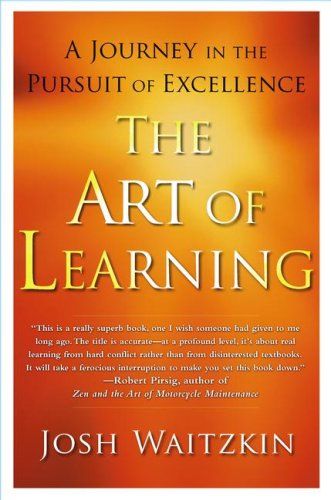
Nova: Exactly! And that's the trap. Today, we're dissecting a powerful concept inspired by a blend of insights, particularly from Josh Waitzkin's The Art of Learning and Ozan Varol's Think Like a Rocket Scientist. What's fascinating about Waitzkin is his unique background: a chess prodigy who became a martial arts world champion, proving mastery isn't about a single discipline, but a universal approach to learning itself.
Atlas: Wow, a chess prodigy who became a martial arts champion. That's incredible versatility. I'm curious, how does someone achieve such high-level mastery in two such different fields? What's the secret sauce that connects them?
The Mountain of Information: Overwhelm and Procrastination
SECTION
Nova: That's the million-dollar question, Atlas, and it leads us directly to what I call 'The Cold Fact' of learning. Think about it: starting any new learning journey often feels like staring at a mountain. You want to learn coding, or a new language, or even just how to manage your finances better. And then you open the first book, or the first online course, and it's just this sheer volume of information.
Atlas: Oh, I know that feeling. It's like you're standing at the base of Everest, looking up, and thinking, "There's no way I can climb that." I imagine a lot of our listeners, who are always eager to learn new things and dive deep, feel this exact paralysis. It's like you want to build a magnificent house, but someone just dumped a million bricks and no blueprint on your lawn. Where do you even begin?
Nova: Precisely. That overwhelm isn't just a feeling; it's a genuine psychological barrier. Our brains are pattern-seeking machines, and when faced with what seems like chaos, they often choose to shut down or procrastinate rather than engage. Waitzkin observed that true learning doesn't start with superficial breadth, trying to absorb everything, but with a deep understanding of the fundamental building blocks. It’s not about how much you know on day one, but how well you grasp the absolute essentials.
Atlas: But Wait, 'deep understanding' also sounds like more work, initially at least. More time. How do you even know what the 'fundamentals' when you're just starting? It feels like you need to understand the whole thing just to figure out where to start simplifying! That sounds like a bit of a paradox, doesn't it?
Nova: That's a great point, and it’s where most people get stuck. The trick isn't to spend more time on the fundamentals, but to spend time. It’s about quality over quantity of initial input. We tend to reason by analogy: "Oh, this new thing is like that old thing I know." But what if that analogy is flawed, or only gets you halfway? You end up building on shaky ground. This is where Ozan Varol's concept of 'first principles thinking' becomes our climbing gear for that mountain.
First Principles Thinking: Deconstructing Complexity
SECTION
Nova: So, that's exactly where 'first principles thinking' comes in. It's the ultimate GPS for that mountain of information. Varol, in 'Think Like a Rocket Scientist,' advocates for breaking down problems to their most basic, foundational truths. It's about asking: What are the irreducible elements here? What do I know to be true, without assuming anything else?
Atlas: Okay, 'basic truths' sounds powerful, but what does that like in practice? Give me a real-world example beyond rocket science. I’m thinking about someone trying to learn a new skill, not launch a satellite.
Nova: Absolutely. Let's take something almost everyone can relate to: learning to cook. Most beginners start by following recipes. They follow step-by-step instructions: add this much of that, cook for this long. That's reasoning by analogy, or rather, by recipe. But a master chef, or someone truly understanding cooking, thinks in first principles. They understand how heat affects proteins, how acids balance fats, how salt enhances flavor, how different ingredients react chemically.
Atlas: So it's not about memorizing the whole cookbook, it's about understanding ingredients react the way they do! That makes so much more sense. It's like you're building a mental LEGO set from the ground up, understanding how each brick works, rather than trying to glue together a pre-built model that might fall apart.
Nova: Exactly! Once you understand those fundamental principles—heat, fat, acid, salt—you don't need a recipe for every dish. You can invent recipes. You can adapt. You can troubleshoot when something goes wrong. This is what Waitzkin did with chess and martial arts; he didn't just memorize openings or techniques. He understood the core dynamics of force, balance, timing, and strategy. He reduced complex scenarios to their simplest, most fundamental interactions.
Atlas: Wow, that's incredibly empowering. It makes learning less about rote memorization and more about creative problem-solving. And, honestly, it sounds a lot less overwhelming. If you know the basic building blocks, the 'mountain' suddenly looks a lot more like a manageable hill with clear paths.
Nova: Precisely. By deconstructing knowledge to its simplest form, you create a robust foundation. This allows you to build profound understanding without getting lost in the details or feeling overwhelmed by complexity. It's about designing your own understanding, not just downloading information.
Atlas: So for our listeners who are buzzing with this idea, what's a 'tiny step' they can take to start applying this? How can they begin to practice this 'first principles' approach?
Synthesis & Takeaways
SECTION
Nova: That's a perfect lead-in to the 'Tiny Step' recommended by these tactical insights. Choose one concept you're currently learning, any concept at all. Now, try to explain it to someone who knows absolutely nothing about it, using only the most basic terms and avoiding all jargon.
Atlas: That's brilliant because it immediately exposes where your understanding is shaky, right? If you can't simplify it down to those 'first principles' for a complete novice, then you haven't truly understood it yourself. It forces you to distill your knowledge.
Nova: It does. It forces you to strip away the assumptions, the analogies, the surface-level explanations, and get to the absolute core. The secret to learning anything without overwhelm is not to consume more information, but to deconstruct to the irreducible truths, building mastery from the ground up. It’s about understanding the 'why' before the 'what' or the 'how.'
Atlas: And that's not just about learning, is it? That's about problem-solving, innovation, and really, seeing the world with fresh eyes. It's profoundly empowering, transforming the daunting into the doable. It allows you to feel truly in control of your intellectual journey.
Nova: Absolutely. So, next time you're facing that learning mountain, don't just start climbing randomly. Find its foundational truths, understand its first principles, and build your ascent from there.
Atlas: Give that tiny step a try this week, and see how it transforms your understanding. We’d love to hear what you discover.
Nova: This is Aibrary. Congratulations on your growth!