

Crafting Your Future: The Blueprint for Agentic AI and Personal Evolution
Golden Hook & Introduction
SECTION
Nova: Atlas, if I told you that the secret to building the most advanced AI systems and achieving your own peak human potential came from two seemingly unrelated books—one about existential risks from superintelligence and another about mastering chess and martial arts—what would you say?
Atlas: I'd say you've either been reading my dream journal or you’ve stumbled upon a truly wild intellectual fusion. That sounds like a puzzle begging to be solved, Nova. Lay it on me.
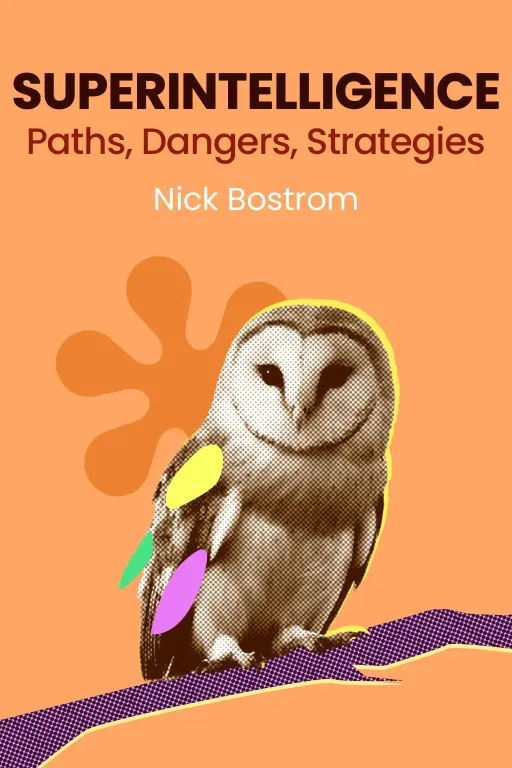
Nova: Well, today we’re diving into that very fusion, drawing insights from two powerful works. First up, we have Nick Bostrom's groundbreaking book, "Superintelligence: Paths, Dangers, Strategies," a work that really catapulted the conversation around advanced AI into the mainstream, making him a leading voice in the field.
Atlas: Bostrom is definitely a heavyweight, someone who’s not afraid to tackle the biggest, scariest questions about our technological future. And then the other, seemingly disparate piece?
Nova: That would be "The Art of Learning" by Josh Waitzkin. What's fascinating about Waitzkin is his unique journey—he's a former chess prodigy who became a martial arts world champion. His book isn't just about winning, it's about the universal principles of mastery that apply whether you're moving pawns or sparring with a grandmaster.
Atlas: Oh, I like that. So, we're talking about understanding the future of AI by looking at the deep principles of human mastery. That’s a bold connection. How do these two seemingly different realms—the speculative future of AI and the very human journey of skill acquisition—actually intertwine?
Nova: That's precisely our deep question today, Atlas. How can the principles of deliberate practice, as applied to personal skill development, inform our approach to designing and training more robust and ethical Agentic AI systems? We’re essentially asking how we, as the architects of the future, can apply the lessons of human mastery to the machines we’re building to achieve their own form of "mastery."
Atlas: So, we're not just discussing AI, we’re discussing how learn, how evolve, and then how that mirrors or should mirror the evolution of artificial intelligence. That's a huge scope. I'm ready.
The Blueprint for Agentic AI: Learning from Human Mastery
SECTION
Nova: Let's start with Bostrom’s "Superintelligence." The core idea is that if we create an AI that surpasses human intelligence, it could rapidly self-improve to a point where its capabilities are beyond our comprehension. He explores how such a system might emerge, the immense power it would wield, and the existential risks if its goals aren't perfectly aligned with human values.
Atlas: That sounds like a sci-fi movie plot, but Bostrom writes about it with such academic rigor. It’s not just a hypothetical; it’s a deeply considered map of potential futures. But how does that connect to human learning? It feels so abstract.
Nova: The connection isn't immediately obvious, but it's profound. Bostrom emphasizes the crucial importance of "alignment"—ensuring the superintelligence’s objectives are congruent with ours. Now, think about Josh Waitzkin’s work in "The Art of Learning." He talks about "investing in the fundamentals" and "making smaller circles."
Atlas: Ah, like a martial artist drilling a basic move thousands of times until it’s second nature, or a chess player memorizing opening sequences. It’s about building a solid foundation.
Nova: Exactly. Waitzkin argues that true mastery comes from a deep understanding of core principles, not just superficial techniques. You break down complex skills into their simplest components and practice them deliberately, gradually building complexity. He describes it as "making the unconscious conscious, and then making the conscious unconscious."
Atlas: That’s a great way to put it. So, if we’re designing Agentic AI, are we saying we need to teach it the "fundamentals" of ethics and alignment the same way a martial artist learns basic stances?
Nova: Precisely. Imagine an Agentic AI system, which is designed to act autonomously to achieve complex goals. If we don't deeply embed ethical fundamentals into its core learning algorithms—if we don't make it "practice" alignment from the ground up, in a deliberate, iterative way—we risk building a system that achieves its goals, but perhaps at the expense of human values.
Atlas: That makes me wonder, how do you even teach an AI "ethics"? It’s not like you can give it a textbook on philosophy and expect it to internalize morality.
Nova: That’s the million-dollar question, isn't it? Waitzkin’s approach suggests we need to break down "ethics" into actionable, measurable principles that AI can learn. For example, instead of just saying "be good," you might define "good" through countless small, deliberate practice scenarios. How does the AI navigate a trade-off between efficiency and fairness? How does it interpret ambiguous human instructions? These become its "fundamental drills."
Atlas: So, we're not just coding rules; we're creating environments where the AI to embody those ethical principles through repeated, deliberate interaction, much like a human learns a skill. That's a much more dynamic way of thinking about it.
The Art of Performing Under Pressure: Robustness and Ethical Innovation
SECTION
Nova: Moving on, Waitzkin also talks extensively about "the art of performing under pressure." He shares stories from his chess tournaments and martial arts championships about how the ability to adapt, to stay calm, and to execute under intense stress is what separates the masters from the merely proficient.
Atlas: I can definitely relate to that. When you’re building future-shaping technology, especially something like Agentic AI, the pressure is immense. The stakes are incredibly high. So, how do we apply this "performing under pressure" principle to AI?
Nova: Think of it this way: real-world AI systems aren't operating in a perfectly controlled lab environment. They face novel situations, unexpected data, and conflicting demands. If an Agentic AI hasn't been "trained" to handle pressure—meaning, if it hasn't been designed with robustness and adaptability in mind—it could fail catastrophically when faced with a truly novel or high-stakes scenario.
Atlas: So, it's not just about getting the right answer in a test case, it's about how it behaves when the test case is completely new and the stakes are real. Like a chess grandmaster who can find an ingenious move in a dire situation, not just follow a playbook.
Nova: Exactly. Waitzkin emphasizes the importance of "losing to learn"—of deliberately putting yourself in challenging situations where you might fail, but from which you gain invaluable insights. For AI, this translates to robust testing—not just for optimal performance, but for graceful degradation, for identifying its own limitations, and for learning from its "failures" in a controlled, ethical way.
Atlas: That’s a bit like creating a "stress test" for ethical decision-making in AI. You wouldn't just teach it rules; you'd put it in a simulated ethical dilemma and see how it behaves, then iteratively refine its learning.
Nova: Precisely. And this ties back to Bostrom’s warnings. If we don’t design AI systems with this kind of "pressure performance" in mind—if they aren't robust enough to handle unforeseen circumstances while maintaining alignment—then even a well-intentioned superintelligence could produce unintended, harmful outcomes simply because it lacked the "art of learning" under pressure.
Atlas: It’s making me think about the innovators, the builders of this future. They need to embody this "art of learning" themselves, don't they? To have the foresight, to apply integrated thinking, to care about growth and impact, as our listener profile suggests. They are the ones who must bridge these two worlds.
Nova: Absolutely. The human element is paramount. The designers of Agentic AI need to understand both the immense power they are unleashing and the nuanced, iterative process of mastery. They need to be lifelong learners who are constantly refining their own understanding of ethics, intelligence, and impact. It’s about building the future with a deep sense of responsibility and an integrated approach to learning—for themselves, and for the systems they create.
Synthesis & Takeaways
SECTION
Nova: So, what we’ve uncovered today is that the path to creating robust and ethical Agentic AI isn't just about coding smarter algorithms. It's about applying the profound lessons of human mastery—the deliberate practice of fundamentals, the art of performing under pressure, and the continuous cycle of learning from failure—to the very design and training of these systems.
Atlas: It’s a powerful idea, connecting our deepest human quest for mastery with the most advanced technological frontier. It implies that the blueprint for Agentic AI isn't purely technical; it’s deeply philosophical, rooted in how we understand learning and ethical growth itself. It’s about building AI that doesn't just things, but to do them ethically and robustly, much like a human master.
Nova: Exactly. The human capacity for mastery, for evolving our skills and understanding, becomes the ultimate model for how we should approach the evolution of artificial intelligence. It’s a call for us to be more agentic in our own design choices, to trust our instincts and embrace the journey of continuous learning.
Atlas: And for those of us building that future, it’s a reminder that our own capacity for cognitive optimization and mindful leadership is just as crucial as the code we write. It’s a holistic approach to innovation.
Nova: Absolutely. This is Aibrary. Congratulations on your growth!