

Beyond the Ice: How Martial Arts Principles Forge Unbreakable Focus.
Golden Hook & Introduction
SECTION
Nova: Most people think 'focus' is something you either have or you don't. A rare gift, a lightning strike of concentration that either hits you or it doesn't. But what if I told you it's actually a muscle, built brick by brick, not in a gym, but often found forged in the disciplined crucible of a dojo?
Atlas: Huh. That’s a fascinating reframe, Nova. Because honestly, for anyone trying to navigate high-stakes environments, whether it's a critical business decision or just trying to get through a mountain of work, consistent, unbreakable focus often feels like the holy grail. It’s elusive. So, you’re saying it’s not just about willpower?
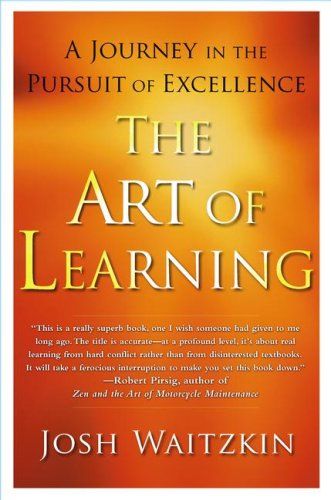
Nova: Absolutely not. It’s about cultivating a state, a profound sense of control and presence that is anything but accidental. Today we're drawing insights from a fascinating concept, 'Beyond the Ice: How Martial Arts Principles Forge Unbreakable Focus.' It's not a traditional book by a single author, but a powerful synthesis of ideas, particularly inspired by Josh Waitzkin – a true polymath.
Atlas: Wait, Josh Waitzkin, the chess prodigy? I know that name.
Nova: The very same! He became a chess Grandmaster and then, not content with conquering the intellectual battlefield, he became a martial arts world champion in Tai Chi Push Hands. His journey from the chessboard to the mat beautifully illustrates how universal principles of focus and learning can translate across wildly different high-pressure domains.
Atlas: Oh, I like that. So, he’s not just theorizing; he’s lived it in multiple arenas. That gives it some serious weight. How does his experience bridge these seemingly disparate worlds of chess and martial arts? Because from the outside, they look so different.
The Cultivated State of 'Flow' and Unbreakable Focus
SECTION
Nova: Well, it all starts with understanding 'flow' – that 'in the zone' feeling. Most people treat it like a happy accident, something that just happens to them. But Waitzkin, and the martial arts philosophy, teaches us it’s a cultivated state. He talks about 'making smaller circles.'
Atlas: Making smaller circles? What does that mean exactly? Are we talking about literally drawing smaller circles? Because that sounds like a very Zen, but maybe not very practical, business strategy.
Nova: It’s a metaphor, Atlas, but a deeply practical one. Imagine a martial artist. They don’t just learn a hundred moves and expect mastery. They take one single move, one block, one strike, and they practice it thousands, tens of thousands of times. They make that circle smaller and smaller, refining every micro-movement, every angle, until it’s perfect. It's about deep, focused repetition on the fundamentals.
Atlas: I see. So, for someone in a high-pressure corporate role, building a strategic plan, or even just mastering a new software, it’s about breaking down those massive goals into minute, perfectly executable tasks? Not trying to conquer the entire mountain at once?
Nova: Exactly. Instead of overwhelming yourself with the entire strategic plan, you focus on perfecting the market analysis component. Or mastering just one module of that new software. It’s in those 'smaller circles' that deep learning happens. And crucially, it’s where you learn to recover from mistakes.
Atlas: Ah, ‘recovering from mistakes.’ You know, that’s going to resonate with anyone who struggles with the pressure of high-stakes work. Because when you make a mistake, especially a big one, the instinct is often to freeze or panic. How does ‘making smaller circles’ help with that?
Nova: Because when you’re repeating that one move, that one small task, thousands of times, you're going to make mistakes. Constantly. And in the dojo, a mistake isn’t a failure; it’s immediate feedback. You feel it, you adjust, and you try again, instantly. It builds an incredible mental game, a resilience where you don’t dwell on the error, but pivot immediately to correction. You're training your nervous system to adapt, not just to avoid.
Mindset as the Foundation: Growth, Resilience, and Learning from Failure
SECTION
Nova: And that idea of learning from mistakes, that relentless pursuit of improvement, naturally leads us to Carol Dweck’s work on 'Mindset,' which is another powerful lens through which to view martial arts.
Atlas: Right, fixed versus growth mindset. Most people have heard of it. But what makes martial arts a real-world example of cultivating a growth mindset, more so than, say, a top-tier athlete in a team sport? What's unique about the dojo environment?
Nova: The crucial difference is the direct, often physical, feedback loop. In martial arts, if your technique is flawed, you literally feel it. You might get swept, or your strike might lack power, or you might leave an opening. There's no hiding from it. This immediate, undeniable feedback fosters a relentless pursuit of improvement, not just winning. Your sparring partner isn’t just an opponent; they’re a mirror, constantly showing you your weaknesses so you can grow.
Atlas: That makes sense. It’s not just about the score or the outcome; it’s about the process and the incremental improvement. But for someone driven by achievement, who might equate failure with personal inadequacy, how do you maintain that ‘growth’ perspective when facing repeated setbacks, or even physical pain? That sounds incredibly challenging.
Nova: It’s the reframing of 'failure' as 'feedback.' Every stumble, every missed block, every submission, is just data. It's information telling you where to adjust, where to strengthen. The masters aren't the ones who never fall; they’re the ones who get up faster, learn more profoundly from each fall, and integrate that learning immediately. It builds an inner fortitude, a belief that your abilities can always be developed, no matter the current outcome. It’s a profound lesson in humility and persistence.
Transferable Skills: From Dojo to Daily Life and Elite Performance
SECTION
Nova: And this brings us to the incredible transferability of these skills. The deep focus, the resilience, the strategic thinking honed in martial arts – these aren’t confined to the dojo. They're directly applicable to almost every area of life, especially for anyone aiming for elite performance.
Atlas: So, it’s not just about being disciplined, then? Because we hear that a lot: "Just be disciplined." But how does the deep focus from martial arts translate into something like strategic networking, or even navigating complex financial fundamentals? Is it more than just showing up and doing the work?
Nova: Oh, it’s far more than just discipline. Think about a martial artist in a sparring match. They’re not just reacting; they’re present, reading their opponent, anticipating moves, looking for openings, maintaining calm under pressure. Now, translate that to a high-stakes negotiation in business. You’re present, reading the room, anticipating your counterpart’s next move, looking for openings, maintaining a calm, centered demeanor.
Atlas: I can see that. It’s about being fully engaged, not just physically, but mentally and emotionally. That’s an elite mindset for high-stakes moments. It’s not just about knowing to do, but having the internal capacity to when it counts.
Nova: Exactly. It’s an internal state, a cultivated presence, not just external action. The strategic thinking isn't just about planning; it's about dynamic adaptation, about seeing the whole board while focusing on the immediate move. This is why these principles are so powerful for anyone aspiring to mastery, whether they’re building a strong financial foundation or connecting with those who can open doors. It’s about bringing that same level of intentionality and presence to every facet of your life.
Synthesis & Takeaways
SECTION
Nova: So, what we’ve really explored today is the profound idea that mastery, focus, and resilience are not innate gifts, but cultivated skills. They are built through intentional practice, by embracing failure as feedback, and by relentlessly refining our approach in 'smaller circles.' It's about bringing the wisdom of the dojo to our daily lives, transforming how we approach challenges and achieve our goals.
Atlas: That’s actually really inspiring. It means that the path to an elite mindset, to building a legacy and achieving independence, isn't some secret formula only for a select few. It’s about adopting these fundamental, ancient principles and applying them consistently. For anyone who feels like they’re chasing that 'in the zone' feeling, this offers a clear roadmap. So, what’s one thing our listeners can do to start cultivating this unbreakable focus?
Nova: Here’s a prompt from our 'healing moment' to leave you with: Recall a moment of intense focus or ‘flow’ in your life. What elements were present? What conditions were you in? How can you intentionally recreate those conditions in your work, in your strategic planning, or even in your daily interactions? Start there.
Atlas: I love that. It’s not about finding a new trick; it’s about recognizing what already works and being intentional about it. A powerful way to refine that mental game.
Nova: Absolutely.
Atlas: This is Aibrary. Congratulations on your growth!