

The Invisible Threads: Unpacking the Roots of Innovation and Human Progress
Golden Hook & Introduction
SECTION
Nova: We've all heard the story: the lone genius, toiling away in a garage or a lab, then – a lightbulb moment, and the world changes forever. But what if that deeply ingrained narrative isn't just a charming myth, but it's actively holding us back from understanding, and more importantly, true innovation?
Atlas: Oh, I like that. So, you're saying the image of the solitary inventor, scribbling furiously on a napkin, is actually a disservice to how breakthroughs really happen? That’s going to resonate with anyone trying to innovate in a team setting.
Nova: Exactly! Today, we're pulling back the curtain on what we call "The Invisible Threads: Unpacking the Roots of Innovation and Human Progress." We're going beyond the surface-level heroes to explore the deep, collective narratives and repeatable processes that truly enable groundbreaking advancements.
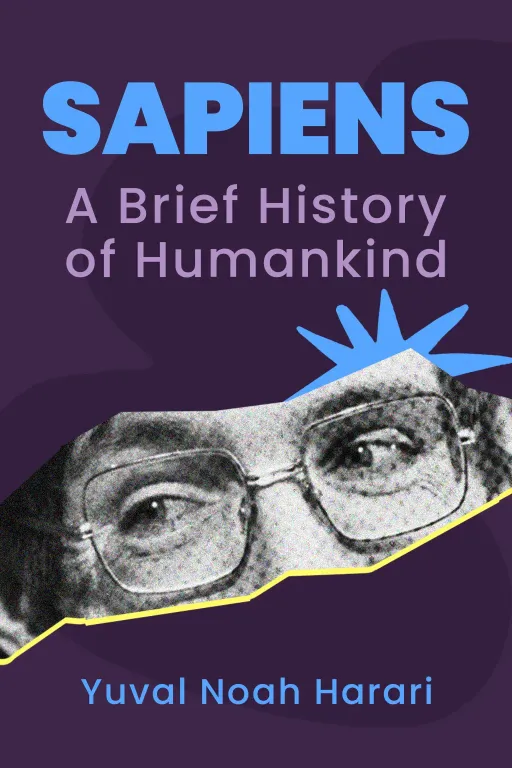
Atlas: And we're drawing from two incredible books to do it. First, Yuval Noah Harari's groundbreaking, which has sold over 23 million copies worldwide and sparked global conversations about humanity's past and future. Then, we have Tom Kelley's, a seminal work from IDEO, the design firm that practically invented human-centered design. These books, though vastly different in scope, offer complementary insights into how we innovate.
Nova: Absolutely. Harari gives us the millennia-spanning 'why,' while Kelley gives us the practical 'how.' And to kick us off, let's challenge that idea of the lone genius head-on.
The Illusion of Individual Genius: Collective Narratives as Innovation Fuel
SECTION
Nova: Harari, in, introduces this powerful concept of "shared fictions." He argues that what truly sets Homo Sapiens apart, allowing us to dominate the planet and build complex societies, isn't just our intelligence. It's our unique ability to believe in and cooperate around things that exist only in our collective imagination. Things like money, nations, religions, or even corporations.
Atlas: Wait, so are you saying Apple isn't real? Or that the iPhone was just... a collective hallucination we all agreed upon? That sounds a bit out there, but I'm intrigued. For our listeners who are managing high-pressure teams, this concept might feel a bit abstract. How does a 'shared fiction' actually help me build a better product or a more innovative company?
Nova: That’s a brilliant question, Atlas. Think of it this way: no single person could ever build an iPhone. It requires thousands, sometimes millions, of people collaborating across continents, from mining rare earth metals to designing chips, writing code, and assembling components. What allows them to do that? It's not just a blueprint. It's their shared belief in the value of the company, the currency they're paid in, the legal system that governs contracts, and the very concept of a global market.
Atlas: Okay, I see. So it's these invisible, agreed-upon constructs that create the framework for massive, coordinated effort. It's not a physical thing, but it’s real in its effects. Like how early human tribes, by believing in shared myths or spirits, could coordinate hundreds for a massive hunt or build monumental structures that an individual simply couldn't. The belief created the capacity for action.
Nova: Precisely! That collective belief, that shared fiction, enables trust and cooperation on a scale no other species can manage. Without it, we'd be stuck in small, fragmented groups, incapable of complex projects. The 'invisible thread' here is the social glue. In a modern context, consider the "culture" of a company, its mission statement, its brand story. These aren't tangible, yet they dictate behavior, inspire loyalty, and guide innovation.
Atlas: That makes me wonder, then, if the 'culture' of a company, its mission statement, its brand story... those are essentially modern shared fictions that enable the team to innovate together? Can you give an example that feels more tangible for a leader trying to foster innovation?
Nova: Absolutely. Take the shared fiction of "progress" or "disruption" that permeates Silicon Valley. It's an invisible, almost religious belief that things can always be better, faster, more efficient. This belief, this shared fiction, pulls countless individuals, startups, and massive tech companies in a similar direction. It enables venture capitalists to fund wildly ambitious ideas, engineers to work tirelessly, and consumers to embrace constant upgrades. The individual contributions are what we celebrate, but the underlying shared belief in 'innovation for innovation's sake' is the silent engine.
Atlas: That makes sense. It's like the belief in a common goal creates the framework for individual brilliance to actually something, to be applied effectively. It's not about denying individual genius, but understanding the ecosystem that allows it to flourish.
Innovation as a Repeatable Process: Empathy, Iteration, and Cross-Disciplinary Teams
SECTION
Nova: And speaking of frameworks, if Harari shows us the 'why' behind our ability to innovate collectively, Tom Kelley from IDEO really digs into the 'how.' He demystifies innovation, showing it's not just a lightning bolt, but a repeatable process.
Atlas: Repeatable? That sounds like music to a 'Strategic Seeker's' ears. But also, a bit counterintuitive. We often think of innovation as this chaotic, unpredictable thing, fueled by flashes of insight. It’s like, how do you schedule genius?
Nova: That's the beauty of Kelley's work. He argues that innovation is a human-centered design process. It revolves around three core tenets: empathy, rapid prototyping, and cross-disciplinary teams. Empathy means deeply understanding the needs, desires, and even unspoken frustrations of your users. It’s about truly putting yourself in their shoes.
Atlas: Okay, so it’s not just about building what you people want, but really observing and listening. Give us an example of how that plays out.
Nova: Think about IDEO's famous redesign of the computer mouse for Apple. Instead of just brainstorming in a boardroom, they observed people using existing mice. They saw users struggling, contorting their hands, getting frustrated. This deep empathy, this direct observation, led them to completely rethink the form factor, making it more ergonomic and intuitive. It wasn't one brilliant designer; it was a team observing, understanding, and then iterating.
Atlas: So it's about structured curiosity. You’re systematically looking for pain points, not waiting for inspiration to strike. But what about the 'human potential' aspect? For an 'Empowering Leader,' how do you foster innovation through teams without stifling individual creativity? Doesn’t too much process kill the spark?
Nova: That’s a crucial concern, and Kelley addresses it directly. It’s not about rigid rules. It’s about creating an environment of psychological safety where "creative abrasion" can happen. That means diverse ideas clash constructively, where team members are empowered to experiment, fail fast, and learn from their mistakes without fear of blame. It's about empowering the team to own the problem and the solution together.
Atlas: That’s a crucial distinction. It's not about making innovation a rigid assembly line, but building a system where creativity is channeled and amplified by collaboration. So, these 'invisible threads' of shared belief that Harari talks about, combined with a structured, empathetic process like Kelley's... that feels like the real superpower for sustainable innovation. It’s about designing the conditions for brilliance.
Nova: Exactly. It's the synergy of those two ideas. The grand, historical narrative of collective belief enabling us to dream big, and the practical, human-centered processes that turn those dreams into tangible realities.
Synthesis & Takeaways
SECTION
Nova: So, bringing these two powerful perspectives together, we see that innovation is never truly a solitary act. It's always built on 'invisible threads' – whether those are the deep historical shared fictions that allow us to cooperate on a massive scale, or the intentional, human-centered processes that guide our collective creativity.
Atlas: Absolutely. For our listeners, especially those 'Strategic Seekers' and 'Resilient Builders' who are navigating complex challenges and leading teams, the deep question from today is this: what 'shared fictions' are currently shaping—or perhaps limiting—innovation in industry? And how can you leverage Kelley's principles of empathy, rapid prototyping, and cross-disciplinary collaboration to either reinforce the helpful fictions or gently challenge the limiting ones? It’s about being intentional with both your culture and your process.
Nova: It's about seeing beyond the surface, recognizing that every breakthrough is built on layers of unseen cooperation and intentional design. It's not magic; it's magnificent human collaboration, made visible by understanding these threads.
Atlas: That's a powerful thought to end on. And understanding that allows us to be more intentional, more impactful, and truly unlock the potential within our teams and ourselves.
Nova: This is Aibrary. Congratulations on your growth!