

The Creative Scientist: Unleashing Innovation Beyond the Lab Bench
Golden Hook & Introduction
SECTION
Nova: Okay, Atlas, rapid-fire. I’ll give you a word, you give me the first thing that comes to mind. Ready? "Innovation."
Atlas: "Eureka!" Definitely. That lightbulb moment.
Nova: "Lab bench."
Atlas: Oh, coffee stains. And maybe a half-eaten sandwich. The reality of scientific pursuit, right?
Nova: Exactly! And "Breakthrough."
Atlas: Accident. Or maybe, a really persistent accident.
Nova: I love that. "Accident." And that's actually a fantastic segue, because today we're diving into a fascinating concept that challenges our traditional notions of where breakthroughs come from. We're talking about the ideas in "The Creative Scientist: Unleashing Innovation Beyond the Lab Bench."
Atlas: Intriguing title. It almost sounds like a call to arms for anyone who’s ever felt boxed in by their own expertise. So, what's the core idea here? Are we saying scientists should abandon their specializations and become Renaissance people overnight?
Nova: Not at all! It's more nuanced. The book argues that sometimes, the most groundbreaking solutions aren't found by digging deeper into your own niche, but by looking sideways. By actively seeking out and integrating diverse thinking from your immediate field. It's about recognizing what the book calls 'the blind spot.'
Atlas: The blind spot. I imagine for many of our listeners, who are incredibly dedicated and deeply immersed in their specific scientific landscapes, this might feel counterintuitive. Like, "I'm supposed to be an expert in THIS, not everything else!"
The Blind Spot: Beyond Your Field
SECTION
Nova: Precisely. The blind spot is that area of potential solutions we miss because our vision is narrowed by our own expertise. It’s like searching for your keys under the streetlight because that’s where the light is, even though you dropped them in the dark alley.
Atlas: Oh, I like that analogy. So, how does one even begin to illuminate that dark alley? Because for someone navigating complex scientific challenges, the idea of just "looking elsewhere" can feel incredibly vague.
Nova: It often starts with a mundane observation, something that seems completely unrelated to your problem. Think about George de Mestral, the inventor of Velcro.
Atlas: Velcro? That ubiquitous fastener? What does that have to do with scientific blind spots?
Nova: Everything! De Mestral was a Swiss engineer. One day, he went hunting with his dog in the Alps. When they returned, he noticed both his dog's fur and his own clothes were covered in burrs. Now, most people would just pick them off and complain.
Atlas: Right, the usual post-hike ritual.
Nova: But de Mestral, driven by a natural curiosity, didn't just dismiss them. He put a burr under a microscope. And what he saw revolutionized fastening technology: hundreds of tiny hooks on the burr, perfectly designed to cling to the loops in the fabric or animal fur.
Atlas: Wow. That's incredible. So he looked at a nuisance, and instead of just removing it, he asked, "How does this?"
Nova: Exactly! His field wasn't botany, or even textiles. His initial problem wasn't "how do I create a new fastener." It was "why are these burrs so annoyingly effective?" He then spent years studying the biomechanics of those burrs, translating that natural design into a synthetic material. He had to collaborate with weavers and textile experts, bridging biology, engineering, and manufacturing.
Atlas: That gives me chills, honestly. It’s a powerful example of how curiosity, paired with a willingness to look beyond the immediate problem, can lead to something truly transformative. For our listeners who are keen observers, always looking for what's next in their field, this is almost like permission to let their minds wander.
Nova: It’s more than permission; it’s a strategy. It's a deliberate act of cross-pollination. The book really champions this idea that your natural curiosity thrives when you actively seek out and integrate diverse thinking, pushing past conventional boundaries. It's about asking, "What can this seemingly unrelated thing teach me about my current challenge?"
The Power of Range: Generalists vs. Specialists
SECTION
Atlas: And that naturally leads us to the second key idea, which often feels like a counterpoint to our modern emphasis on hyper-specialization. Are we talking about the power of being a generalist?
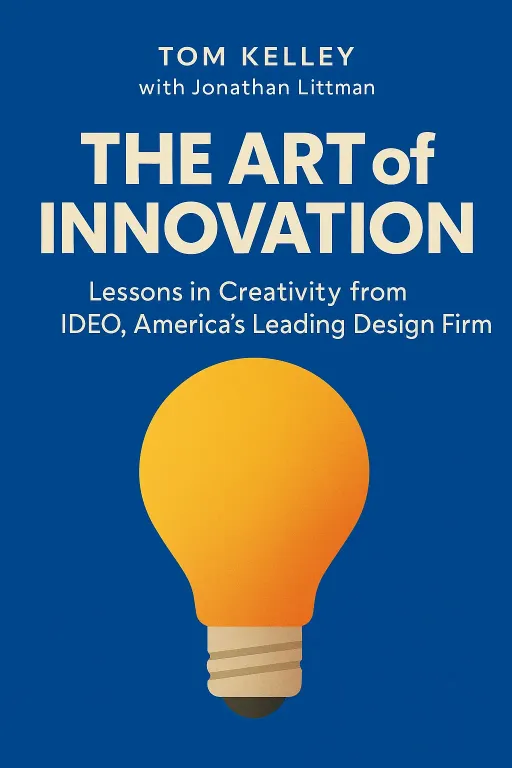
Nova: Absolutely. It's about the power of 'range,' as David Epstein argues in his highly acclaimed book of the same name. He makes a compelling case for the power of generalized knowledge and diverse experiences over early specialization. And it ties beautifully into what Tom Kelley, from the legendary design firm IDEO, talks about in "The Art of Innovation."
Atlas: Okay, so Epstein argues for generalists. Kelley, from IDEO, is all about design thinking. How do these seemingly different perspectives converge to ignite innovation beyond the lab bench?
Nova: Think of it this way: Kelley's "design thinking" is a framework for problem-solving that inherently encourages cross-pollination. It’s user-centric, iterative, and deeply collaborative. It pulls in insights from anthropology, psychology, engineering – whatever is needed to understand the user and the problem space holistically. It’s about building a diverse team to tackle a challenge, not just a team of specialists from one discipline.
Atlas: Right, like bringing together engineers, designers, and even ethnographers to rethink something as simple as a shopping cart.
Nova: Exactly. And Epstein's "Range" provides the theoretical underpinning for that approach is so effective. He shows that individuals with broader experiences and knowledge bases are often better at connecting disparate dots, identifying novel patterns, and applying solutions from one domain to another. They might not be the deepest expert in a single narrow field, but they are masters of synthesis.
Atlas: But wait, looking at this from a scientific research perspective, isn't deep specialization absolutely critical for groundbreaking discoveries? You need to know molecular biology inside and out to develop a new gene therapy, for example.
Nova: You do, but the breakthrough often happens at the. Consider the field of AI in healthcare. It's not just about brilliant AI engineers or brilliant doctors. The truly transformative potential lies in the collaboration between them, and often, with ethicists, public health experts, and even sociologists.
Atlas: So you're saying that a generalist perspective helps bridge those specialized silos, allowing different forms of expertise to combine in novel ways?
Nova: Precisely. A scientist with a broader understanding of, say, public health policies or even ethical philosophy, can not only develop a more effective AI diagnostic tool but also ensure its ethical application and wider societal impact. They can anticipate challenges that a purely technical specialist might miss. It's about connecting those dots in research, leading to truly novel breakthroughs, especially in complex, interdisciplinary areas like AI in healthcare. It's not about being a jack-of-all-trades and master of none; it's about being a master of connection.
Synthesis & Takeaways
SECTION
Atlas: That’s a powerful reframing. It means that our innate curiosity, our desire to understand "what's next," isn't just a personal trait, but a critical tool for innovation. It's about trusting that unique perspective to connect the dots.
Nova: Absolutely. The core message here is that cultivating a broad, interdisciplinary approach to knowledge fuels your innate creativity. It allows you to discover breakthrough solutions that linear, hyper-focused thinking often misses. It’s about recognizing that the greatest impact often comes from bridging the gap between the lab and life, and that requires a wider lens.
Atlas: And for those of us driven by the ethical application of science for the greater good, this perspective is even more crucial. Understanding the broader implications, the human element, the societal impact – that comes from range, not just depth in a single discipline.
Nova: Exactly. It moves us beyond just discovery to truly impactful translation. So, for our listeners this week, here's a challenge: What seemingly unrelated field or concept could you explore this week to spark a fresh perspective on a current research challenge? Maybe it’s art history, maybe it’s philosophy, maybe it’s urban planning. Just dip your toe in.
Atlas: I love that. Dedicate specific time each week to explore those interdisciplinary connections. See where they lead. Because the next big idea might not be where you expect it.
Nova: This is Aibrary. Congratulations on your growth!