

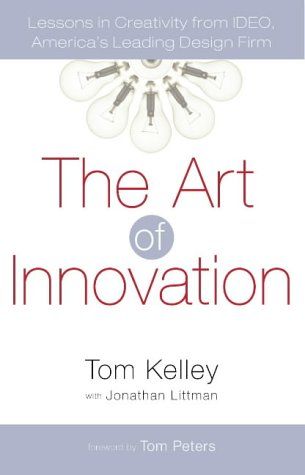
The Art of Innovation
Introduction
Nova: Imagine you are given a challenge. You have exactly five days to take one of the most mundane, overlooked objects in the world—the grocery store shopping cart—and completely reinvent it. Not just a new color or a better wheel, but a total overhaul that solves safety issues, theft, and navigation. Most companies would spend months in committee meetings. But in 1999, a firm called IDEO did it in less than a week on national television.\n\nLeo: Wait, five days? That sounds like a recipe for a disaster or a very stressful reality show. Did they actually pull it off, or was it just a bunch of sticky notes and wishful thinking?\n\nNova: They didn't just pull it off; they created a legend. That episode of ABC’s Nightline became one of the most famous moments in design history. And the man behind the curtain, Tom Kelley, eventually wrote down the secret sauce in his book, The Art of Innovation. Today, we are diving into that book to see how a group of self-proclaimed nerds in Silicon Valley changed how the world thinks about creativity.\n\nLeo: I have to admit, when I hear the word innovation, I usually think of a lone genius in a garage, like Steve Jobs or Edison. But you are saying this is more of a team sport?\n\nNova: Exactly. Tom Kelley argues that innovation isn't a lightning bolt that hits a single person. It is a repeatable, teachable process. It is about observation, prototyping, and a very specific kind of chaos.\n\nLeo: Well, I am ready for some organized chaos then. If this book can teach me how to reinvent a shopping cart in five days, maybe it can help me figure out why my home office is still a mess.\n\nNova: We might not fix your office, but we will definitely change how you look at the world. This is the story of IDEO and the art of making the impossible feel like a Tuesday afternoon project.
Key Insight 1
The Anthropologist's Lens
Nova: The first big pillar Kelley talks about is observation. But he doesn't mean just looking at things. He calls it being an anthropologist. Most companies, when they want to know what customers want, they use focus groups. They put people in a room, give them some pizza, and ask, What do you want in a toothbrush?\n\nLeo: And let me guess, people lie? Or they just don't know?\n\nNova: Both! Kelley points out that focus groups are terrible because people try to sound smart or they tell you what they think you want to hear. IDEO’s secret is to go out into the wild. They watch people actually using products in their real lives.\n\nLeo: Give me an example. How does watching someone brush their teeth lead to a breakthrough?\n\nNova: Okay, take the Oral-B kids' toothbrush. Before IDEO stepped in, kids' toothbrushes were just smaller versions of adult toothbrushes. Thin, skinny handles. The assumption was: small hands, small handle.\n\nLeo: That seems logical. Why was it wrong?\n\nNova: Because they actually watched kids. They realized that kids don't have the fine motor skills to hold a toothbrush with their fingertips like adults do. Kids grab a toothbrush with their whole fist. They clench it.\n\nLeo: Oh, like a club!\n\nNova: Exactly! Because they clench it, those skinny handles were constantly slipping and sliding in their hands. So IDEO designed the Squish Grip. It was fat, rubbery, and easy to hold with a full fist. It became the best-selling kids' toothbrush in the world.\n\nLeo: That is wild. So the innovation didn't come from a lab; it came from just watching a five-year-old struggle in a bathroom.\n\nNova: Precisely. Kelley calls this Vuja De. You know Deja Vu, where you feel like you have seen something before? Vuja De is the opposite. It is looking at something you have seen a thousand times—like a kid brushing their teeth—and seeing it as if for the very first time.\n\nLeo: I love that. It is like being a tourist in your own life. But how do you train yourself to do that? I feel like I just go on autopilot most of the day.\n\nNova: Kelley suggests looking for the workarounds. Look for the things people do to fix a product that isn't working for them. Like the person who tapes a piece of cardboard to their dashboard to block the sun. Those hacks are the breadcrumbs leading to your next big idea.\n\nLeo: So, if I see someone using a binder clip to keep their snack bag closed, that is a sign the snack bag design is failing?\n\nNova: You got it. Every frustration is a hidden opportunity. If you stop complaining about the world and start observing how people cope with it, you are halfway to being an innovator.
Conclusion
Nova: We have covered a lot today. From the five-day shopping cart challenge to the importance of watching kids brush their teeth, and the seven rules that make a brainstorm actually work.\n\nLeo: It really boils down to humility, doesn't it? Having the humility to observe instead of assume, the humility to share a bad idea, and the humility to build a crappy cardboard prototype.\n\nNova: That is a great way to put it. Tom Kelley’s The Art of Innovation isn't just a business book; it is a guide to being more curious about the world. It teaches us that innovation isn't a gift you are born with; it is a muscle you build through practice.\n\nLeo: I think I am going to go look at my messy office now and try to find some workarounds. Maybe there is a breakthrough hidden in that pile of mail.\n\nNova: Just remember: defer judgment, go for quantity, and don't be afraid to use some duct tape. If you can apply even one of these principles—whether it is being a better observer or building a quick prototype of a new idea—you are already on your way.\n\nLeo: Thanks for the masterclass, Nova. I will never look at a shopping cart the same way again.\n\nNova: Mission accomplished. This is