

The 'Curator's Dilemma': Navigating Your Diverse Passions
Golden Hook & Introduction
SECTION
Nova: Quick, Atlas, I'll give you three iconic figures – Leonardo da Vinci, Benjamin Franklin, and Marie Curie. What's the one thing they all have in common that's rarely celebrated?
Atlas: Oh, I like that! Hmm. Intelligence, certainly. Unwavering curiosity? A drive for innovation? All true, but "rarely celebrated"... I'd say maybe their sheer breadth of knowledge? Like, they weren't just good at one thing, they were good at.
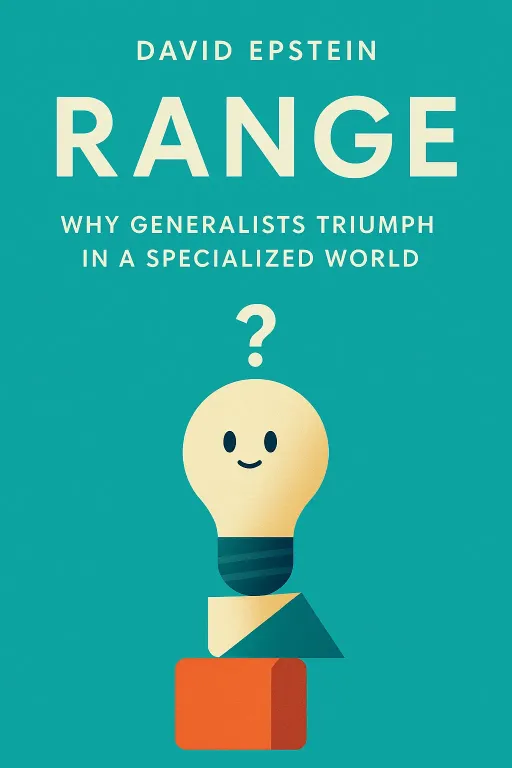
Nova: Exactly! That incredible range, their diverse interests, often gets overshadowed by their most famous singular achievement. And that's precisely what we're diving into today, inspired by David Epstein's widely acclaimed book, "Range: Why Generalists Triumph in a Specialized World."
Atlas: Ah, "Range"! I've heard so much about this. Epstein, if I remember correctly, really challenges that whole 10,000-hour rule, doesn't he?
Nova: He absolutely does. Epstein, a former science journalist, brings a unique investigative lens to challenging that sacred cow of specialization. He illuminates how broad experience often outshines narrow focus, especially in our increasingly complex world. He makes a compelling case that the very thing many of us are told to avoid – being a generalist – is actually our superpower.
Atlas: That makes me wonder, for a lot of our listeners who might have passions across, say, coffee, music, and tech, society often pushes them to pick. That pressure for a singular path can feel like a real blind spot, can't it?
Nova: It can. And that's our first core idea today: the blind spot.
The Blind Spot: Specialization vs. Diverse Passions
SECTION
Nova: It’s so easy to feel like you need one singular path, especially when society often praises early specialization. Think about it: from childhood, we're asked 'What do you want to be when you grow up?' singular. Not, 'What are the five fascinating things you want to explore?'
Atlas: Right? It's like, if you're not coding by age seven, or mastering the violin before high school, you're somehow behind. I imagine a lot of our listeners, especially those with incredibly detailed minds and a quest for mastery across various fields, feel that pull. They might look at their deep dives into advanced audio production, or their meticulous coffee brewing, and then their home automation projects, and think, 'Am I spread too thin?'
Nova: Precisely. For someone with that kind of depth across coffee, music, and tech, this narrow view – this pressure to specialize – can be a real blind spot. Your diverse experience isn't a weakness; it's genuinely your unique superpower. Epstein argues that early specialization can actually be a in many fields, particularly those that are complex and unpredictable.
Atlas: Wait, are you saying that being a jack-of-all-trades, so to speak, is actually than being a master of one? That goes against so much conventional wisdom! What about all the research on deliberate practice and expertise?
Nova: Well, it's not that deliberate practice isn't important, but Epstein shows that generalists often thrive in those complex, unpredictable fields of their breadth. He cites examples of individuals who tried many different paths before finding their niche, or those who brought insights from one totally unrelated domain to revolutionize another. Think of Kepler, who studied theology before physics, or Darwin, whose diverse interests in geology and botany informed his theory of evolution.
Atlas: So, you're saying my love for vintage synthesisers and smart home tech isn't a distraction, but actually my secret weapon? That’s incredibly liberating! It's like the more different types of puzzles you've solved, the better you get at solving puzzles, even if they look completely different.
Nova: Exactly. Your ability to connect seemingly unrelated domains is a formidable asset. It makes you more innovative and resilient than most specialists. And that brings us to our second core idea: the power of range.
The Power of Range: Generalists as Innovators
SECTION
Nova: So, let's talk about the immense power of range. Epstein's core argument in "Range" is that breadth of experience allows for more creative problem-solving and adaptability. He shows how generalists excel at connecting disparate ideas in novel ways. It's not about being shallow in many things, but about having enough depth in varied areas to see patterns and solutions that specialists, with their narrower focus, often miss.
Atlas: Okay, but how does one connect these disparate ideas? Is it just... hoping for a lightning bolt moment, or is there a method? I mean, for someone driven by mastery and dissecting complex systems, they're not just collecting hobbies; they want to understand things at a fundamental level.
Nova: That's a great question, and it's where "The Art of Gathering" by Priya Parker subtly comes into play, even though it's about events. Parker's work highlights the power of defining purpose and creating unique experiences. This resonates with curating diverse interests into a cohesive personal narrative, much like an architect designs an integrated space. You don't just throw furniture into a room; you design the flow, the light, the purpose of each area.
Atlas: That’s a great analogy! So it's like we're not just collecting hobbies; we're designing an experience around our own life, making sure all the 'guests'—our passions—have a reason to be there together. It’s about being an architect of your own intellectual ecosystem, making sure everything serves a greater purpose.
Nova: Precisely. Nova’s take here is that your ability to connect these varied domains, when done consciously, makes you not just innovative, but truly resilient. Imagine someone who understands both the intricate mechanics of a coffee machine and the subtle nuances of audio engineering. When a problem arises in one area, they might instinctively draw a solution from the other. This cross-pollination of ideas is where true innovation often happens.
Atlas: So it's about understanding the underlying principles that govern different domains. Like, the precision required in coffee extraction might inform the precision needed in sound mixing, or the systematic approach to smart home tech might apply to organizing a music library. It's about finding those fundamental connections.
Nova: Exactly. It's about seeing the weave, as your user profile suggests. It's about recognizing that a deep capacity for detail, a joy in precision, and a quest for mastery aren't limited to one field. These are transferable skills that, when applied across diverse interests, create something far greater than the sum of their parts.
Curating Your Unique Offering: Weaving Passions into Purpose
SECTION
Nova: So, Atlas, given all this, how might someone with a deep love for, say, coffee brewing, advanced audio production, and ethical AI in creative fields, consciously weave those interests to create something truly unique?
Atlas: That makes me wonder, how can someone take their varied interests and turn them into an offering no specialist could replicate? It sounds like it moves beyond just having hobbies, to actually something new. Like, a coffee-tech-music hybrid experience. What does that "truly unique offering" even look like in practice?
Nova: It looks like an "integrated portfolio design" – a coherent vision that showcases your multifaceted talents. Imagine a music producer who also designs and builds custom, AI-powered soundproofing solutions for home studios, informed by their deep understanding of acoustics from their audio production, and their ethical AI insights ensuring responsible tech use. Or a coffee entrepreneur who develops a smart home brewing system that analyzes bean properties and adjusts parameters in real-time, all while composing bespoke ambient music for the perfect coffee experience.
Atlas: That’s actually really inspiring. It sounds like the goal isn't just to diverse interests, but to them. To make them sing together, rather than just playing separate tunes. It’s about embracing that architect mindset, not just collecting, but curating.
Nova: Precisely. It's about moving from simply collecting knowledge to consciously curating it. Your growth recommendations emphasize this: trust your diverse experience, see the connections, embrace the weave. Dedicate time each week to explore one new connection between your varied passions. That’s how you build that truly unique offering that no specialist could replicate.
Atlas: So the "Curator's Dilemma" isn't a dilemma of choice, but a challenge of integration. It's about becoming the master weaver of your own unique tapestry, right?
Synthesis & Takeaways
SECTION
Nova: Absolutely. The core message here is profound: your diverse experience isn't a blind spot, it's your unique superpower. Embracing your range, consciously weaving your passions together, allows you to create something truly innovative and resilient. It's about finding the intersection of craft, culture, and connection that only can bring to life.
Atlas: That’s such a hopeful way to look at it. So the real takeaway here is to embrace your multifaceted self, trust that your unique blend of interests is your strength, and then actively look for the connections. Don't be afraid to be the 'curator' of your own life's work.
Nova: Exactly. The future belongs to those who can connect the dots in novel ways. What if the greatest innovations aren't born from tunnel vision, but from panoramic sight?
Atlas: A profound thought to leave us with! For anyone out there feeling like their passions are too scattered, remember that's your unique blueprint for something extraordinary.
Nova: Absolutely. And if this episode resonated with you, share your own 'curated' passions with us online. We'd love to hear how you're embracing your range.
Atlas: This is Aibrary. Congratulations on your growth!