

Weaving Narratives: Bioinformatics, Data, and Human Stories
Golden Hook & Introduction
SECTION
Nova: You know, Atlas, I was reading something the other day that made me wonder: what if the biggest breakthroughs in medicine aren't just about finding new drugs or technologies, but about how we about them? What if the most powerful diagnostic tool isn't a scanning machine, but a well-told story?
Atlas: Oh, I like that. So, you’re suggesting the art of communication is just as vital as the science itself, especially in complex fields like bioinformatics where data can feel so cold and abstract? That’s going to resonate with anyone who’s ever tried to explain their work at a family dinner.
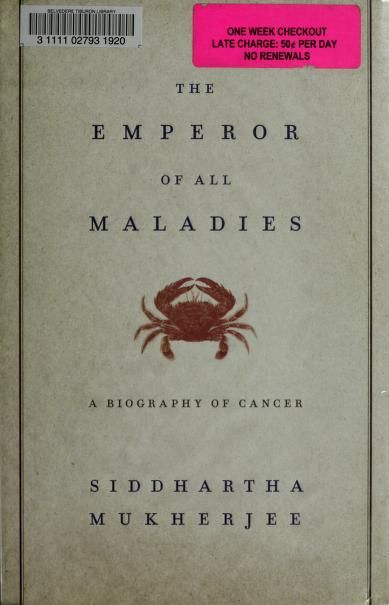
Nova: Exactly! And that’s precisely what we’re diving into today with a truly remarkable book: Siddhartha Mukherjee’s Pulitzer Prize-winning masterpiece, "The Emperor of All Maladies: A Biography of Cancer." This isn't just a medical textbook; it's a sprawling, human story of a disease that has plagued humanity for millennia. Mukherjee, an oncologist and researcher himself, weaves together history, science, and deeply personal narratives in a way that transforms our understanding of cancer from a clinical diagnosis into a living, breathing saga.
Atlas: Wow, that gives me chills. A biography of cancer – that’s such a powerful framing. It immediately shifts perspective from "disease as enemy" to "disease as character in a long, ongoing story." And coming from an actual oncologist, it adds such immense credibility, making it clear this isn't just a philosophical musing but grounded in profound medical insight.
Nova: Absolutely. And that leads us directly into our first core topic: the profound humanization of scientific data.
Humanizing Scientific Data
SECTION
Nova: Mukherjee’s genius in "The Emperor of All Maladies" lies in his ability to take something as terrifyingly complex as cancer—a disease defined by genetic mutations, cellular anarchy, and intricate biochemical pathways—and render it utterly human. He doesn't just present data points; he introduces us to the scientists who dedicated their lives to understanding it, the patients who battled it, and the historical figures who shaped our perception of it.
Atlas: So basically, he’s saying that beneath every statistic, every gene sequence, every biopsy report, there’s a person. A story. That’s a perspective that I imagine is often lost in the sterile environment of a lab or in the sheer volume of data that bioinformatics generates. For our listeners who are deep in data analysis, it's easy to forget the 'why.'
Nova: Precisely. Take, for instance, the story of Sidney Farber, often considered the father of modern chemotherapy. Mukherjee doesn't just tell us that Farber discovered the anti-folate aminopterin in the 1940s, which led to temporary remissions in children with leukemia. He immerses us in the context: the desperation of parents, the heartbreaking reality of childhood cancer, and Farber’s almost singular obsession to find —anything—to help these children.
Atlas: That’s a great example. It puts the discovery into an emotional framework. It wasn't just a chemical compound; it was hope, born out of immense suffering and relentless pursuit. I imagine that kind of storytelling makes the science itself more memorable and impactful. It’s like, instead of just saying “compound X works,” you’re saying “compound X, born from a doctor’s desperate hope for a dying child, offered a glimmer of light.”
Nova: Exactly. And he doesn't shy away from the darker side either, the failures, the false hopes, the immense suffering caused by early, toxic treatments. He chronicles the evolution of our understanding of cancer from a mysterious, almost supernatural affliction to a genetic disease, showing the incremental, often agonizing, progress of science. It’s a narrative that makes you feel the weight of history in every scientific step forward.
Atlas: That’s such an important point. It’s not just about celebrating the wins, but understanding the brutal journey. It brings a sense of humility to the scientific process. And for professionals in bioinformatics, understanding this historical context must be crucial. It reminds them that their data isn't just numbers; it's the culmination of centuries of struggle and discovery.
Nova: It absolutely does. And this approach, this weaving of human experience into scientific discovery, is something Ben Goldacre, in "Bad Science," implicitly champions, though from a different angle. Goldacre is all about transparency and critical thinking in presenting scientific information. While his book is about debunking myths and calling out misinformation, the underlying principle is the same: present science clearly, responsibly, and in a way that respects the audience's intelligence and humanity.
Atlas: Right, so it’s two sides of the same coin: Mukherjee shows us how to a compelling narrative around science, and Goldacre shows us how to and scientific narratives. Both are essential for anyone trying to bridge the gap between complex data and public understanding, especially in a field like genetics where the stakes are incredibly high.
Nova: Precisely. And that brings us to our second core idea: the craft of clarifying complexity.
Crafting Clarity from Complexity
SECTION
Nova: When we talk about bioinformatics, we're talking about mind-boggling amounts of data: genomic sequences, protein structures, patient health records, clinical trial results. It's a deluge of information that can easily overwhelm if not properly contextualized and explained. This is where the principles laid out in "The Art of Explanation" by Lee LeFever become incredibly relevant.
Atlas: So, it’s not enough to just the data or even analyze it; you have to be able to it. I mean, for someone delving into the future of genetic regulation, or patient advocacy in genetics, the ability to clearly articulate what a gene variant means for a person's health, or what the ethical implications of CRISPR technology are, is paramount. How do you simplify without oversimplifying?
Nova: LeFever provides frameworks for just that. He emphasizes understanding your audience, identifying the core problem you're trying to solve, and then building an explanation like a story: starting with what people already know, introducing new concepts gradually, and connecting them to a larger context. It’s about creating a mental model for the listener or reader.
Atlas: That sounds a bit like building a bridge. You start from one side, where people are comfortable, and then you extend the structure, piece by piece, until they can safely cross to a new understanding. Can you give an example of how this applies to something like genomic data? Because "gene sequencing" can sound like a foreign language to most people.
Nova: Absolutely. Instead of barraging someone with terms like "single nucleotide polymorphisms" or "allele frequencies," you might start by explaining that our bodies are like incredibly complex instruction manuals, written in a four-letter code. A gene sequence is just reading a chapter of that manual. And sometimes, there are tiny typos—these SNPs—that might change a single word, and that change can sometimes mean the difference between health and disease.
Atlas: Oh, I love that analogy! "Instruction manual" and "typos"—that immediately makes it graspable. It takes something incredibly abstract and makes it relatable to everyday experience. That’s the kind of accessible explanation that cuts through the jargon and makes the information stick.
Nova: Exactly. And LeFever would also stress the importance of visuals, even in spoken explanations. You can paint a picture with words. Imagine explaining the concept of personalized medicine not just as "medicine tailored to your genes," but as a highly specific key designed to unlock only body's unique genetic lock, rather than a master key that tries to fit everyone.
Atlas: That’s a perfect example of Nova's take: the true power of bioinformatics lies not just in analysis, but in the ability to translate those analyses into stories that resonate and inform. It’s about building those bridges, creating those mental models, and making the data speak in a human voice. It’s about empowering patients, informing policy, and guiding ethical discussions, not just generating reports.
Synthesis & Takeaways
SECTION
Nova: So, what we've really been exploring today is the profound truth that in fields as complex as bioinformatics, the data itself is only half the story. The other, equally vital half, is how we tell that story. Mukherjee teaches us the power of narrative to humanize the most daunting scientific battles, grounding abstract concepts in personal struggle and historical context.
Atlas: And Goldacre reminds us of the ethical imperative to communicate science clearly and responsibly, to build trust by being transparent about the evidence. Then LeFever gives us the practical tools, the "how-to" guide for taking those complex insights and making them understandable, relatable, and actionable for everyone from patients to policymakers. It’s about turning raw information into profound understanding.
Nova: It truly is. The journey from a raw sequence of DNA to a patient understanding their prognosis, or a community making informed health decisions, is a narrative journey. It requires not just brilliant scientists but brilliant storytellers. It demands that we, as the ethical explorers and human-centric scientists, embrace the ambiguity, connect the data to human experience, and amplify the human voice in science.
Atlas: So, for anyone out there wrestling with complex data, trying to make sense of the cutting edge of science, remember: the most powerful tool you have isn't just your analytical prowess. It's your ability to tell a story, to connect those dots into a narrative that moves, informs, and inspires. Because ultimately, science isn't just about facts; it's about our shared human journey.
Nova: This is Aibrary. Congratulations on your growth!