

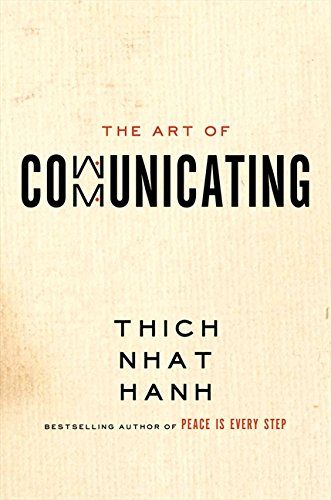
The Art of Communicating
Introduction: The Paradox of Connection in the Digital Age
Introduction: The Paradox of Connection in the Digital Age
Nova: Welcome to the show. We live in an age of unprecedented connectivity. We have pocket supercomputers that let us talk to anyone, anywhere, instantly. Yet, how often do you walk away from a conversation feeling truly heard, or having truly understood someone else? That disconnect is precisely what Zen Master Thich Nhat Hanh addresses in his profound book, The Art of Communicating.
Nova: : That's the paradox, isn't it? We're drowning in words, but starving for meaning. I picked up this book expecting simple tips on better small talk, but it seems to go much deeper. What's the central thesis that sets this work apart from every other communication guide out there?
Nova: It’s radical, really. Thich Nhat Hanh posits that communication isn't just an exchange of data; it is our continuation. It’s how we build or destroy relationships, communities, and even peace in the world. He argues that before we can speak beautifully, we must first learn to listen beautifully, and before we can listen beautifully to others, we must listen beautifully to ourselves.
Nova: : Listen to ourselves? That sounds like introspection, not conversation. Are we talking about meditation here, or how to handle a difficult meeting?
Nova: Both, actually. He grounds all external interaction in internal awareness. He says we must practice mindful self-communication—recognizing our own emotions, fears, and desires without immediately judging them. If we don't know what’s churning inside us, how can we possibly articulate it clearly or listen through the noise of our own baggage when someone else speaks?
Nova: : So, the first step isn't opening your mouth, it's closing your mouth and checking your internal weather report. That’s a huge shift from the usual advice of 'just be confident and speak your truth.'
Nova: Exactly. Confidence without awareness is just noise. This book is a roadmap for turning our daily conversations from potential battlegrounds into opportunities for genuine connection. We’re going to break down his three pillars: Self-Communication, Deep Listening, and Right Speech. Ready to dive in?
Nova: : Absolutely. Let's start with that inner weather report. Tell us more about this self-communication.
Key Insight 1: Knowing Your Own Terrain
Chapter 1: The Inner Dialogue - Mastering Self-Communication
Nova: The foundation of Thich Nhat Hanh's approach is what he calls mindful self-communication. He emphasizes that we must learn to recognize our emotions, fears, and desires without judgment. Think of it like this: if you’re angry, you don't just react; you notice, 'Ah, anger is present. I see my fear of being unheard is fueling this.'
Nova: : That’s tough. In the heat of the moment, my instinct is to project that anger outward, usually blaming the other person for causing it. How does he suggest we pause that projection?
Nova: He anchors it in mindfulness, often using the breath. When you feel that surge, you pause, breathe in, and acknowledge the feeling. He suggests labeling it gently: 'Breathing in, I see my frustration. Breathing out, I smile to my frustration.' This act of acknowledging without immediately acting on the emotion creates space.
Nova: : So, instead of saying, 'You always interrupt me!' I first have to recognize, 'I am feeling invalidated right now because my need for space isn't being met.' That changes the entire tone before the words even leave my mouth.
Nova: Precisely. And this applies to desires too. If you’re communicating a need, you must first understand the need itself, not just the demand you’re making. Are you demanding attention, or are you communicating a deep-seated need for recognition?
Nova: : I remember reading that he connects this to the idea that we often speak from a place of suffering—a lack of something. If we don't address the lack internally first, we just try to fill that hole using the other person’s attention or agreement.
Nova: That’s spot on. He warns that when we communicate from a place of lack, we often end up attacking or criticizing because we are trying to force the other person to fill that void. The self-communication practice is about nourishing ourselves first so that when we do speak, it comes from a place of fullness, or at least, awareness.
Nova: : It sounds like a prerequisite for any healthy relationship, whether it’s with a spouse or a colleague. If I’m not honest with myself about my own triggers, I’m just setting the other person up to fail my unspoken expectations.
Nova: Absolutely. And this self-honesty is what allows for the second pillar: Deep Listening. Because if you are constantly defensive about your own internal state, you can’t possibly hear what the other person is truly saying. You’re too busy defending your own narrative.
Nova: : It’s a complete reversal of the modern communication script, which prioritizes quick responses and winning the argument. This requires slowing down to an almost glacial pace.
Nova: It does. But the payoff is that when you finally do speak, your words carry weight because they are rooted in genuine self-awareness, not just reaction. It’s the difference between shouting into the wind and speaking from a solid foundation. Let's transition now to how we receive others, which is Deep Listening.
Key Insight 2: Listening with Compassion
Chapter 2: Deep Listening - The Art of Relieving Suffering
Nova: If Right Speech is about how we send messages, Deep Listening is about how we receive them. Thich Nhat Hanh calls this 'listening with compassion,' and he makes a powerful distinction: it’s not just hearing the words; it’s listening to relieve the suffering of the other person.
Nova: : That’s a heavy responsibility. When someone is venting about their terrible day, I usually listen just long enough to formulate my supportive, or sometimes contradictory, advice. How does listening to relieve suffering change that?
Nova: It means suspending your desire to fix, advise, or even agree. The research shows that Deep Listening helps us recognize the 'wrong perceptions' in the other person, but crucially, it also helps us see the wrong perceptions in ourselves that are causing us to react defensively. You are creating a safe space for their pain to surface and perhaps dissolve.
Nova: : I recall reading that if you are a parent, this practice is essential. It’s about transforming yourself into a Bodhisattva for that moment, just absorbing the difficulty without trying to change the person speaking.
Nova: Exactly. And what happens when you try to listen deeply, but you find yourself getting triggered? You feel your own anger rising, or you start mentally rehearsing your rebuttal. Thich Nhat Hanh has a practical instruction for that moment, too.
Nova: : Please tell me it doesn't involve just sitting there silently while someone yells at you!
Nova: Not exactly. He says if you can no longer listen with compassion, you must stop. You excuse yourself gently, perhaps saying, 'I need a moment to breathe so I can listen better,' and you return to your basic mindfulness practice—breathing in and out. You re-center yourself before re-engaging.
Nova: : That’s brilliant. It reframes stopping the conversation not as avoidance, but as an act of responsibility toward the quality of the communication itself. It’s saying, 'I value what you are saying too much to respond poorly right now.'
Nova: It is. It’s a commitment to the relationship over the immediate need to 'win' the exchange. He notes that when we listen deeply, we allow the other person to see their own confusion more clearly, because we are holding up a mirror of non-judgmental presence. It’s incredibly powerful.
Nova: : So, we’ve established we need to know ourselves and we need to receive others without judgment. Now, what about when it’s our turn to speak? How do we ensure our words don't undo all that careful listening?
Nova: That brings us to the third pillar, Right Speech. This is where we put our awareness into action, ensuring our words are constructive, not destructive.
Key Insight 3: The Four Criteria for Loving Speech
Chapter 3: Right Speech - Speaking with Intention and Kindness
Nova: Right Speech is often simplified to 'don't lie and don't be mean,' but Thich Nhat Hanh gives us a much more robust framework. He emphasizes that speech must be both true and kind. But the real depth lies in the Four Criteria for Loving Speech, which are highly contextual.
Nova: : I found those criteria fascinating. They move beyond simple morality into practical effectiveness. Can you walk us through them? I think listeners need to hear how specific this gets.
Nova: Absolutely. The first criterion is to speak according to the understanding of the listener. This means you tailor your language. You wouldn't use complex philosophical terms with a child, and you wouldn't use overly simplistic language with an expert. You meet them where they are.
Nova: : That’s the opposite of intellectual posturing. It requires empathy to gauge their current level of receptivity. What’s the second one?
Nova: The second is to give the right teaching according to person, time, and place. This is about timing and appropriateness. Telling someone a hard truth when they are already overwhelmed is not Right Speech; it’s adding suffering. The truth needs the right container.
Nova: : So, if I have a major critique for my manager, I shouldn't drop it on them five minutes before a major deadline. I need to wait for a moment of calm and privacy. That makes perfect sense.
Nova: Precisely. The third criterion is to speak in a way that reflects the absolute truth. This means avoiding exaggeration, fabrication, or twisting facts to serve your immediate agenda. It’s about integrity in the narrative you present.
Nova: : And the fourth, which seems to tie everything together?
Nova: The fourth is to perceive, and speak, in a way that takes that perception into account. This loops back to Deep Listening. If you’ve listened deeply and realize the other person is operating from a place of fear, your speech must address that underlying fear, even if you are stating a fact. You speak to the whole person, not just the surface statement.
Nova: : It’s a holistic approach. It’s not just about you say, but you know what you know, you say it, and you are saying it to. It sounds exhausting, frankly, to maintain that level of awareness in every sentence.
Nova: It is demanding, but remember the goal: to create peace and happiness. If your speech creates confusion, conflict, or more suffering, it fails the test, no matter how 'true' you feel it is in the moment. This practice is about transforming conflict into continuation, which leads us to our final area: applying this wisdom to the real world.
Case Studies in Connection
Chapter 4: Communication as Continuation and Conflict Resolution
Nova: We’ve covered the internal work and the mechanics of speaking and listening. Now, let’s look at the payoff. Thich Nhat Hanh didn't just write this for monks; he worked extensively with couples, families, and even international diplomats. The book shows how these principles can resolve deep-seated conflict.
Nova: : The research mentioned that he has examples from international conflicts. That’s a massive leap from a tense dinner table conversation. What bridges that gap?
Nova: The bridge is the recognition of shared humanity and shared suffering. In conflict, both sides are usually speaking from a place of perceived threat or unmet needs—the same internal triggers we discussed in Chapter One. When one side commits to Deep Listening, they stop trying to win the argument and start trying to understand the other side’s suffering.
Nova: : So, in a high-stakes negotiation, instead of presenting demands, one side might say, 'I hear that you feel your security is threatened by this proposal. Is that correct?' That shifts the dynamic immediately from adversarial to collaborative.
Nova: Exactly. It validates the emotion before addressing the logistics. And this applies perfectly to relationships. He suggests that when a couple fights, they should agree to practice Deep Listening for a set time, focusing only on understanding the other’s pain, not defending their own.
Nova: : It’s about creating a 'sanctuary' in the conversation where vulnerability is safe. But what about the modern challenge? We are constantly communicating through screens—text, email, social media. Does this practice still hold up when we lose tone and body language?
Nova: That’s where the philosophy becomes even more vital. On digital platforms, we lose all context, making Right Speech incredibly difficult. Exaggeration and misinterpretation thrive. Thich Nhat Hanh’s teaching compels us to pause before typing, asking: Is this true? Is this kind? Is this necessary? If it’s just a quick, reactive text, the answer is usually no.
Nova: : It forces us to treat digital communication with the same gravity as face-to-face dialogue, which most people don't. We treat email like a throwaway medium.
Nova: He reminds us that every word we send out—whether spoken or typed—is a seed. If we plant seeds of anger, misunderstanding, or judgment, we harvest conflict. If we plant seeds of compassion and clarity, we harvest connection. Our communication our continuation; it’s the legacy we leave in the minds of others.
Nova: : That’s a powerful closing thought for this section. It elevates the mundane act of sending an email into a moral and relational act. It makes you want to delete half your sent folder!
Nova: It should! It’s about making every word count, not just for the listener, but for the speaker's own peace of mind.
Conclusion: Making Every Word a Seed of Peace
Conclusion: Making Every Word a Seed of Peace
Nova: We’ve covered a lot of ground today, moving from the quiet center of our own minds all the way out to how we engage with the world’s conflicts. The Art of Communicating by Thich Nhat Hanh isn't a quick fix; it’s a lifelong practice.
Nova: : It really boils down to three interconnected commitments. First, the commitment to Self-Communication: knowing our internal landscape before we try to map out a conversation. Second, the commitment to Deep Listening: suspending our own agenda to truly relieve the suffering of the person in front of us.
Nova: And third, the commitment to Right Speech: ensuring that what we send out is truthful, kind, timely, and tailored to the listener. It’s about speaking from awareness, not reaction.
Nova: : The actionable takeaway for me is the pause. Before I react, before I send that sharp reply, I need to take one conscious breath and ask: What emotion is driving this, and what suffering might my words cause?
Nova: That single breath is where the magic happens. It’s the moment you choose continuation over conflict. Thich Nhat Hanh gives us the tools to transform our daily interactions from noise into nourishment, making our very presence a source of peace for others.
Nova: : It’s a beautiful, challenging, and ultimately liberating philosophy. If we can master our communication, we truly begin to master our lives.
Nova: Indeed. Thank you for exploring this profound work with me. This is Aibrary. Congratulations on your growth!