

The Rational Animal: Unpacking Human Decision-Making
Golden Hook & Introduction
SECTION
Nova: Atlas, I was reading something recently that really struck me, and it made me think of a little game. What’s one deeply held belief about human nature that you think most people just is true, but might actually be completely wrong?
Atlas: Oh, I love this kind of challenge! I'd say the biggest one is that we humans are fundamentally rational beings. You know, given all the information, we’ll always make the logical choice. That’s just… default, right?
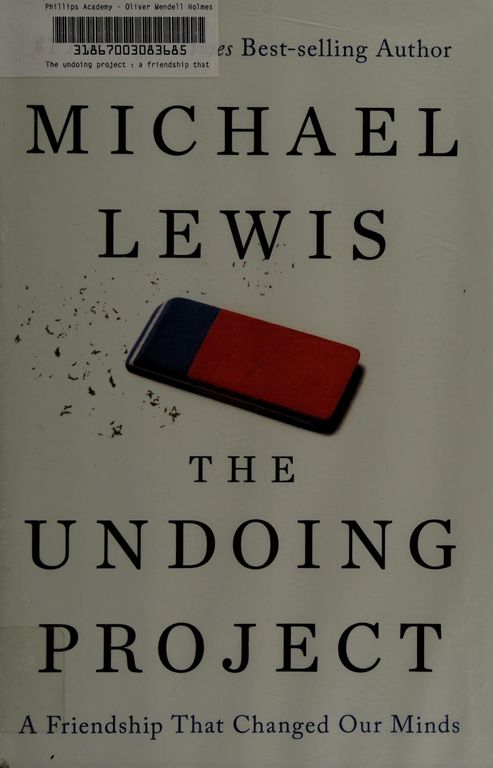
Nova: Exactly! And that’s precisely what our book today,, really unpacks. It's not a single book, but a concept woven through two groundbreaking works: Michael Lewis’s, and Sheena Iyengar’s.
Atlas: Ah, Michael Lewis! The master storyteller who can make finance sound like a spy thriller. What’s the hook with him and this 'rational animal' idea?
Nova: Well, Lewis, who's known for his ability to translate complex financial and psychological concepts into gripping narratives, chronicles the extraordinary partnership between Daniel Kahneman and Amos Tversky. These two Israeli psychologists basically invented behavioral economics, showing that our minds are full of predictable shortcuts, not just logical calculations. It's fascinating how their personal story is so intertwined with such a monumental scientific shift.
Atlas: So, it's not some dry academic text, but a human story behind the science. That’s a great way to make it accessible. And Iyengar's? How does that fit in?
Nova: Iyengar builds on that foundation, exploring the sheer complexity of choice itself. She dives into how culture, context, and even the sheer number of options profoundly influence our decisions. It’s not just we’re irrational, but and our choices are so easily swayed.
Atlas: That makes me wonder… if we’re not these perfectly rational agents, what does that mean for how we design everything around us? Because so much of our world, from marketing to public policy, is built on the assumption that we rational.
Nova: Exactly! The core of our podcast today is really an exploration of the fundamental disconnect between how we think we make decisions and how we actually do, and the profound implications this has for individuals and system designers alike. Today we'll dive deep into this from two perspectives. First, we'll explore the revolutionary work of Kahneman and Tversky that unveiled our inherent 'irrationality,' then we'll discuss the complex psychology of choice and the ethical responsibilities that come with designing for humans who are anything but purely rational.
The 'Irrational' Human: Kahneman & Tversky's Revolution
SECTION
Nova: So, let's jump into the heart of it. Kahneman and Tversky, this incredible duo, fundamentally reshaped our understanding of human decision-making. Their work, beautifully captured in Lewis’s book, showed us that our brains aren't always the perfect logic machines we imagine them to be.
Atlas: Hold on, so these two psychologists came along and basically said, 'Hey, all those economic models assuming perfectly rational actors? They're missing something big.' What was the big 'something'?
Nova: It was the idea of 'heuristics and biases.' Think of heuristics as mental shortcuts, rules of thumb our brains use to make quick decisions. And biases are the systematic errors that often come with those shortcuts. They're not random mistakes; they're predictable patterns of irrationality.
Atlas: Oh, I like that. Predictable irrationality. That’s a game-changer because it means we can actually anticipate how people might deviate from a purely logical path. Can you give me an example of one of these biases?
Nova: Absolutely. Take 'framing effect' for instance. Kahneman and Tversky did this classic experiment where they presented two groups of people with the same medical problem: a disease outbreak expected to kill 600 people.
Atlas: Okay, sounds grim. What happened?
Nova: Group A was offered a program that would save 200 lives. Group B was offered a program where there was a one-third probability of saving all 600 people and a two-thirds probability of saving no one.
Atlas: So, both options result in 200 lives saved in expectation, right? Mathematically, they're identical.
Nova: Precisely. But a significant majority of people in Group A chose the 'save 200 lives' option, while a significant majority in Group B chose the 'one-third probability of saving all 600' option. The mere of the problem – saving 200 lives versus a chance of saving all 600 – completely changed their decision, even though the underlying expected value was the same.
Atlas: Wow. That’s incredible. So, it’s not about the cold hard facts, but how those facts are presented. That’s going to resonate with anyone who’s ever had to present data or make a pitch. It’s like the packaging matters more than the product sometimes.
Nova: Exactly! Or consider 'anchoring bias.' This is where our decisions are disproportionately influenced by the first piece of information we receive, even if it's irrelevant. They showed this by asking people to estimate the percentage of African countries in the UN.
Atlas: Okay, how did they 'anchor' it?
Nova: Before asking for the estimate, they spun a wheel of fortune. If the wheel landed on, say, 10, people tended to give lower estimates for the percentage. If it landed on 65, their estimates were much higher. The random number from the wheel acted as an anchor, pulling their subsequent judgment towards it.
Atlas: That’s wild! So, even a completely random, arbitrary number can subtly warp our perception of value or quantity. I can see how that would be exploited in pricing or negotiations. Like, if a car salesman starts with a ridiculously high price, even if you negotiate down, you might still feel like you got a good deal because you're anchored to that initial, inflated number.
Nova: Spot on. And these aren’t just academic curiosities. These biases, this predictable irrationality, impacts everything from how we invest our money to how we vote, to how we choose a breakfast cereal. Kahneman and Tversky’s work, which earned Kahneman a Nobel Prize after Tversky's untimely passing, really laid the groundwork for understanding the 'flawed logic' of human choice.
Atlas: It’s a bit humbling, isn’t it? To realize that our brains are, in some ways, hardwired for these kinds of 'errors.' It kind of makes you question every decision you've ever made.
Nova: It’s not about judgment, though. As we mentioned, understanding this 'irrational' side isn't about shaming ourselves; it's about gaining a more accurate model of reality. It’s crucial for designing effective and empathetic systems, which brings us perfectly to our next point.
The Psychology of Choice: Influence and Responsibility
SECTION
Nova: So, if Kahneman and Tversky showed us the internal mechanisms of our 'irrationality,' Sheena Iyengar, in, takes us on a journey to understand how external forces profoundly shape those choices.
Atlas: That makes sense. We don’t make decisions in a vacuum. I’m curious, what does she highlight as the biggest external influences?
Nova: One of her most famous experiments is the 'jam study.' She set up a tasting booth in a gourmet food store. Sometimes she offered 24 different varieties of jam, other times only 6.
Atlas: My gut says more choice is better, right? More options, more freedom.
Nova: And that's exactly the common assumption most people make! When there were 24 jams, more people stopped to look, but fewer people actually bought jam. When there were only 6 options, fewer people stopped, but a significantly higher percentage ended up making a purchase.
Atlas: Whoa, that's counterintuitive! So, too much choice can actually paralyze us? That's a bit like when I'm trying to pick a movie on a streaming service and there are thousands of options, I end up just scrolling for an hour and watching nothing.
Nova: Exactly! It’s called 'choice overload' or 'paradox of choice.' It can lead to anxiety, decision fatigue, and even regret, because we worry we didn't pick the option out of so many. Iyengar also delves into how cultural context plays a huge role. For example, in individualistic cultures like the US, we're taught that choice is inherently good, a sign of freedom. But in more collectivist cultures, too much personal choice can be seen as a burden or even selfish.
Atlas: That’s a great way to put it. It highlights that 'good design' isn't universal; it has to be culturally sensitive. For a strategic analyst, understanding these nuances is critical. It’s not just about offering a product, but how you present it, how many variations, and to whom.
Nova: Precisely. And this leads to a deep question: if our choices are so easily influenced by framing, by anchors, by the sheer number of options, what responsibility do have as strategic analysts, as product designers, as marketers, to design systems that guide users towards their long-term well-being? Even when their short-term preferences might differ?
Atlas: That’s heavy. Because on one hand, you want to empower people. You don’t want to manipulate them. But on the other, if you know they're systematically making choices that aren't good for them in the long run, do you just stand by?
Nova: It’s the ethical tightrope of 'nudge theory.' You're not forcing people, but you're subtly influencing their decisions, often for their own good. Think about organ donation systems: in some countries, you have to actively opt-in, and rates are low. In others, you're automatically opted-in unless you choose to opt-out, and rates are much higher. It's the same choice, framed differently, with profound impact.
Atlas: That’s such a powerful example. It shows how small design changes can have massive societal implications. So, it's about designing for 'real humans,' with all their predictable quirks and biases, rather than some idealized rational agent.
Nova: And that's where the ethical innovator comes in. It's about leveraging these psychological insights not to exploit, but to empower. To create systems that are intuitive, supportive, and that gently steer people towards choices that align with their deeper values, even when their immediate impulses might pull them elsewhere.
Atlas: I guess that makes sense. It’s about building guardrails, not cages. It’s acknowledging that humans are complex, and our systems should reflect that complexity with empathy and foresight.
Synthesis & Takeaways
SECTION
Nova: So, what we've really explored today is this incredible journey from understanding we're not perfectly rational, thanks to Kahneman and Tversky, to grasping our choices are shaped by external forces, as Iyengar shows us. It’s a profound shift in perspective.
Atlas: It is. It transforms how I think about every interaction, every product, every piece of information I consume. It makes me realize that simply having more data isn't enough if we don't understand the psychological lens through which that data is processed.
Nova: Exactly. And for our listeners, especially those who are strategic analysts or innovators, this understanding is a superpower. It means you can design more effective marketing campaigns, more intuitive products, and more ethical systems, because you're designing for the human brain as it actually is, not as we wish it were.
Atlas: It truly is about gaining a more accurate model of reality, as you said earlier. It’s about moving beyond judgment of 'irrationality' to an empathetic understanding of how our minds work.
Nova: And the impact of that understanding is immense. It allows us to build a world that anticipates human nature, rather than fighting against it. It's about creating environments where people can make better choices more easily, leading to better long-term well-being.
Atlas: That’s actually really inspiring. It means our curiosity about the 'why' behind human behavior isn't just academic; it's a foundation for creating real, positive change in the world.
Nova: Absolutely. And that’s a powerful place to be. For all of you listening, we encourage you to observe the world around you. Can you spot those moments where predictable human irrationality is being leveraged, either for good or for… well, less good?
Atlas: And then ask yourself, how can design a system that guides users towards their long-term well-being, even when their short-term preferences might differ? It’s a question that drives meaningful impact.
Nova: That's a perfect challenge to leave our listeners with. This is Aibrary. Congratulations on your growth!