

The Fog of 'What If': How to Navigate Uncertainty with Purpose
Golden Hook & Introduction
SECTION
Nova: Alright, Atlas, quick game for our listeners today. I'll say a classic piece of advice, you give me your five-word gut reaction. Ready? "Always keep your options open."
Atlas: Paralyzing, exhausting, overrated, misleading, trap.
Nova: Ooh, strong start! And I think you’ve just perfectly encapsulated the central tension we're exploring today, which is the exact opposite of what most people believe. We think more options mean more freedom, right? But what if that's actually a trap?
Atlas: That sounds rough, but I can definitely relate. It's like standing in front of a massive menu and just wanting someone to pick for you.
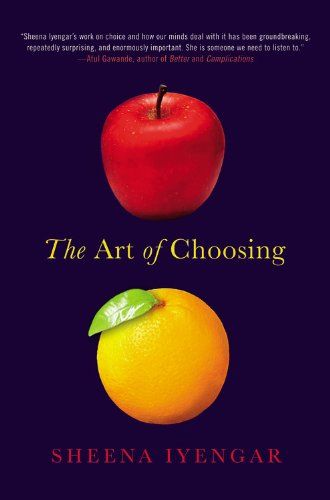
Nova: Exactly! And that feeling is at the heart of two incredible books we’re diving into today. First, Sheena Iyengar’s "The Art of Choosing," and then Daniel Kahneman's monumental "Thinking, Fast and Slow."
Atlas: Oh, I know Kahneman won a Nobel Prize for his work, but tell me more about Iyengar. Her name isn't as widely known.
Nova: Sheena Iyengar is a rockstar in her own right. A Columbia Business School professor, she's visually impaired and grew up having to make significant, often life-altering choices from a very young age, which gave her this incredibly unique perspective on how we choose. Her research really challenges our basic assumptions. And Kahneman, of course, with Amos Tversky, completely revolutionized our understanding of how the mind works when making decisions, earning him that Nobel Memorial Prize in Economic Sciences.
Atlas: So, we're talking about how our pursuit of endless options, combined with our mind's inherent shortcuts, can trap us in a 'fog of what if,' and how understanding these dynamics is key to purposeful choice.
Nova: Precisely. Today we'll dive deep into this from two perspectives. First, we'll explore the surprising paradox that more options can mean less freedom, then we'll discuss the hidden cognitive biases that influence our choices, and finally, we'll focus on how recognizing these empowers us to navigate uncertainty with purpose.
Deep Dive into Core Topic 1: The Paradox of Choice
SECTION
Nova: So, let's pick up on your "paralyzing, exhausting, trap" five-word review. Iyengar's work, particularly in "The Art of Choosing," brilliantly illustrates this paradox. The common wisdom is that more options are always better, right? It implies more control, more freedom to find the "perfect" fit.
Atlas: Right? I mean, who doesn't want options? If I’m looking for a new job, I want a hundred options, not two. If I’m buying a car, I want all the models and colors. That feels like power.
Nova: It feels like power, but it often leads to paralysis. Iyengar’s most famous experiment, the "jam study," perfectly captures this. Imagine you walk into a gourmet food store. At one table, there are twenty-four different kinds of exotic jam. At another, only six. Which table do you think attracted more attention?
Atlas: Oh, I love a good jam. Probably the twenty-four. More to look at, more to sample, more to consider.
Nova: Exactly! The table with twenty-four jams drew more initial interest. But here's the kicker: when it came to actual purchases, only three percent of the people who stopped at the twenty-four-jam display ended up buying jam.
Atlas: Whoa. Really? Only three percent? That’s incredibly low.
Nova: Now, compare that to the table with just six varieties. It attracted fewer initial tasters, but a whopping thirty percent of those tasters ended up making a purchase. That's a tenfold difference in sales!
Atlas: That’s actually really inspiring. So, more choice literally led to less purchase. It’s like the brain just shuts down when faced with too much.
Nova: It's decision fatigue. When presented with too many options, our cognitive load increases, we become overwhelmed, and often, we just default to doing nothing. We fear making the "wrong" choice so much that we avoid making any choice at all. It's not just jams, either. There's another study that looked at retirement savings plans. Employees offered a massive number of investment options were significantly less likely to enroll in a 401k plan compared to those offered a more manageable selection.
Atlas: Oh, I’ve been there. Trying to pick a streaming service, or even just what to watch on one, can feel like a monumental task sometimes. So, for someone trying to figure out their next big step – say, what career path to pursue, or what personal growth journey to embark on – how does this 'jam paradox' actually show up in their life?
Nova: It shows up as the "fog of what if." Instead of narrowing down possibilities, we keep researching, keep exploring, convinced that the perfect option is out there if we just look a little longer. We get stuck in analysis paralysis, constantly asking "what if I chose differently?" even before we've chosen. And that's not freedom; that's mental exhaustion.
Atlas: That makes me wonder, are we just hardwired to want more, even if it hurts us? Is it a cultural thing, this endless pursuit of options?
Nova: It's absolutely both. Iyengar points out how cultural context shapes our perception of choice. In individualistic societies, like many in the West, we're taught that personal freedom means having infinite options. But in collectivistic cultures, choice is often framed within a community context, with fewer, more guided options, and often less regret. Our biases are also at play, which brings us perfectly to Kahneman.
Deep Dive into Core Topic 2: Unmasking the Mind's Hidden Biases
SECTION
Nova: And speaking of being hardwired, that brings us perfectly to the internal wiring that makes us so susceptible to this 'fog of what if' – our own cognitive biases, brilliantly laid out by Daniel Kahneman in "Thinking, Fast and Slow." He introduced us to two systems of thought.
Atlas: Okay, so, two systems. Is one like the good cop and the other the bad cop?
Nova: Kind of! Think of System 1 as your fast, intuitive, emotional brain. It's lightning-quick, operates automatically, and is responsible for things like recognizing a face or understanding a simple sentence. It’s brilliant for survival. System 2 is your slow, deliberate, logical brain. It’s what you use for complex calculations, focusing attention, or learning a new skill. It’s powerful, but it’s also lazy.
Atlas: So, our gut feeling, which we often trust, is actually the culprit here? That feels counter-intuitive. We're told to trust our instincts.
Nova: Our instincts are great for simple, familiar situations. But when faced with complex decisions, especially under uncertainty, System 1 relies on mental shortcuts, or heuristics, that can lead us spectacularly astray. One of the most insidious is what Kahneman calls "anchoring bias."
Atlas: Anchoring? Like, dropping an anchor in the ocean?
Nova: Exactly that. Imagine I ask you to estimate the percentage of African countries that are members of the United Nations. But first, I spin a wheel that happens to land on the number 10. Then I ask you for your estimate. Then I ask another group the same question, but the wheel lands on 65.
Atlas: I guess that makes sense, but what difference does that make? The number on the wheel is completely irrelevant to the UN.
Nova: Precisely! It's irrelevant. Yet, people whose wheel landed on 10 will give a significantly lower estimate for African UN members than those whose wheel landed on 65. That initial, irrelevant number – the anchor – disproportionately influences our subsequent judgment. It’s a completely unconscious bias.
Atlas: That’s a bit like when you see the "original price" crossed out on a sale item, even if you know the original price was inflated. It sets an anchor. But how does anchoring or confirmation bias play out when you're trying to discover your 'true self' or choose a new life path?
Nova: Oh, it's everywhere. Say you're exploring new career paths, and a friend casually mentions that "all successful people in X field went to Y university." That's an anchor. You might then unconsciously overvalue Y university, even if it's not the best fit for you. Or, with confirmation bias, if you have a vague idea of who your "true self" is, you'll unconsciously seek out and interpret information that confirms that idea, ignoring anything that challenges it. You build your own echo chamber of self-discovery.
Atlas: So, we're not just overwhelmed by external choices, but our own internal wiring is actively leading us down biased paths, often without us even knowing it. That’s kind of heartbreaking. Is there any way to turn off System 1, or are we just doomed to be biased?
Synthesis & Takeaways
SECTION
Nova: You can't turn off System 1; it's essential for daily functioning. But you can learn to recognize when it's likely to lead you astray and engage System 2. The key insight from both Iyengar and Kahneman is that awareness is the first step to reclaiming control. We’ve seen how too many choices can overwhelm us, and how our minds often trick us. The good news is, awareness is the first step to reclaiming control.
Atlas: So, it's about being more deliberate. Not just letting our gut or the sheer volume of options dictate our path.
Nova: Exactly. For anyone feeling lost in the 'fog of what if,' the path to purposeful choice isn't about finding more options; it's often about deliberately them. It’s about understanding your cognitive biases so you can consciously engage System 2 when the stakes are high. It's about creating your own decision-making frameworks that cut through the noise and align with your true purpose, rather than just reacting to the illusion of infinite choice.
Atlas: That’s actually really inspiring. So, for anyone feeling lost in the 'what ifs,' start by actively your options in one area of your life this week. Just pick one small area – maybe what you're going to have for dinner, or how many articles you'll read on a topic – and see what clarity emerges when you deliberately limit your choices.
Nova: A fantastic, actionable step. And then, reflect on those limited choices felt clearer or more purposeful. That's how we start breaking free from the paralyzing 'what ifs.'
Atlas: Absolutely. We hope this has given you some powerful tools to navigate your own journey of self-discovery and make those purposeful choices.
Nova: This is Aibrary. Congratulations on your growth!