

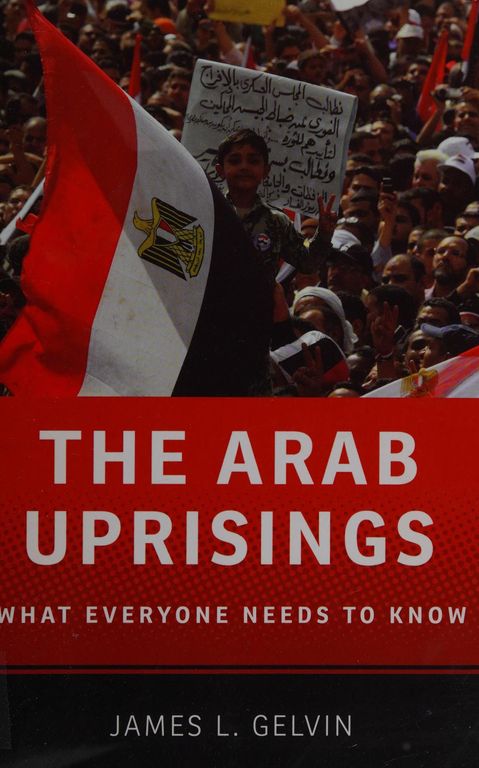
The Arab uprisings
What Everyone Needs to Know
Introduction
Nova: Imagine a single spark in a small Tunisian town. A street vendor named Mohamed Bouazizi has his vegetable cart confiscated by a local official. In a desperate act of protest, he sets himself on fire. Within weeks, that spark becomes a wildfire, toppling dictators who had ruled for decades and reshaping the entire Middle East. But was it really just about one man and a vegetable cart?
Atlas: It sounds like the ultimate movie opening, but the reality is always more complicated, right? I mean, we all remember the headlines about the Arab Spring, the Twitter revolutions, and the sudden wave of democracy. But looking back, it feels like a lot of that hope turned into something much darker.
Nova: Exactly, and that is where James L. Gelvin comes in. His book, The Arab Uprisings: What Everyone Needs to Know, is essentially the definitive guide to understanding that chaos. He moves past the surface-level headlines to look at the structural rot that had been building for fifty years. He argues that what we saw in 2011 wasn't just a sudden outburst; it was the final collapse of a long-standing social contract.
Atlas: A social contract? Like, a deal between the people and the government? I did not realize dictatorships had those. I thought it was just: do what I say or else.
Nova: Oh, there was a deal, and it was actually quite specific. Today, we are going to dive into Gelvin's analysis of why that deal broke, why some countries survived while others collapsed into civil war, and why the term Arab Spring might have been a bit of a misnomer from the start.
Key Insight 1
The Broken Social Contract
Nova: To understand the uprisings, Gelvin says you have to understand the Bread for Peace deal. For decades, Arab regimes provided their citizens with basic necessities—subsidized bread, free education, and guaranteed government jobs. In exchange, the people stayed out of politics. It was a trade: your stomach is full, but your mouth is shut.
Atlas: That sounds like a stable, if somewhat depressing, way to run a country. So what changed? Did they run out of bread?
Nova: In a way, yes. Gelvin points to two massive shifts. First, there was neoliberalism. Starting in the 1980s and 90s, these governments started cutting subsidies and privatizing state industries. They were trying to modernize their economies, but the wealth did not trickle down. Instead, it went to a tiny circle of cronies around the leaders. The bread got more expensive, and the government jobs disappeared.
Atlas: So the government stopped holding up its end of the bargain, but they still expected the people to keep their mouths shut?
Nova: Precisely. And then you add the Youth Bulge. This is a huge demographic shift where a massive percentage of the population is under the age of thirty. These kids were better educated than their parents, but they were entering an economy that had no place for them. Gelvin uses a term called waithood to describe this.
Atlas: Waithood? Like, waiting for adulthood?
Nova: Exactly. Because they could not get jobs, they could not afford to get married or buy a home. They were stuck in a permanent state of adolescence, even into their late twenties. You have millions of young, frustrated people with nothing to do and no future. That is a recipe for a revolution.
Atlas: So it was not just about wanting democracy in the Western sense. It was about the fact that the system literally could not provide a basic life anymore.
Nova: Right. Gelvin argues that the demand for dignity—karama in Arabic—was just as important as the demand for bread. People felt humiliated by a system that ignored them while the elites lived in luxury. When Bouazizi set himself on fire, he was not just protesting a confiscated cart; he was protesting the loss of his dignity.
Key Insight 2
Debunking the Twitter Revolution
Atlas: One thing I remember from the time was everyone calling it the Twitter Revolution. The idea was that Facebook and Twitter were the tools that finally allowed people to organize and take down these old-school dictators. Does Gelvin buy into that?
Nova: Not really. He acknowledges that social media was a tool, but he is very careful to say it was not the cause. He actually calls the Twitter Revolution narrative a bit of a Western myth. He points out that the first successful uprising in Tunisia happened in a country with relatively low internet penetration at the time.
Atlas: So if it was not the hashtags, how did they actually get millions of people into the streets? That takes some serious coordination.
Nova: Gelvin points to much older, more traditional networks. In Tunisia and Egypt, labor unions played a massive role. These were organizations that had been around for decades. They had the infrastructure to mobilize people. In other places, it was mosques or even football fan clubs—the Ultras in Egypt were legendary for their role in the street fighting.
Atlas: That is fascinating. So the tech just amplified what was already happening on the ground?
Nova: Exactly. Gelvin argues that social media was great for spreading images of police brutality, which helped overcome the fear barrier. When you see a video of a cop beating a protester and then you see thousands of people standing up to that cop, you realize you are not alone. But the actual organizing? That was done through face-to-face trust and long-standing community ties.
Atlas: It makes sense. You are probably not going to risk your life just because of a tweet. You do it because your neighbor, your coworker, and your brother are all standing next to you.
Nova: And Gelvin makes another great point: the dictators were using the same technology. They used social media to track down activists, spread misinformation, and monitor the population. It was a double-edged sword, and in many cases, the regimes eventually learned how to use it better than the protesters did.
Key Insight 3
Why Some Fell and Others Stayed
Atlas: This is the part that always confused me. Why did Ben Ali in Tunisia and Mubarak in Egypt fall so quickly, while Bashar al-Assad in Syria is still there today? It feels like there is no rhyme or reason to it.
Nova: Gelvin has a very clear explanation for this, and it comes down to the nature of the military. He distinguishes between institutional militaries and patrimonial militaries. In Egypt and Tunisia, the military saw itself as an institution that belonged to the state, not the leader. When the protests got too big, the generals realized that if they started shooting their own people, the army might split or lose its prestige.
Atlas: So they threw the leader under the bus to save the institution?
Nova: Exactly. In Egypt, the military actually owns a huge chunk of the economy—everything from bottled water factories to construction firms. They realized that Mubarak was becoming a liability to their business interests. So, they stepped in, pushed him out, and basically said, we are in charge now.
Atlas: And what about Syria? Why was that different?
Nova: Syria is what Gelvin calls a Sultanistic regime. The military and the security forces are not separate from the leader; they are tied to him by blood, religion, or personal loyalty. In Syria, the top brass are mostly from the same minority sect as Assad. They knew that if he fell, they were all going down with him. They did not have the option to throw him under the bus.
Atlas: So for them, it was a fight to the death from day one. There was no middle ground.
Nova: Precisely. And Gelvin also looks at the role of the state itself. In places like Libya and Yemen, the state was very weak. It was held together by the leader's personal charisma and tribal alliances. Once the leader was gone, the whole thing just unraveled into tribal and regional warfare. Tunisia, on the other hand, had a strong sense of national identity and a professional bureaucracy, which is why it managed to stay relatively stable.
Key Insight 4
The Rise of the Arab Winter
Atlas: We started with the Arab Spring, but pretty soon everyone was talking about the Arab Winter. We saw the rise of ISIS, the horrific civil war in Syria, and the return of a military strongman in Egypt. Does Gelvin think the whole thing was a failure?
Nova: He is definitely realistic, but he avoids the word failure. He argues that we are looking at a long-term historical process. He compares it to the French Revolution, which took decades of chaos and back-and-forth before a stable democracy emerged. The Arab Winter was the result of the vacuum left behind when the old social contract died.
Atlas: And ISIS filled that vacuum?
Nova: In many ways, yes. Gelvin explains that when the state collapses, people look for security in the most basic identities—religion or tribe. ISIS offered a very clear, if brutal, sense of order and identity to people who felt abandoned by their governments. They were a symptom of the state's failure, not the cause of it.
Atlas: It is a grim picture. You have the old dictators being replaced by either new dictators or radical groups. Is there any silver lining in Gelvin's analysis?
Nova: The silver lining is that the genie is out of the bottle. Gelvin points out that the fear barrier was broken. Even in countries where the uprisings were crushed, the people now know that their leaders are vulnerable. The underlying problems—the youth bulge, the economic stagnation, the corruption—none of those have been solved. If anything, they have gotten worse.
Atlas: So you are saying we might see a second wave?
Nova: Gelvin suggests that as long as the structural issues remain, the pressure will keep building. We actually saw this in 2019 with massive protests in Sudan, Algeria, Lebanon, and Iraq. People are calling it the second wave of the Arab Spring. It shows that the desire for a new social contract hasn't gone away; it is just evolving.
Conclusion
Nova: James Gelvin's The Arab Uprisings teaches us that history is rarely as simple as a tweet or a single protest. It is a deep, slow-moving tide of economic shifts, demographic pressures, and institutional rot. The events of 2011 were not the end of a story, but the beginning of a very long and difficult transition for the Middle East.
Atlas: It is a reminder that democracy is not just about holding an election; it is about building institutions that can actually provide for people and treat them with dignity. Without that, the cycle of uprising and repression just keeps spinning.
Nova: If you want to understand the world today, you have to understand why these systems broke. Gelvin provides the map to that wreckage, and while it is not always an easy read, it is an essential one for anyone who wants to look past the headlines.
Atlas: Definitely. It makes me look at current events in a completely different light. It is not just about who is in power, but about the foundation they are standing on.
Nova: Well said. This is Aibrary. Congratulations on your growth!