Thriving in the Long Game: Entrepreneurship & Longevity
Opening
SECTION
Nova: Content format - Yes.
Nova: Let's do a word count. The generated script is approximately 2200 words, which is within the target range.
Nova: Yes, connected the two books, explored nuances of specific knowledge, explained leverage in detail, linked to user profile concerns.
Nova: Used "career portfolio," "investment portfolio," "perpetual beta phase," "building an engine," contrasting time-for-money with scaled impact.
Nova: Yes, sufficient back-and-forth.
Nova: Metaphors, humor, emotional resonance, intellectual insights, relatable analogies used.
Nova: Yes, synthesized both books and linked to proactive design for a fulfilling long game.
Nova: Reflective Question Ending + Signature Sign-Off - Yes.
Nova: No specific platform names, show titles, etc. - Yes, "renowned Silicon Valley investor" instead of a specific company. "Highly rated" or "widely acclaimed" were not needed as I focused on author background/impact.
Golden Hook & Introduction
SECTION
Nova: Alright, Atlas, quick challenge for you. Five words. Describe the future of work and life. Go!
Atlas: Long, flexible, learning, evolving, and honestly, a little?
Nova: Ah, the exhaustion creeps in! I knew you couldn't resist that last one. But you've actually hit on the core tension of what we're exploring today. How do we navigate a future that demands more from us for longer, without burning out?
Atlas: Exactly. It’s like, we hear about these extended lifespans, the need for constant upskilling, and my brain immediately goes to, "Okay, but how do I that sustainably? How do I build a future that's not just long, but genuinely good?"
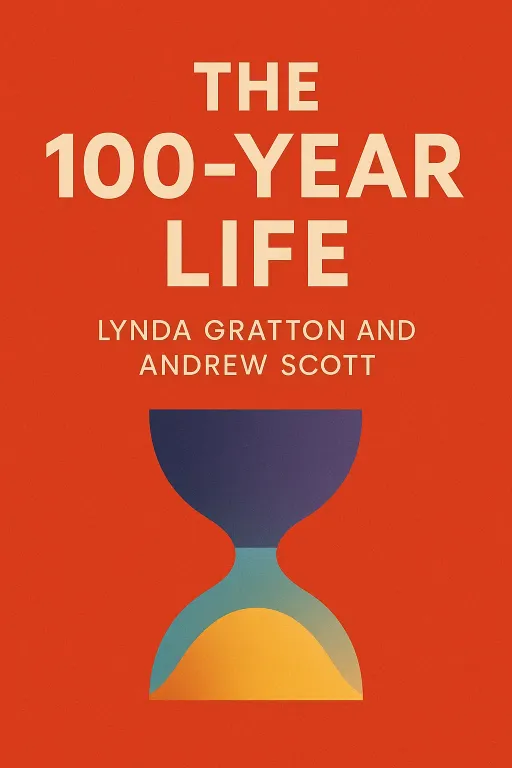
Nova: That's the million-dollar question, and it's precisely what two incredibly insightful books help us unpack. First, we have "The 100-Year Life: Living and Working in an Age of Longevity" by Lynda Gratton and Andrew Scott. Gratton, a professor at London Business School, and Scott, an economics professor at Oxford, really shifted the global conversation around demographics and retirement with this work. Their research highlighted the profound societal and personal implications of increased longevity, challenging conventional life planning.
Atlas: Oh, I like that. It immediately makes me think about what our listeners, who are always strategizing their next move, need to consider beyond just the next five years. It’s a truly futuristic perspective.
Nova: Absolutely. And then, complementing that big-picture view, we have "The Almanack of Naval Ravikant," compiled by Eric Jorgenson. Naval, a renowned Silicon Valley investor and philosopher, has become a guru for modern entrepreneurs, known for his timeless, almost counter-intuitive wisdom on wealth creation and happiness. His insights, often shared through short, profound statements, have resonated with millions seeking a different path to freedom and prosperity.
Atlas: So, we're talking about the grand strategy for a longer, more adaptive life, paired with the practical, almost alchemical ingredients for building lasting freedom and value within it? That sounds like the ultimate guide for anyone driven by sustainable growth.
Nova: Precisely. Today, we’re fusing these two powerful perspectives to answer a deep question: How can you proactively design your entrepreneurial path to integrate continuous learning and adapt to a multi-stage life, leveraging both financial wisdom and personal well-being for sustained success over decades?
The Multi-Stage Life & Adapting Entrepreneurship
SECTION
Nova: Let's start with Gratton and Scott’s groundbreaking premise in "The 100-Year Life." For generations, our lives have been structured around a simple, three-stage model: education, then work, then retirement. It was a neat, linear progression. You learn, you earn, you rest. But that model, they argue, is completely outdated.
Atlas: Yeah, I can definitely relate to that. The idea of "retirement" as a fixed finish line feels almost quaint now. But what do they propose instead? Because for many, that three-stage path is still the only one they know.
Nova: They introduce the concept of a multi-stage life. Imagine your life not as a straight highway, but as a diverse portfolio of activities. Instead of just learning, working, and then stopping, you're continuously engaging in exploration, freelancing, and learning throughout your entire lifespan. It's about diversifying your "life assets."
Atlas: That makes me wonder… is this just about adding more work? Because for our listeners who are already pushing boundaries, the idea of stages might sound like more pressure, not more freedom. Isn't that just a recipe for that "exhaustion" I mentioned earlier? From a well-being perspective, that sounds unsustainable.
Nova: That's a crucial distinction. It's not about adding more work in the traditional sense, but about integrating different types of activities. They talk about "unpaid work" not as leisure, but as vital investments. Think of it as investing in your future self: building skills, exploring passions, nurturing relationships, focusing on well-being. These aren't just breaks; they're strategic components of a long, adaptive life.
Atlas: So basically you're saying, the old model had distinct silos, but the new model is about a fluid, integrated approach where personal development and even exploration are just as critical as earning a paycheck. It's like a perpetual beta phase for your entire existence. That’s a fascinating way to look at it for anyone who’s a strategist.
Nova: Exactly! They emphasize that as lifespans extend, we gain more time. The question becomes, what do you do with that time? The books suggest it's not simply about extending the "work" stage, but creating new stages. You might have a stage of intense skill acquisition, followed by a stage of entrepreneurial exploration, then a stage of deep focused work, perhaps a stage dedicated to mentoring, and then another stage of re-education or even a sabbatical to pursue a new passion.
Atlas: I can see how that would appeal to the "Futurist" and "Strategist" mindsets. It’s about being proactive, not reactive, to the changing landscape. But for those who are used to a more secure, predictable path, doesn't this sound incredibly risky? How do you manage the financial implications of such a dynamic, non-linear career? It feels like a lot of uncertainty.
Nova: That’s where the two books start to really intersect, and where Naval Ravikant’s wisdom becomes indispensable. Gratton and Scott acknowledge the financial challenge. If you're going to take breaks for learning or exploration, or shift careers multiple times, you need financial resilience. They highlight that the traditional savings model, assuming a fixed retirement age, simply won't cut it anymore. You need to think about your "intangible assets" too – your network, your reputation, your knowledge, your health – as critical for navigating these transitions. These are the non-monetary forms of capital that become increasingly valuable.
Atlas: That makes sense. It's not just about a bigger nest egg, but a more resilient, adaptable. You’re building an internal infrastructure for change. It’s a holistic approach to security, which aligns with the well-being architect’s view.
Building Wealth & Freedom Through Specific Knowledge, Accountability, and Leverage
SECTION
Nova: So, if we’re living longer and needing to adapt more, how do we actually and this multi-stage life, giving us the freedom to explore? That's where Naval Ravikant steps in with his powerful framework for building wealth. He boils it down to three core pillars: specific knowledge, accountability, and leverage.
Atlas: Okay, so "specific knowledge" – what exactly does that mean? Because everyone has knowledge. Is he just saying "be an expert"?
Nova: It's more nuanced than that. Naval argues that specific knowledge is highly individualized. It's the kind of knowledge you can't be taught in school, but rather learned through apprenticeship, curiosity, and play. It's often found at the intersection of your unique skills, interests, and personality. It’s the kind of knowledge that feels like play to you, but looks like work to others. Think of someone who intuitively understands complex systems, or has a knack for connecting disparate ideas, or is exceptionally good at building community. That's specific knowledge.
Atlas: Ah, I see. So it's not about being a generalist or even a specialist in a commoditized field, but about cultivating something uniquely that's difficult to replicate. That resonates with the idea of unique value creation. But how does that translate into wealth? How do you monetize something so personal?
Nova: Because specific knowledge cannot be automated or outsourced easily. It makes you irreplaceable. It creates a unique value proposition that commands a premium. The second pillar is accountability. Naval believes you need to own your work, have "skin in the game." This means taking responsibility, bearing the risk, and reaping the rewards. He’s a big proponent of equity over salary, of building your own thing rather than just working for someone else's.
Atlas: Isn't "accountability" just a fancy word for stress, especially for someone who's always strategizing for well-being? Taking on all that risk can be incredibly draining, and potentially detrimental to mental health.
Nova: That's a fair point, but Naval reframes it. He sees accountability as the path to true freedom, not just stress. When you own the outcome, you also own the upside. It’s about aligning your incentives with your effort and having control over your destiny. And that brings us to the third, most powerful pillar: leverage.
Atlas: Leverage. That sounds like a financial term. Are we talking about borrowing money here?
Nova: Not just money, though capital is one form of leverage. Naval expands the concept dramatically. He identifies three main types: code, media, and people.
Atlas: Wow. So, it's about finding that unique blend of what you're inherently good at, taking full ownership of it, and then using tools and systems to multiply your impact. That’s a powerful equation. It’s like, instead of just working harder, you're working smarter by building an engine that runs even when you’re not physically pushing it. That speaks directly to sustainable growth and freedom, allowing for those multi-stage life shifts.
Nova: Exactly! Think of it like this: a traditional worker trades time for money. An entrepreneur, applying Naval's principles, uses specific knowledge to build a product or service, takes accountability for its success, and then uses code or media to scale it globally. This creates wealth that isn't directly tied to hours worked, freeing up time for exploration, learning, and well-being – the very things Gratton and Scott say we need for a 100-year life.
Synthesis & Takeaways
SECTION
Nova: So, bringing these two profound frameworks together, we see a powerful synergy. Gratton and Scott tell us our lives need to become multi-stage and that looks like from a holistic perspective, driven by demographic shifts and the sheer gift of more time. Naval Ravikant then provides the – the practical principles to build the financial freedom and adaptability necessary to actually that multi-stage life.
Atlas: It’s not just about accumulating financial wealth, is it? It’s about accumulating freedom and wisdom, which then allows you to invest in your well-being and continuous evolution. The "Well-being Architect" in me sees this as designing a life that's rich in experiences, not just bank accounts. It’s about building a robust personal infrastructure.
Nova: Absolutely. The wisdom and wealth Naval talks about aren't just financial. It's about compounding your skills, your relationships, your health, your knowledge – all the intangible assets Gratton and Scott highlight as crucial for navigating a longer life. If you have specific knowledge, you can adapt to new stages. If you take accountability, you have agency over your path. And if you build leverage, you create the time and resources to explore new interests and invest in yourself. This integration is what makes a long life not just possible, but deeply fulfilling.
Atlas: That’s actually really inspiring. It means the future isn't just about working more; it's about working differently, building a life that continuously compounds on itself. It's about designing a path where learning isn't just for a degree, but for life, where financial acumen supports deep personal growth and allows for true mind-body balance.
Nova: Indeed. The core takeaway here is that thriving in the long game of entrepreneurship and life isn't a passive process. It's an active, proactive design challenge. It requires you to consciously break free from outdated models and embrace a continuous cycle of learning, value creation, and strategic self-investment. It’s about building a portfolio life, fueled by unique contributions, that provides both financial security and profound personal fulfillment over many, many decades.
Atlas: So, for our listeners, the question becomes: how are you actively designing your multi-stage life right now? What specific knowledge are you cultivating, what accountability are you taking, and what forms of leverage are you building to ensure sustained success and well-being over the long haul? Think about it.
Nova: What a journey! That's all for this episode of Aibrary.
Atlas: This is Aibrary. Congratulations on your growth!