

The Evolution of Value: Beyond Traditional Financial Metrics
Golden Hook & Introduction
SECTION
Nova: What if the price of a multi-billion dollar sports team isn't just about its revenue or assets, but actually about how much its fans it's worth? And what if that collective belief, in turn, makes it valuable?
Atlas: Whoa, wait. Are you saying the collective 'vibes' of a fanbase can literally inflate a team's market value? Because if so, that's both fascinating and a little terrifying for anyone trying to analyze things purely by the numbers.
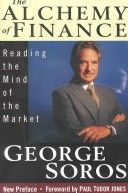
Nova: Absolutely! Today, we're diving into that exact phenomenon, drawing from two titans of economic thought. First up, we're cracking open by the legendary George Soros.
Atlas: Soros! The man who practically invented the modern hedge fund, right? I always thought of him more as a market mover than a philosopher.
Nova: He's both! What’s fascinating about Soros is that he wrote this book not just as a memoir of his trading strategies, but as a deep dive into his philosophical understanding of markets. It was initially met with mixed reviews because of its complex theoretical framework, but it's since become a seminal text for understanding market behavior beyond just traditional economics, influencing generations of financial thinkers. He argues that markets are not efficient, but rather, they're inherently flawed and influenced by human biases.
Atlas: So, his big idea isn't just about making money; it's about understanding the very fabric of how markets work, or perhaps,.
Nova: Exactly. And his core concept, 'reflexivity,' is a game-changer for understanding true economic value, especially in areas like sports.
Reflexivity: The Self-Fulfilling Prophecy of Markets
SECTION
Nova: So, reflexivity. It's a fancy word for a relatively simple but profound idea: our understanding of the world, our biases, our beliefs, they don't just reality; they it. And then, that newly shaped reality, in turn, influences our original beliefs. It's a dynamic, two-way feedback loop.
Atlas: So you're saying it's not just a mirror, but a funhouse mirror that distorts what it sees, and then what it sees distorted?
Nova: That’s a great analogy! Think about a sports team. Traditionally, you value a team based on its assets, its revenue, its broadcast deals, its stadium. Pure fundamentals.
Atlas: Right, the hard numbers. The stuff an analyst can crunch.
Nova: But Soros would argue that's incomplete. Fan sentiment, media attention, the 'story' of the team – these are all subjective biases. If fans a team is a contender, they buy more tickets, more merchandise, they tune into more games. This increased engagement boosts revenue, attracts better players, maybe even leads to a new stadium deal.
Atlas: So the 'belief' itself creates the financial performance. And then that improved performance reinforces the belief that the team is great, making it even more valuable. It’s like a self-fulfilling prophecy for sports franchises.
Nova: Precisely. Let's take a hypothetical, but very real-world example. Imagine a struggling football team in a major market. They’re losing games, attendance is down, media is critical. Their valuation is stagnant.
Atlas: Sounds like a tough situation. Purely on paper, a bad investment.
Nova: Now, suppose a charismatic new owner comes in. They don't immediately change the team's performance, but they launch an aggressive marketing campaign, invest in community outreach, and promise a 'new era.' They start changing the.
Atlas: So they're targeting the fan sentiment, the belief system.
Nova: Exactly. Fans, hungry for hope, start buying into it. They show up, the media starts covering the 'turnaround story.' Even if the team still loses a few games, the shifts. Suddenly, ticket sales are up, local businesses want to sponsor them, and the team's 'brand' value skyrockets. This increased revenue allows them to actually invest in better players, which improves performance, reinforcing the initial belief.
Atlas: That’s a bit unsettling, though. It almost sounds like value can be manufactured out of thin air, based on hype. For someone looking at cold, hard numbers, that must be a really challenging variable to account for. How do you even put a number on 'fan belief'?
Nova: That's the alchemy! Soros isn't saying fundamentals don't matter, but that they are not independent of interpretation. The market isn't just a passive reflection of value; it's an active participant in its creation. And for a highly popular sports team, where passion runs deep, fan sentiment isn't just a byproduct; it's a fundamental driver of financial performance. It means that strategic financial decisions in sports can't ignore the psychological and emotional currents that flow through the fanbase.
Atlas: It makes me wonder about the long-term sustainability though. If a team's value is riding high on a wave of manufactured hype, what happens when the team starts losing again, and that belief falters? Does the bubble burst just as quickly as it inflated?
Nova: That’s the other side of reflexivity – the negative feedback loop. If the narrative collapses, if the team consistently underperforms and fan belief evaporates, that can trigger a downward spiral. Declining attendance, lost sponsorships, frustrated media – all of which can severely depress the team's actual financial performance and valuation. It's a powerful and often volatile dynamic. This is why understanding these deeper, often cyclical, forces is crucial for strategic financial decisions in sports. It's not just about the P&L statement today.
Piketty's r > g and Long-Term Asset Accumulation
SECTION
Nova: And that naturally leads us to a second key idea we need to talk about, which often explains why some assets, like iconic sports franchises, just keep accumulating immense value over centuries, seemingly defying everyday economic logic. We're talking about Thomas Piketty's monumental work,.
Atlas: Ah, Piketty. The economist who basically told us that wealth inequality isn't a bug, but a feature of capitalism, right?
Nova: Precisely. Piketty's work, which is a formidable historical and economic analysis of wealth and income dynamics over centuries, famously argues that the rate of return on capital, or 'r,' often significantly exceeds the rate of economic growth, or 'g.' This 'r > g' dynamic, he contends, is the fundamental force driving wealth concentration.
Atlas: So, money makes money faster than people make money through labor.
Nova: In essence, yes. He meticulously traces this pattern across centuries, demonstrating how capital, once accumulated, tends to grow faster than the overall economy. This provides a macro-historical lens for understanding the long-term accumulation of value in assets.
Atlas: Okay, so how does this apply to our sports teams, especially after we just talked about the fickle nature of fan sentiment and reflexivity?
Nova: Think about the oldest, most established sports franchises – the Yankees, the Lakers, Manchester United. They might have their ups and downs, periods of high fan engagement and low. But over the long historical arc, their value has almost universally exploded. This isn't just about their current revenue streams or even their present-day fan base. It's about their status as entrenched capital.
Atlas: So, they're not just businesses; they're almost like historical artifacts that just appreciate because they capital.
Nova: Exactly. They are 'legacy' capital. They started with an initial investment, and over generations, that capital has compounded. Their brands are global, their history is part of cultural fabric, and their scarcity – there are only so many iconic teams – means they are incredibly durable assets. Even when a team has a few bad seasons, the underlying capital value, driven by that r > g principle, continues its relentless upward march over the long term.
Atlas: That gives a whole new meaning to 'strategic financial decisions.' It's not just about today's balance sheet, but about tapping into these centuries-long forces of capital accumulation. But what does this mean for someone trying to build lasting value today, especially if they're not inheriting a sports team? It feels a little disheartening, almost like the game is rigged.
Nova: It’s a critical challenge many people face, and it's why understanding Piketty is so important. He highlights that while r > g describes a historical reality, it also means that thoughtful, long-term investment strategies, even on a smaller scale, are crucial. It's about recognizing that simply earning a salary and saving won't always keep pace. It requires actively engaging with capital, understanding how it grows, and making strategic decisions to leverage that growth. It forces you to think beyond short-term transactions and consider the deeper, often cyclical, forces that drive and concentrate economic value over time.
Synthesis & Takeaways
SECTION
Nova: So, bringing Soros and Piketty together, we see that understanding true economic value is far more nuanced than just looking at a spreadsheet. It’s a dynamic interplay of collective belief, as Soros shows with reflexivity, and the relentless, historical accumulation of capital, as Piketty reveals with r > g.
Atlas: It really shifts your perspective. It means that for anyone in sports finance, or really any strategic financial role, you can't just be an analyst of the present. You have to be a strategist for the future, and almost a psychologist for the market's collective mind.
Nova: Absolutely. It means seeing the game not just on the field, but in the minds of the fans and in the long historical arc of wealth accumulation. The most successful decisions aren't just about optimizing current performance, but about understanding and even shaping perceptions, and positioning assets to benefit from capital's long-term compounding power.
Atlas: So, for our listeners who are navigating complex financial decisions, perhaps thinking about a career in sports finance, what's the one big takeaway here? How do they apply these profound insights without needing to become a philosopher-economist?
Nova: The big takeaway is this: Challenge your assumptions about value. Don't just look at the surface metrics. Ask yourself, 'How are beliefs shaping this asset's value?' and 'How does this asset fit into the long-term accumulation of capital?' It’s about building a meaningful career where passion meets purpose, by trusting your instincts and blending your analytical mind with a visionary perspective.
Atlas: That’s a powerful call to action: look deeper, think bigger. It makes me wonder how many other 'truths' about value we've just implicitly accepted without digging into their underlying mechanics.
Nova: Precisely. This is Aibrary. Congratulations on your growth!