

Personalized Podcast
Golden Hook & Introduction
SECTION
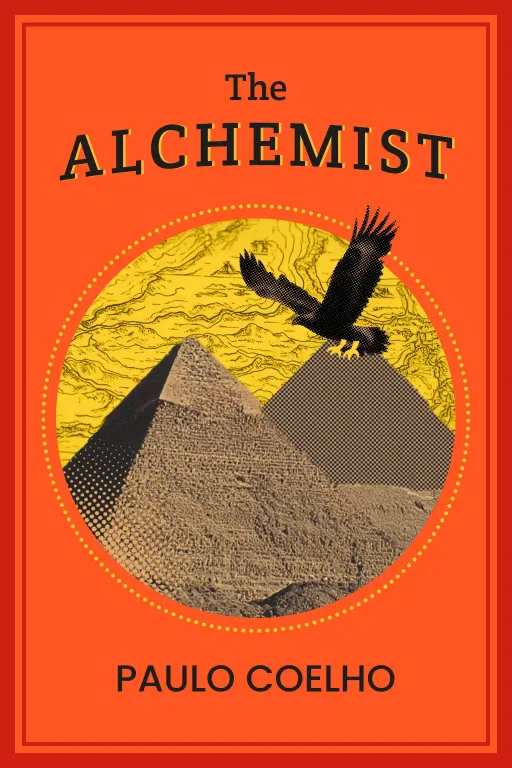
Orion: Badz, as a venture capital investor, you're in the business of betting on dreams. But let me ask you this: what's the difference between a visionary founder on a mission, and a shepherd boy chasing a recurring dream about treasure in Egypt? Today, we're diving into Paulo Coelho's "The Alchemist" to argue they might be one and the same. This isn't just a philosophical tale; we believe it's a powerful, hidden blueprint for the entire entrepreneurial journey.
Badz: That's a fantastic framing, Orion. I have to admit, I've never thought of "The Alchemist" as a VC playbook, but the parallels are immediately obvious. The line between visionary and delusional can be razor-thin, and it's our job as investors to figure out which is which. It often comes down to whether that dream is just a fantasy or a "Personal Legend" they're willing to sacrifice everything for.
Orion: Exactly. And we're going to tackle this from two critical angles. First, we'll explore the four founder-killing roadblocks that can derail any 'Personal Legend,' using the cautionary tale of the Crystal Merchant. Then, we'll decode the mystical art of reading 'omens'—and what that means for pattern-matching and trusting your gut in a chaotic market. Badz, are you ready to turn some lead into gold?
Badz: Let's do it. I'm curious to see how these concepts hold up under a financial lens.
Deep Dive into Core Topic 1: The Founder's Gauntlet
SECTION
Orion: Perfect. So, let's start with the roadblocks. Right in the introduction to the book, before the story even begins, Coelho gives us a framework. He says there are four obstacles that prevent people from achieving their Personal Legend. For our purposes, let's call them the four biggest red flags for a founder.
Orion: Number one: being told from childhood that your dream is impossible. Number two: the fear of hurting those you love by pursuing your dream. Number three: the fear of the defeats you'll meet along the way. And number four, the most subtle one: the fear of actually realizing the dream you've fought for your whole life.
Badz: That's a very comprehensive list. It covers the external pressures and the internal demons. I can already map those to different stages of a startup's life.
Orion: Let's zoom in on that. The book gives us a powerful character who embodies this struggle: the Crystal Merchant. Santiago, our shepherd hero, has been robbed in Tangier and is broke. He gets a job with this merchant who owns a crystal shop at the top of a hill. The shop is stagnant, business is slow, and the merchant is just going through the motions.
Badz: Sounds like a business that's ripe for disruption or revitalization.
Orion: Exactly. The merchant has had the same dream for thirty years: to make a pilgrimage to the holy city of Mecca. He has the money. He has the time. But he never goes. Santiago, full of energy, starts suggesting improvements: build a display case outside to attract customers, sell tea in the crystal glasses to tourists climbing the hill. The merchant is resistant, saying change is risky.
Badz: The classic "we've always done it this way" mentality. That's a venture-killer right there.
Orion: Precisely. But he eventually agrees, and the business booms. They become incredibly successful. Santiago earns enough money to go home, or even to continue his quest for the treasure. But when Santiago asks the merchant why he still won't go to Mecca now that he's even richer, the merchant gives a chilling answer. He says he's afraid to. Because the of Mecca is what keeps him alive. If he actually achieves it, he'll have nothing left to dream about. He prefers the comfort of the dream to the reality of the achievement.
Badz: Wow. That's a profound and, from an investment standpoint, terrifying insight.
Orion: So, Badz, this Crystal Merchant. He's profitable, stable, but fundamentally stuck. From a VC's perspective, what is he? And which of those four obstacles does he represent most powerfully for you?
Badz: He's the classic lifestyle business owner. And that's not a bad thing, but he's not on a venture trajectory. He's actively avoiding the very growth that a founder seeks. For me, he embodies the fourth obstacle most profoundly: the fear of the dream. Because if he goes to Mecca, what's next? His life's purpose, as he's defined it, is fulfilled. A true founder, when they hit a goal—say, a billion-dollar valuation—is already thinking about the next, bigger one. The merchant's fear isn't of failure; it's the fear of having to find a new dream. That's a critical mindset difference we screen for.
Orion: That's a brilliant distinction. So it's not just about having a dream, but having the appetite for what comes the dream is achieved.
Badz: Precisely. Success creates a whole new class of problems—scaling, managing a larger team, higher stakes, more pressure from the board. The Crystal Merchant is terrified of those new problems. A founder we'd back is excited by them. They see scaling not as a burden, but as the next level of the game. The merchant wants to stay on level one forever because it's safe.
Orion: He's optimized for comfort, not for growth. And that fear of success, as Coelho puts it, can lead to self-sabotage. You get close to the goal and then unconsciously make mistakes to avoid crossing the finish line.
Badz: We see that in a different form. A founder gets to a certain level of success, maybe a Series A or B, and they stop taking risks. They get conservative. They try to protect what they've built instead of continuing to innovate. They become the Crystal Merchant of their own company. And that's when a competitor, a new 'Santiago,' comes along and eats their lunch.
Deep Dive into Core Topic 2: The Art of the Omen
SECTION
Orion: That's a perfect pivot to our second topic. Because moving past those obstacles requires guidance. In 'The Alchemist,' this guidance comes from 'omens.' The book's most famous line is, 'When you want something, all the universe conspires in helping you to achieve it.' For a rational, analytical thinker, that can sound a bit... mystical. But I think it's just another word for something VCs do every day: pattern-matching.
Badz: I like that translation. The universe doesn't send you a memo. It gives you data points, and it's your job to connect them.
Orion: Exactly. And the book gives us the ultimate example of this. Santiago is in the middle of the Sahara desert, at the Al-Fayoum oasis. The oasis is neutral territory, but there are violent tribal wars raging all around. One afternoon, he's just sitting, watching the sky, and he sees two hawks flying. Suddenly, one hawk dives and attacks the other. In that instant, Santiago has a vision—a flash of an army with swords drawn, riding into the neutral oasis.
Badz: A moment of pure intuition.
Orion: Pure intuition. And it terrifies him. He knows that seers who are wrong are often punished. But he also feels that this is an 'omen,' a message he can't ignore. He takes a massive risk and tells the tribal chieftains about his vision. They're skeptical, but they heed his warning, arm the men of the oasis, and when the army does attack that night, they're ready. They save the oasis. Santiago's ability to read that one, single omen changed everything.
Badz: It's a high-stakes decision based on a non-traditional data source. I see the parallel.
Orion: So here's the question for you, Badz. This vision of the hawks—it's a critical 'omen.' It's not a spreadsheet, it's not a market report. It's an intuitive leap based on a single observation. What is the modern-day equivalent of this for a SaaS founder in Southeast Asia? What's the 'hawk' they should be watching?
Badz: That's a great question. The 'hawks' are the qualitative signals that don't show up on a dashboard yet. It could be a single, passionate email from a user in an unexpected industry, say, a fishing company in Vietnam using your project management tool in a way you never imagined. That's an 'omen' that your total addressable market might be bigger or different than you thought.
Orion: So it's an anomaly in the data that points to a new opportunity.
Badz: Exactly. Or it could be the 'vibe' during a team meeting—a subtle lack of conviction from your lead engineer when discussing a new feature. That's an 'omen' of a hidden product or technical issue. "The Alchemist" says the language of the world is not always logical; it speaks to the heart. In our world, that's founder intuition. We bet on founders who can read those subtle signs, not just the ones who can build a perfect financial model.
Orion: So the conspiracy of the universe is really the market leaving you clues, if you're willing to pay attention.
Badz: Yes, and you have to be open to them. The Englishman in the book, the other character searching for the alchemist, is so buried in his books that he misses everything happening in the desert around him. He can't read the omens. Many founders are like that—so buried in their own product roadmap and internal metrics that they miss the 'hawks' flying right over their heads.
Orion: And like Santiago, you have to have the courage to act on that clue, even if it seems irrational to others.
Badz: That's the key. He risked his life telling the chieftains. A founder might have to risk their quarterly target to pivot the company based on an 'omen' like that unexpected customer use case. It's the same principle: a high-stakes bet on an intuitive insight. And as an investor, seeing a founder make that kind of courageous, data-informed but intuition-led decision... that's a massive signal for us. That's a founder who's truly on a Personal Legend.
Synthesis & Takeaways
SECTION
Orion: So, to bring it all together, 'The Alchemist' isn't just a fable. It's a strategic guide for anyone on a difficult quest. First, you have to diagnose and overcome the four key obstacles that keep you playing small, making sure you don't become the Crystal Merchant of your own life.
Badz: And second, you have to learn to read the 'omens'—the qualitative, intuitive signals the market is giving you—and have the courage to act on them, just as Santiago did with the hawks. It's about balancing the analytical with the intuitive.
Orion: It's a powerful combination. The book's final twist, of course, is that the treasure Santiago sought was buried back where he started, under a tree in Spain. But he had to make the entire journey to Egypt and back to realize it. The journey itself was the real treasure.
Badz: Which is the perfect metaphor for a startup. The goal might be the IPO or the acquisition, but the real value created—the learning, the growth, the team you build, the market you change—happens along the way. The destination gives you the direction, but the journey creates the value.
Orion: Beautifully put. So, for everyone listening, whether you're a founder or just navigating your own career, here's the question to ponder from today's discussion...
Badz: Which character are you right now? Are you the Crystal Merchant, comfortable in your routine but secretly afraid to pursue your 'Mecca'? Or are you Santiago, willing to sell your sheep and bet on a dream, ready to read the omens along the way? The answer to that question might just be your most important investment.
Orion: A perfect place to end. Badz, thank you for bringing such a sharp, analytical perspective to this timeless story.
Badz: My pleasure, Orion. It was a fascinating way to look at a book I thought I knew.









