

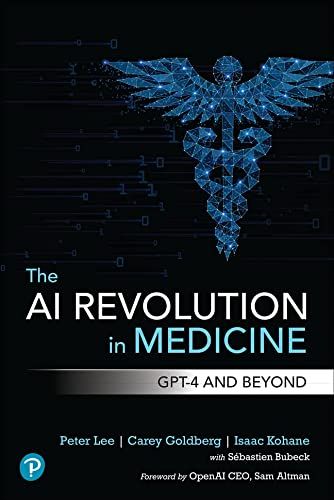
The Algorithmic Physician
Golden Hook & Introduction
SECTION
Nova: A machine just diagnosed a rare lung condition in three seconds that took five specialists ten years to miss. But when the patient started crying, the machine scheduled a software update.
Atlas: That is chillingly accurate. It perfectly captures the high-stakes tension we are living through right now in healthcare.
Nova: It really does. Today we are exploring this exact frontier through a fascinating book called The Algorithmic Physician, written by Dr. Arthur Jenkins.
Atlas: Oh, I have heard about this one. Dr. Jenkins has an incredible background. He spent twenty years as an emergency room physician before going back to school to get a second degree in computer science, specifically to understand why the software he was forced to use kept failing his patients.
Nova: Yes, he did that because he realized the digital tools entering his hospital were changing the way he made life-or-death decisions. He wanted to understand the code behind the stethoscope.
Atlas: That is an amazing vantage point. He brings a unique perspective as someone who has actively practiced in both fields, moving past the simple labels of tech evangelist or technophobe.
Nova: Exactly. And his core argument is that we are quietly outsourcing the very soul of clinical judgment to statistical models, transforming doctors from intuitive healers into data entry clerks who execute software recommendations.
Atlas: Wow. That feels like a massive shift. I think anyone listening who has visited a doctor lately has felt this. You sit there, and the doctor is staring at a computer screen, typing furiously, barely making eye contact. It feels like they are treating the database instead of the human being in front of them.
Nova: You hit the nail on the head. That screen is the physical manifestation of the algorithmic shift. Let us dive into how this transition is fundamentally changing how medical decisions are made.
The Eclipse of Intuition
SECTION
Nova: Let us start with how doctors actually think. Historically, medicine has been taught as both a science and an art. A seasoned physician walks into a room, looks at the patient's posture, hears the slight rasp in their breathing, smells a subtle sweetness on their breath, and their brain synthesizes decades of experience into an immediate, intuitive hypothesis.
Atlas: That sounds like pure intuition, almost like a superpower. It is like a master chess player just knowing the right move without calculating every single option.
Nova: It is exactly like chess master heuristics. Psychologists call this System One thinking. It is fast, automatic, and deeply pattern-based. But Dr. Jenkins points out that hospitals are systematically replacing this intuitive process with System Two thinking, which is slow, deliberate, and highly structured, specifically through clinical decision support software.
Atlas: That sounds safer on paper, though. Human intuition can be incredibly biased or just plain wrong if the doctor is tired, distracted, or running on three hours of sleep.
Nova: That is the promise. The software is designed to eliminate human error. Jenkins shares a powerful case study about a major hospital system that implemented an advanced machine learning algorithm to predict sepsis, which is a deadly, rapid-onset inflammatory response to infection. Sepsis kills millions of people globally every year because it is notoriously difficult to catch early.
Atlas: Oh, I know how terrifying sepsis is. It moves so fast. If an algorithm can flag it hours before a human doctor notices, that seems like a massive win.
Nova: You would think so. The algorithm was trained on millions of patient records and could analyze vital signs, lab results, and demographic data in real-time. It was designed to trigger a red alert on the patient's electronic chart the moment it detected a high probability of sepsis.
Atlas: What actually happened when they rolled it out?
Nova: The system started firing off alerts constantly. It was incredibly sensitive. But here is the catch. It was so sensitive that it suffered from massive false-positive rates. Doctors and nurses were getting bombarded with hundreds of alerts a day for patients who were completely fine.
Atlas: That sounds like the classic boy who cried wolf scenario.
Nova: It created severe alert fatigue. Clinicians began reflexively clicking dismiss on the warnings just to get through their shifts. And then, the inevitable happened. A patient came in who actually was sliding into septic shock. The algorithm flagged it, but the attending nurse, exhausted by a hundred false alarms that morning, dismissed the alert without looking. The patient survived, but only after a devastating ICU stay that could have been avoided.
Atlas: That is tragic. It shows that we cannot look at technology in isolation. The human element, the cognitive load of the person receiving the data, completely changes the outcome.
Nova: Jenkins argues that this is the paradox of the algorithmic physician. When we introduce these systems, we often expect them to act as safety nets. Instead, they transform the cognitive environment of the clinic. Doctors stop looking at the patient to see if they look sick; they look at the screen to see if the score is red.
Atlas: That makes me think about how we make decisions in other parts of our lives. If you rely entirely on GPS to navigate, you eventually lose your mental map of the city. If the GPS tells you to turn left into a lake, some people actually do it because they have suspended their own critical judgment.
Nova: That is a perfect analogy. In medicine, this is called automation bias. It is the human tendency to trust an automated suggestion even when our own senses tell us something is wrong. Jenkins describes an experiment where radiologists were shown chest X-rays with a clearly visible, obvious nodule. Alongside the image, a faulty AI assistant suggested the scan was completely normal. A shocking number of experienced radiologists agreed with the AI and missed the nodule they would have easily spotted on their own.
Atlas: Wow, that is incredibly unsettling. It is as if the presence of the technology actively degrades our own competence.
Nova: It creates a form of cognitive atrophy. If you do not exercise your diagnostic muscles because a computer is doing the heavy lifting, those muscles waste away.
Atlas: So we are trading a system of human intuition, which has known flaws, for a system of digital automation that introduces entirely new, systemic vulnerabilities.
Nova: Yes, we are. The key is recognizing that these algorithms are not magical truth machines. They are statistical prediction engines, and they carry their own hidden baggage.
The Black Box and the Ghost in the Code
SECTION
Atlas: Let us talk about that baggage. When we use these deep learning models, how do we actually know how they are reaching their conclusions?
Nova: That is the most alarming part of modern medical AI. We often do not know. This is the famous black box problem. Traditional software operates on clear, rule-based logic. If X and Y are true, then do Z. But modern neural networks train on massive datasets, adjusting millions of internal parameters until they find correlations that no human could ever map out.
Atlas: That sounds like a doctor being handed a diagnosis by an oracle. The oracle says, this patient has a rare heart condition, but when the doctor asks why, the oracle just says, trust me.
Nova: That is exactly what is happening. Jenkins highlights a study where an AI was trained to detect pneumonia from chest X-rays. It performed with incredible accuracy in testing. But when researchers looked closer at how the AI was making its decisions, they discovered something bizarre. The machine completely ignored the lungs. It focused entirely on a tiny metal token that technicians placed on the patient's shoulder during the scan to indicate whether the X-ray was taken with a portable machine or a permanent hospital machine.
Atlas: Wait, what was it looking at then?
Nova: It was looking at that metal token because portable machines are used for patients who are too sick to leave their beds. The AI figured out that if an image had a portable machine token, the patient was much more likely to have pneumonia. It bypassed the entire medical science of lung pathology and focused on a logistical correlation.
Atlas: No way. Why would that matter?
Nova: It mattered because the algorithm found a shortcut that worked in that specific dataset but would be completely useless, and dangerous, in a different hospital.
Atlas: That is hilarious and terrifying at the same time. The machine was essentially cheating.
Nova: It would fail spectacularly in a real-world setting. And this brings us to the issue of data bias. Algorithms are trained on historical medical data. If that historical data reflects systemic inequalities, the algorithm will not just replicate those inequalities, it will codify them.
Atlas: I can see how that would happen. If certain demographics historically received lower quality care or were underrepresented in clinical trials, the machine learns that as the standard.
Nova: Jenkins details a widely used algorithm designed to identify high-risk patients who needed extra care management. The algorithm used healthcare spending as a proxy for health needs. The logic was that sicker patients cost more money.
Atlas: That sounds reasonable on the surface.
Nova: It sounds logical, but it ignored a massive systemic reality. Because of systemic economic barriers, Black patients with the same level of chronic illness had significantly less money spent on their care than white patients. The algorithm took that spending data and concluded that Black patients were healthier than they actually were, systematically denying them access to critical care programs.
Atlas: That is a devastating example. The algorithm did not have malicious intent, but because it was fed a flawed metric, it scaled up discrimination at a systemic level.
Nova: Exactly. It took human bias and automated it, giving it a veneer of scientific objectivity. That is the danger of the black box. It makes it incredibly easy to abdicate moral and professional responsibility.
Atlas: Who is actually responsible when things go wrong in this scenario? If a doctor follows a biased algorithm and a patient is harmed, is it the doctor's fault, or does the blame lie with the software company?
Nova: We are entering a legal and ethical grey zone. Currently, the legal framework still holds the physician accountable. They are supposed to be the final safety check. But as Jenkins points out, this is a deeply unfair expectation. If a hospital pressures a doctor to use an algorithm to maximize efficiency, but then sues them when the algorithm fails, the physician is caught in an impossible squeeze.
Atlas: That is an incredibly stressful position for a healthcare provider. You are told to trust the machine, but you bear all the risk if the machine makes a mistake.
Nova: It is leading to massive burnout. Doctors feel like they are losing their autonomy. They are being forced to practice defensive medicine, not against lawsuits, but against the algorithm itself.
The Empathetic Interface
SECTION
Atlas: This paints a pretty bleak picture. But Dr. Jenkins must offer some way forward. How do we fix this before we completely lose the human element of medicine?
Nova: He does. He argues that we need to redefine the relationship between the physician and the machine. We have to stop trying to make doctors act like second-rate computers, and stop trying to make computers act like first-rate doctors.
Atlas: I love that distinction. Let the machine do what it does best, and let humans do what they do best.
Nova: Yes. Computers are incredibly good at processing vast amounts of data, finding subtle statistical correlations, and keeping track of complex drug interactions. Humans are unmatched in empathy, contextual understanding, shared decision-making, and ethical reasoning.
Atlas: This means the future physician works alongside the algorithm, rather than being replaced by it.
Nova: Jenkins calls this the empathetic interface. The doctor becomes the translator. They take the raw statistical outputs of the AI and interpret them through the lens of a patient's unique life, values, and fears.
Atlas: That sounds like a much more fulfilling role for a doctor. It brings the focus back to the patient-physician relationship.
Nova: It completely reclaims the sacred nature of care. Jenkins shares a story of a palliative care physician who used a predictive algorithm that estimated a patient's life expectancy. The algorithm suggested the patient had less than three months to live. Instead of just accepting that as a clinical death sentence, the doctor used that data to have a profound, open conversation with the patient about what they wanted to achieve in their remaining time.
Atlas: That is a beautiful way to use data. It was not used to automate a decision, but to catalyze a deeply human connection.
Nova: That is the ideal. The algorithm provides the map, but the human doctor and patient decide on the destination. This requires a major shift in how we train physicians. Medical schools currently focus heavily on memorization and analytical processing, skills that AI can easily replicate.
Atlas: We should be training doctors in communication, emotional intelligence, and critical evaluation of data.
Nova: We need to teach them how to interrogate the machine, to ask, why is the algorithm recommending this? What are the limitations of the data it was trained on? Jenkins suggests that medical education must include algorithmic literacy as a core requirement.
Atlas: That makes so much sense. If you do not understand how your tools work, you are a servant to them, not a master.
Nova: It is about reclaiming agency. For our listeners who are leaders, innovators, or simply patients navigating this system, the lesson is clear. Technology should never be used as a shortcut to bypass human judgment. It should be used to free up human capacity so we can focus on what truly matters.
Synthesis & Takeaways
SECTION
Atlas: This has been such an eye-opening discussion. It really challenges the conventional wisdom that more data and better algorithms automatically equal better care.
Nova: The core of our discussion today is really an exploration of how we preserve our humanity in an increasingly automated world. The Algorithmic Physician shows us that the true value of medicine lies in the connections we forge, far beyond the data points we collect.
Atlas: That is a powerful reminder. If we want a future where healthcare is both highly advanced and deeply compassionate, we have to actively design systems that elevate the human touch, rather than phase it out.
Nova: Well said, Atlas. For everyone listening, next time you are at a doctor's office and find yourself staring at the back of their head while they type, remember that the screen is only half the story. The real healing happens when they turn around and look you in the eye.
Atlas: Thank you for joining us today on this journey into the future of medicine. We would love to hear your thoughts on this. Have you felt the impact of algorithms in your own healthcare experiences? Reach out and let us know.
Nova: This is Aibrary. Congratulations on your growth!
Atlas: See you next time.